
Disclosure: This post contains affiliate links. If you purchase through these links, I may earn a commission at no extra cost to you. I am a proud partner of Hayabusa Combat because I use and trust their gear daily. Use code LILO for a discount on your order.
Review: Why the Hayabusa T3 is the ‘Rolex’ of Boxing Gloves for Your 30s

In your 20s, you could get away with murder. You could sleep four hours, eat takeout, train in $30 gloves you bought at a sporting goods store, and wake up the next day ready to do it again. Your joints were rubber, and your recovery was instant.
Then, the 30s hit.
Welcome to the decade of the “Operator Mindset.” This isn’t about slowing down; it’s about smart aggression. It’s about realizing that if you injure your wrist on a heavy bag on Tuesday, you can’t type that proposal on Wednesday. In our 30s, we don’t just train for aesthetics; we train for longevity, capability, and mental clarity.
If you are incorporating boxing or kickboxing into your routine—which you should be, for both the cardio and the mental edge—your equipment matters. Today, we are doing a deep dive into the Hayabusa T3 Boxing Gloves. After putting these gloves through rounds of heavy bag work, mitts, and sparring, I’m breaking down why they are the standard for anyone serious about “Living Strong,” and how they compare to their entry-level and luxury counterparts.
The Hayabusa Philosophy: Science Over Tradition
Most boxing gloves haven’t changed much in 50 years. They are essentially leather pillows stuffed with horsehair or foam. Hayabusa (Japanese for “Peregrine Falcon”) takes a different approach. They treat fight gear like protective equipment, relying on university-backed research to design gloves that protect the anatomy of the hand and wrist.
For us at How To Live 30, this aligns perfectly with our ethos. We aren’t looking for the cheapest option; we are looking for the highest Return on Investment (ROI) for our health.
The Gold Standard: Hayabusa T3 Review
The Hayabusa T3 is the flagship model. If you walk into any high-level MMA or kickboxing gym, this is the glove you will see most often on the mats. Here is why it has become the daily driver for my training.
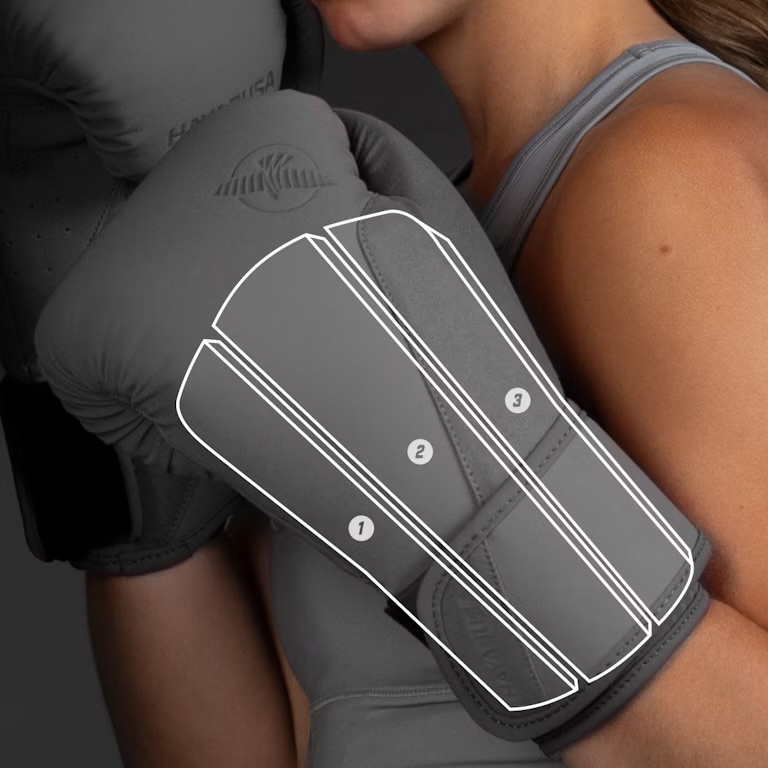
1. The Dual-X® Wrist Support System
This is the game-changer. Most gloves use a single velcro strap that wraps around the wrist. It’s simple, but it leaves gaps. If you throw a hook with bad form in a single-strap glove, your wrist can buckle.
The T3 uses a Dual-X closure system. It has two interlocking straps that pull from opposite directions. When combined with the “Splinting” structure running up the back of the hand, it essentially casts your wrist in place. It keeps your hand perfectly aligned with your forearm.
The 30s Perspective: This feature alone makes the glove worth the price. Wrist injuries can linger for months. The T3 provides a level of security that lets you throw full power without that subconscious fear of tweaking a joint.
2. Five-Layer Foam Complex
Cheaper gloves usually use two layers of foam. The T3 uses five distinct layers designed to absorb impact and dissipate energy. It doesn’t feel “pillowy”—it feels dense and protective. When you crack the heavy bag, you feel the pop, but your knuckles don’t feel the punishment.
3. Vylar® Engineered Leather
The standard T3 is not animal leather; it’s Vylar. This is a lab-engineered material that Hayabusa claims is stronger than real leather. From my experience, it is incredibly resistant to cracking and peeling. It looks sleek, modern, and requires zero maintenance (unlike real leather, which needs conditioning).
4. The Sweat Thumb
A small but tactical detail: the thumb is made of a microfiber suede. It’s designed specifically so you can wipe sweat out of your eyes during a workout without scratching your face. It’s a small “quality of life” feature that you miss instantly when you switch to other gloves.
Ready to Upgrade Your Arsenal?
Official Partner Offer
Get the Operator Edge
Save money and support the blog when you order from Hayabusa Combat.
The Comparison: T3 vs. S4 vs. T3 LX
Hayabusa offers a range of gloves. While the T3 is the flagship, how does it stack up against the entry-level S4 and the premium LX (Kanpeki) line? Let’s break it down to see which one fits your current stage in life.
The Entry Level: Hayabusa S4
The Price Point: Significantly cheaper than the T3.
The Build: The S4 is a fantastic “Day 1” glove. It offers better ergonomics than generic sporting goods store gloves, but it lacks the advanced features of the T3. It uses a single strap closure rather than the Dual-X system, and the foam is simpler.
Who is it for? The S4 is for the “Cardio Kickboxing” class attendee. If you are hitting the bag once a week for 30 minutes to burn calories, the S4 is fine. However, if you are hitting hard, or if you plan on training more than twice a week, you will likely outgrow these within six months.
The Verdict: Good, but not “Operator Grade.” In your 30s, buy nice or buy twice. I recommend skipping the S4 and going straight to the T3.
The Flagship: Hayabusa T3 (Standard)
The Price Point: Mid-range (Investment grade).
The Build: As mentioned above—Dual-X wrist support, 5-layer foam, Vylar shell. This is the workhorse. It is virtually indestructible and provides the best protection-to-price ratio in the industry.
Who is it for? Everyone. Whether you are a beginner who wants safety or a seasoned striker, this is the glove. It is the perfect balance of performance and durability.
The Luxury: Hayabusa T3 LX (formerly Kanpeki)
The Price Point: Premium.
The Build: Structurally, the T3 LX is identical to the standard T3. It has the same foam, the same splinting, and the same Dual-X wrist support. The difference is the skin. The LX is wrapped in 100% full-grain Italian leather.
The “Feel”: There is undeniably something special about the smell and feel of real, high-quality leather. It patinas over time, molding to your hand in a way that synthetic materials can’t replicate. It screams luxury. It’s the difference between driving a high-performance Toyota and a high-performance Lexus. Both get you there, but one feels richer.
Who is it for? The aesthetic purist. If you are at a point in your life where you appreciate fine materials—if you like leather boots and quality watches—you will appreciate the LX. It performs the same as the T3, but it does so with more style.
Performance Review: The ‘Liz Lightning’ Test
In the gym, they know me as Liz Lightning. After ten years of kickboxing—and spending most of those rounds sparring men—I don’t just need gloves that look good; I need armor. I took the standard T3s through three specific environments to test their mettle against real impact.
1. The Heavy Bag
This is where the T3 shines. When you are throwing full power at a 100lb bag, the shock travels up your arm. With lesser gloves, my wrists often ache after a 10-round session. With the T3s, the alignment is forced. You physically cannot bend your wrist backward easily. The crack of the impact is satisfying, and the protection allows for high-volume training without the next-day soreness.
2. Pad Work (Mitts)
The gloves are compact enough that they don’t feel like giant balloons. This makes them excellent for precision striking on focus mitts. The weight distribution is balanced; they don’t feel top-heavy, which keeps your shoulders from burning out prematurely.
3. Sparring
Note: If you spar, always buy 16oz gloves to protect your partner.
The T3s are firm. Because the leather/Vylar is durable, they can feel a bit hard to your sparring partner initially. They require a break-in period. However, the defensive shell is great. The broad surface area covers the face well when you are in a high guard, blocking hooks and head kicks.
Sizing and Fit Guide
One common question I get is regarding fit. Hayabusa gloves generally have a snug hand compartment. If you have massive hands, they might feel tight at first.
- 12oz: strictly for light bag work or small hands.
- 14oz: The “all-arounder” for bag and pad work.
- 16oz: Required for sparring. If you weigh over 175lbs, just get the 16oz for everything to get the extra shoulder conditioning.
Final Verdict: Are They Worth the Hype?
In the context of How To Live 30, the answer is a definitive yes. We talk a lot about real estate and financial investments, but the most critical asset you own is your body.
The Hayabusa T3 represents a shift in mindset. It is a refusal to settle for “good enough.” It is an acknowledgement that you are a tactical athlete who requires equipment that matches your intensity. The wrist support is unrivaled, the durability is elite, and the aesthetic fits the modern, clean look we love.
If you are debating between the S4 and the T3, save up for the T3. If you want to treat yourself to the finest gear on the market, grab the LX. But for 90% of people, the standard T3 is the best boxing glove you will ever own.
Liz Lightning’s Choice
- Best Feature: Dual-X Wrist Support (prevents injury).
- Durability: 10/10 (Vylar shell does not crack).
- Style: Sleek, dangerous, professional.
Don’t forget to use code LILO at checkout to support the blog and save on your gear.
FAQs
Do I need to wrap my hands with Hayabusa gloves?
Yes. Even with the superior wrist support of the T3, you should always wrap your hands. Wraps tighten the bones in your hand to prevent fractures. The glove protects the wrist; the wrap protects the knuckles.
How do I clean my Hayabusa gloves?
Do not put them in the washing machine. Wipe the outside with a damp cloth. For the inside, use a deodorizer and leave them open to air dry after every session. The T3 lining is antimicrobial, which helps prevents the “gym bag funk.”
How long is the break-in period?
The T3s are stiff out of the box. Expect about 10 to 15 rounds of heavy bag work before they really start to mold to your hand shape.
From the Archives
Master the Striking Game
Dive deeper into our full library of heavy bag drills, technique breakdowns, and gear reviews designed to build the Operator Mindset.
View All Kickboxing Posts →