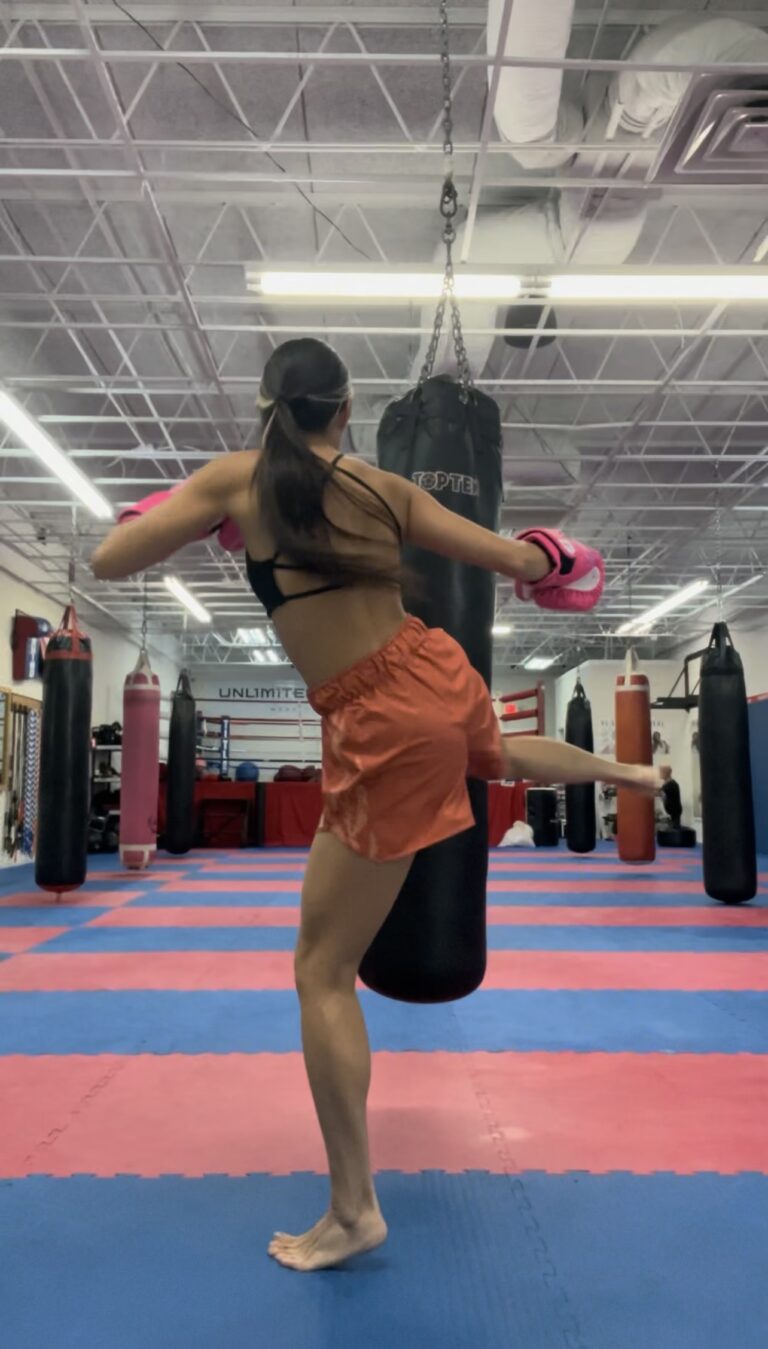



Hey friends, it’s Lizzie! I’ve been kickboxing for ten years, and in that time I’ve trained in three different Hayabusa models — the T3, the T360 and the E1. This one is about the two that sit at opposite ends of the range: the T3 and the E1. So when people ask me which to get, I’m not reading a spec sheet back to them. I’m telling you what each one is actually like to own.
Heads up: I’m a Hayabusa ambassador and I earn a small commission if you use my code or shop through my links. No extra cost to you, and it doesn’t change what’s below.
Here’s the short version, and then the long one.
The quick answer
Get the E1 if this is your first real pair of gloves and you want something that feels good immediately without a big break-in. Get the T3 if you already know you’re going to keep training, and you want the pair you stop thinking about.
Both are genuinely good. Neither is a mistake. The difference is mostly about where you are right now.
What actually separates them
The T3 is Hayabusa’s flagship, and the thing you’re paying for is the wrist. It’s a longer cuff with a closure system that locks your wrist in a way the E1 doesn’t quite match. For me, that mattered most on heavy bag days and in sparring — the days where sloppy wrist position is the thing that ends a session early.
The E1 is the more approachable pair. It is built around plush comfort and a single-strap closure, which is the whole difference in one sentence: you can get it on and off yourself in seconds. My own blue E1s are 16 oz and my only heavy pair. They feel softer out of the box and noticeably easier to get on and off by yourself, which sounds like nothing until you’ve tried to strap up alone before class three times a week.
Out of the box, the E1 was comfortable on day one. The T3 took me a few weeks to break in properly, and then it was better than the E1 has ever been. That’s the trade, honestly: immediate comfort versus a pair that rewards patience.
Side by side, from someone who owns both
| Hayabusa T3 | Hayabusa E1 | |
|---|---|---|
| Closure | Longer cuff, a closure that locks the wrist down | Single strap you can do one-handed |
| Break-in | A few weeks, then it molds to your hand | None. Comfortable on day one |
| Feel on the bag | Firmer. I can feel where my punches land | Softer. Absorbs more of the punch |
| Where it lives in my week | Sparring, and any session I know will be a real one | Long heavy-bag sessions, and classes where I just want to move |
| Price (US, at the time of writing) | $169, about $152 with LILO | $99.99, about $90 with LILO |
| How I got mine | Three pairs: white, pink and black | Sent by Hayabusa as part of my ambassador package |
Where each one earns its spot in my week
Here’s how it actually plays out, because “I own both” is only useful if you know what I do with them.
The T3 is my favorite glove, period. It gives me the right amount of protection while still letting me feel where my punches land, and that feedback is something I never want to give up. Sparring days are T3 days. Any session where I know I’m going to work hard is a T3 day.
The E1 is what I reach for on long heavy-bag days. It’s softer and more cushioned, so it absorbs more of the punch, and over a long bag session that’s exactly what I want. It also does a job people don’t think about: it gives my T3s a day off. Gloves need time to dry out between sessions, and having a second pair means neither one is being worn while it’s still damp. In my experience that’s a big part of why my gloves last as long as they do.
So when people ask “T3 or E1?”, the honest answer from my bag is: I ended up with both, and they don’t compete. If you only get one, the sections below are how I’d choose.
Which one should you actually buy?
Buy the E1 if: you’re newer to training, you’re mostly doing classes and bag work, you don’t love fussing with gear, or you’re not yet sure this is going to stick. There’s no shame in that — most people who buy the most expensive pair first do it before they know whether they’ll still be training in six months.
Buy the T3 if: you’re training multiple times a week, you’re doing anything with contact, or you’ve already worn out a cheaper pair. If you’ve ever finished a session and noticed your wrists before your arms, that’s the signal.
And a thing nobody says out loud: if you’re between the two and you can comfortably afford the T3, get the T3. Not because the E1 is bad, but because the most common gear regret I hear is people buying twice.
The thing the cheaper gloves never did
Before Hayabusa, I trained in a Venum Contender for about two years, and before that a basic Everlast pair. They were fine. The difference when I switched was night and day, and it came down to three things: wrist support, durability, and the way the T3 molded to my hand over the first few weeks. That last one is the reason the T3 has stayed my favorite for ten years. Neither of the cheaper gloves ever molded. They stayed generic no matter how long I wore them.
The E1 doesn’t need a break-in to be comfortable, which is its whole appeal. But if you’ve only ever worn budget gloves, the T3’s break-in is not a flaw to put up with. It’s the point. A few weeks in, it fits you and nobody else.
Sizing is the same problem for both
Whichever you pick, size is where people get it wrong, and it’s got nothing to do with the model. Both run snug out of the box and both change once you’re wrapped. I wrote the whole thing up separately in my Hayabusa sizing guide, and I’d honestly read that before you decide on a model at all — a perfectly chosen T3 in the wrong size is worse than an E1 that fits.
If you have smaller hands, I went deeper on that in boxing gloves for women with small hands.
What about the price gap?
The T3 sits at the premium end and the E1 undercuts it. Over a year of regular training the gap works out smaller than it looks on the product page — I broke that math down in is Hayabusa worth the money.
Either way, my code LILO takes 10% off, and it doesn’t stack with a site-wide sale — one code per order, so if theirs is bigger, use theirs.
Shopping from the UK or Europe? Use code LIZZIE for 10% off on the Hayabusa Europe store.
Shop Hayabusa with code LILO →
Ten years in, here’s my honest take
I still have both. The T3 is what I reach for when I know it’s going to be a real session. The E1 is what lives in my bag for classes where I just want to show up and move. If I could only keep one, it’d be the T3 — but I’d have been perfectly happy if the E1 were the only pair I’d ever bought.
That’s the most useful thing I can tell you: this is not a decision you can get badly wrong.
If comfort matters more than lockdown for you, here is my full E1 review.
Outside the US? Use code LIZZIE on the Hayabusa EU store for the UK and Europe, or shop my Australia storefront.
Still deciding across the whole range? Every Hayabusa model, ranked. Or read my full T3 review.
Your Questions, Answered
Is the T3 worth the extra money over the E1? If you train more than twice a week or do anything with contact, yes — the wrist support is the difference. If you’re doing occasional classes, the E1 is plenty.
Which is better for beginners? The E1, mostly because it’s comfortable immediately and easier to strap up on your own.
Do they fit the same? Close, but both run snug before break-in and both change once you’re wrapped. Read the sizing guide before you order either.
Does code LILO work on both? Yes — 10% off. It doesn’t stack with a site-wide sale, so if theirs is bigger, use theirs.
Can I start with the E1 and move up to the T3 later? Yes, and that’s roughly how my bag ended up: both pairs, doing different jobs. If you start on the E1 and find yourself noticing your wrists before your arms, that’s your T3 signal.