


Hey friends, it’s Lizzie! I’ve owned a pair of Sanabuls. I don’t own them anymore — I ended up giving them away rather than keeping them in my rotation.
That sounds like the start of a hit piece, and it isn’t. Sanabul is doing something completely different from Hayabusa, and once you see the price gap the whole comparison makes more sense.
The price gap is the entire story
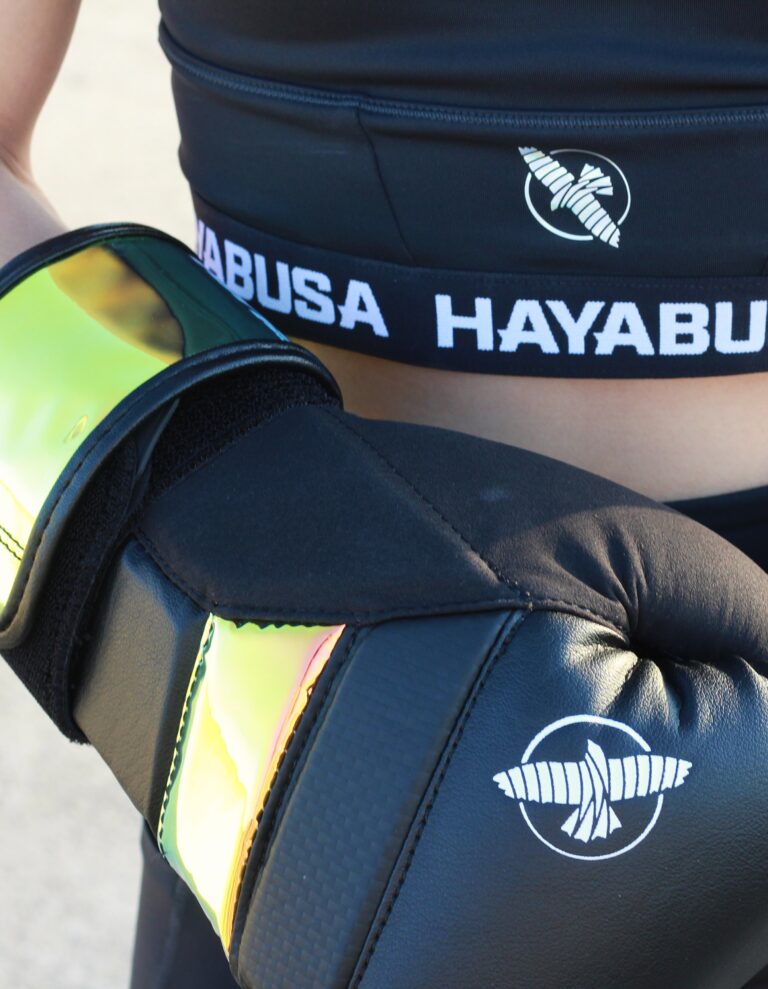
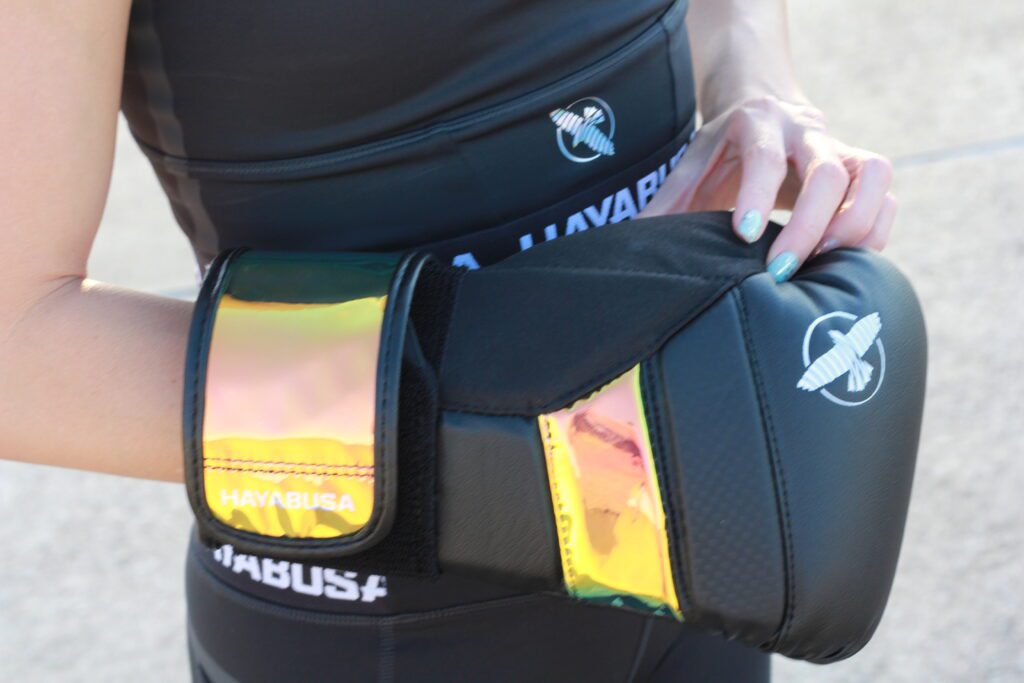
Sanabul’s boxing gloves start around $17.99 for the Essential Gel and run up to about $34.99 for the Funk Strike. The Hayabusa T3 is $169.
That’s not a premium. That’s five to nine times the price.
Which means these two brands aren’t really competing. Sanabul isn’t competing with Hayabusa — it’s competing with borrowing the gym’s communal gloves. And at eighteen dollars, it wins that fight comfortably. Anything is better than the shared pair that forty other people have sweated into.
Being straight about what I can and can’t tell you
I owned one pair and moved them on, so I can tell you how they felt to put on and train in. What I can’t honestly tell you is how they hold up over years, because I didn’t keep them long enough to find out. Anyone claiming a multi-year durability verdict on a glove they used briefly is guessing at you.
My Hayabusa assessment is different — that’s ten years of kickboxing and four pairs I still train in, which is a genuinely different kind of knowledge.
What the money actually buys you
Having gone from cheaper gloves up to Hayabusa, the difference showed up in three places for me, and they’re the same three every time:
Wrist support. This is the one that matters most and the one people notice last. Sloppy wrist position is what ends sessions early, and a budget glove’s closure simply doesn’t lock things down the same way. The T3’s does it without me thinking about it.
Durability. Cheap gloves don’t usually fail dramatically — the padding just quietly flattens and stops doing its job. You often don’t notice until your hands start telling you.
The way they mould to your hand. This is the one I didn’t expect. A good glove slowly becomes your glove. A cheap one holds the same generic shape it shipped in, forever. I wrote about that properly in my three-way comparison.
So who should actually buy Sanabul?
Genuinely: quite a few people.
- You’ve been to two classes and have no idea whether this sticks
- You’re currently using the gym’s loaners and want anything of your own
- You’re buying for a kid who’ll outgrow them anyway
- Money is tight right now, and the honest choice is cheap gloves or no gloves
There is no shame in any of that. Spending $169 to find out kickboxing isn’t for you is a worse outcome than spending $18 to find out.
And who should just buy the Hayabusa
- You’re training more than twice a week and you know you’re staying
- You’ve already worn out a cheap pair — that’s the signal
- You’re doing anything with contact
- You’ve finished a session noticing your wrists before your arms
The most common gear regret I hear isn’t buying the expensive pair. It’s buying twice.
The maths people skip
A $28 glove replaced every eight months and a $169 glove that lasts years are much closer in cost-per-year than the shelf price suggests. That doesn’t make the cheap pair wrong — it makes it a cash-flow decision rather than a value one. I broke the numbers down in is Hayabusa worth the money.
If you’re upgrading, get the size right
Coming off a budget pair, don’t assume your size carries over. Hayabusas run snug before break-in and the fit changes once you’re wrapped. My sizing guide covers it, and if you have smaller hands like me, read this one first.
Not sure which model? The E1 at $99.99 is the softest and the easiest step up, and the T3 is the one I’d buy if I only bought once. Compared here.
What it costs
My code LILO takes 10% off the US store, and it matches whatever site-wide sale is running if that one’s bigger.
Shop Hayabusa with code LILO →
Outside the US? Use code LIZZIE on the Hayabusa Europe store for the UK and Europe, or shop my Australia storefront.
Exactly which Sanabuls I owned
Being specific, because it matters: mine were the Easter egg colourway from their women’s line. And I’ll give them real credit — the foam was genuinely nice and the colour was stunning. They looked better than gloves at that price have any business looking.
Where they lost me was fit over time. They never moulded to my hand. They held the shape they shipped in, and they got uncomfortable quickly — which my T3s simply don’t do. That’s the honest reason they left my rotation rather than anything dramatic.
It’s also the clearest illustration of what you’re actually paying for further up the range. Padding quality you can feel on day one. A glove becoming yours takes months, and it’s the thing you only miss once you’ve had it.
The two, side by side
| Sanabul | Hayabusa | |
|---|---|---|
| Entry price | $17.99 Essential Gel | $99.99 E1 |
| Top of range here | $34.99 Funk Strike | $169 T3 / T360 |
| What I owned | Easter egg colourway, women’s line — gave them away | T3 ×3, T360 12oz, E1 — all still in rotation |
| Foam | Genuinely nice out of the box | Holds up over years, not months |
| Fit over time | Never moulded, uncomfortable quickly | Moulds to your hand |
| Really competing with | The gym’s loaner gloves | Buying once instead of three times |
The cost-per-year version
A $28 pair replaced every eight months runs about $42 a year. A $169 pair that lasts five years runs about $34. The premium pair is not automatically more expensive — it’s more expensive today, which is a completely different problem and a legitimate reason to start cheap.
What makes the cheap route genuinely expensive is buying at this tier repeatedly after you already know you’re committed.
Also worth reading: Hayabusa vs cheap boxing gloves and every Hayabusa model, ranked.
Your Questions, Answered
Are Sanabul gloves any good? For the money, genuinely yes — they’re a real glove and far better than training in the gym’s shared pair. They’re an entry point, not a long-term pair.
Why did you give yours away? They didn’t earn a place in my rotation once I was training in Hayabusas. That’s a comment on what I needed, not on whether they’re worth $18.
Is Hayabusa worth nine times the price? If you train regularly, yes — the wrist support alone. If you’re three classes in, no. Buy for the training you’re doing right now.
What should my first “real” pair be? The E1 if you want soft and forgiving, the T3 if you already know you’re committed.
Are Sanabul gloves good? For under $35, genuinely yes. They are a real glove and far better than the gym’s shared pair. They are a starting point, not a forever pair.
How much better is Hayabusa really? The differences that mattered to me were wrist support, how long the padding held its shape, and the glove moulding to my hand. None of those show up in week one, which is why this comparison is hard to make in a shop.
Is the price difference justified? On cost-per-year the gap is much smaller than the shelf price suggests. On cash today it is very real — which is a legitimate reason to start at the cheaper end.
Which Hayabusa is the fair comparison to Sanabul? Neither, honestly. Sanabul competes with the gym’s loaners. The E1 at $99.99 is the realistic first step up.
Can I use my code on Hayabusa sale items? It is one code per order, so it will not stack with a site-wide promotion. Take whichever saves you more.
Some links above are affiliate links — I earn a small commission at no extra cost to you, and I only link gear I actually train in.