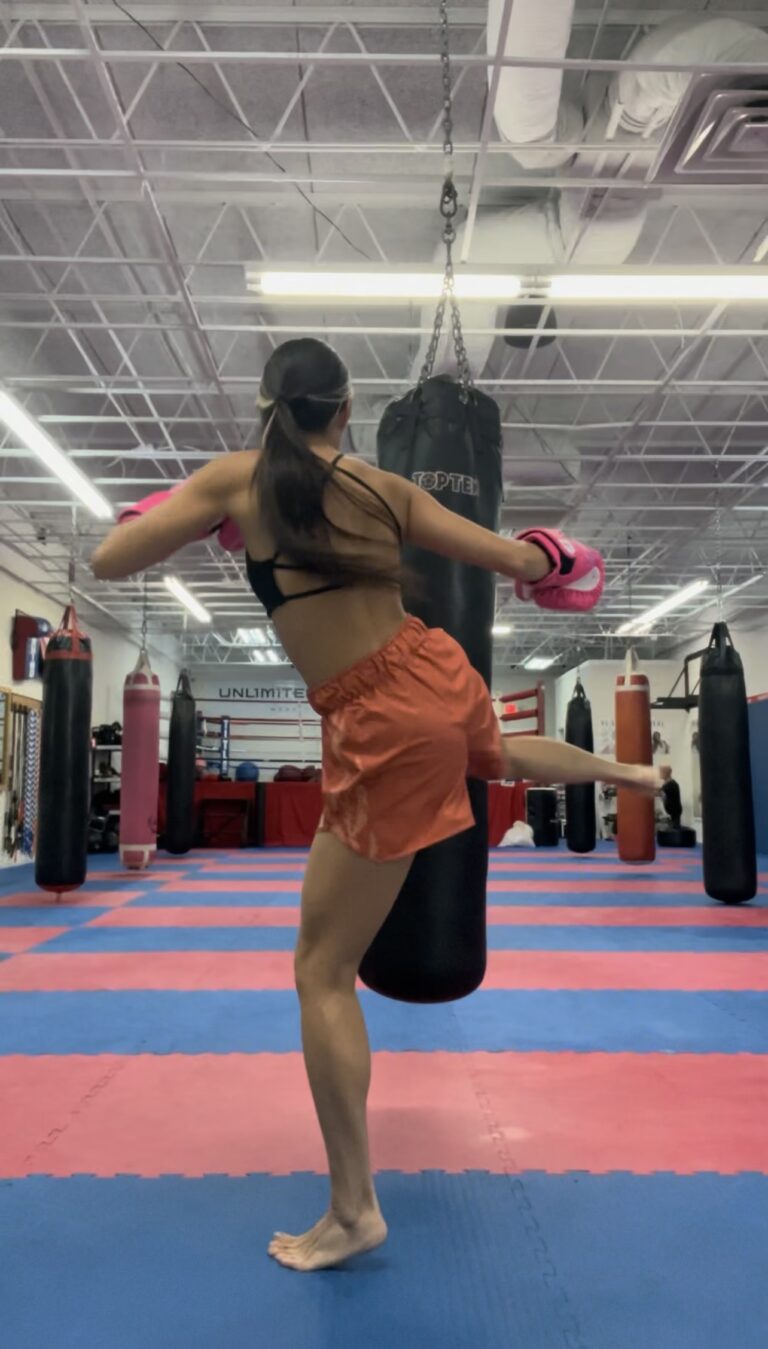



Hey friends, it's Lizzie! Making friends in your 30s is hard, and making friends in a room where everyone is hitting things and nobody is talking is harder. I know, because my first kickboxing class was overwhelming. Here is what I'd tell a woman walking into her first fight gym hoping to find her people.
Give the first class some room
Real talk: you might not make a friend in class one. You're overwhelmed, you're half a step behind the room, and everyone else is busy with their own round. That's not the gym being cold; that's just class one. My sister talked me into my first class, and I hated it. Gym friendships come later, and from one very specific habit.
The habit: same class, same time, every week
Fight gyms are built on regulars. The Monday 6pm crowd is a different set of people from the Wednesday 6am crowd, and both groups know each other. Trying the same class for a few weeks can make it easier to recognize people and start conversations. A different class time may have a different feel, so choose one that works for you.
Where the friendships actually start
- Pad rounds. You spend three minutes a foot from someone's face, calling combinations, saying “nice” when something lands. It is the most natural conversation in the gym, and it happens without either of you deciding to talk.
- The five minutes after class. Wraps come off, everyone is wrecked and happy, and the guard comes down. Don't bolt for the car. Unwrap slowly. Ask someone how long they've been training.
- Being the new person's partner. Once you're a regular, hold pads for the newest woman in the room. You were her a few months ago, and she will remember who was kind.
- Sparring nights. Nothing builds trust like going light for someone and having them go light for you. Sparring partners often become the people you'd call in a crisis.
The women in the room
Fight gyms skew male, and that's fine, but the women who train there will find you fast if you keep showing up, and they will become your people faster than anyone. Most gyms have a small group of women who look out for each other: who partner up on sparring nights, who say “go light with her, it's her first time,” who text after a bad round. Find them by being consistent, and then be that for the next woman.
What not to do
- Don't try to impress the room. Going hard in week one to prove you belong makes you the person people avoid on pad rounds. Go at your level; that's what earns partners.
- Don't coach anyone. There is one coach. Unsolicited advice is the fastest way to end a friendship before it starts, and it applies double if you've been there three months.
- Don't take the quiet personally. A fight gym is quiet because people are working, not because they don't like you.
- Don't disappear for a month. The room forgets faces fast. If you have to miss weeks, say so to someone before you go.
Beyond the mats
The gym friendships that stick tend to leave the gym eventually: coffee after a morning class, a beach day, a pickleball game. You don't have to force that; it happens on its own once the gym friendship is real. But if you're the one who says “a few of us are getting coffee after” first, you become the person the group forms around. Someone has to be. It might as well be you.
If the room never warms up
Some rooms don't. A gym where nobody speaks to the new person after a month, where the coach only corrects the people he likes, where sparring is a status game: that is information about the gym, not about you. Move. It is fine to try another gym if this one does not feel welcoming or safe. I wrote what to look for in how to choose a kickboxing gym.
Why it's worth the awkward month
Because the friends you make in a fight gym have seen you at your worst: gassed, hit, frustrated, trying again. There is no small talk left to get through. Ten years in, that's the thing I'd tell any woman in her 30s who feels like the window for new friends has closed. It hasn't. It's at the gym, on a Monday, holding pads for someone who was you.
A first-month script that works
Week one: same class, tell the coach you're new, thank them after. Week two: same class, learn one name, say it back next time. Week three: same class, stay five minutes after and ask someone how long they've been training. Week four: same class, offer to hold pads first. That's the whole script. These steps can help you feel more familiar with the room, but there is no five-week friendship deadline. None of it requires being outgoing; it requires being there.
Friendships start on the bad nights
A good training partner respects your limits and helps you stop when something feels wrong. If you have been hit too hard, pause and tell your coach. Possible concussion symptoms mean stopping training and getting medical assessment, with no same-day return and no return to sport before medical clearance. Seek emergency care for danger signs; see the CDC concussion guidance. You never need to keep taking hits to earn friendship.
And bring one of them to pickleball
The gym friendship becomes a real friendship the first time it leaves the gym. Coffee after a morning class, a beach day, or a pickleball game. Two hobbies, one group of people, and a week that feels full instead of busy. I wrote about the combination in pickleball vs kickboxing.
Your Questions, Answered
Is it hard to make friends at a kickboxing gym? It varies by gym and by person. Attending a regular class, thanking your partner and chatting briefly after training can create opportunities to connect. Friendships do not follow a fixed timeline.
How do you make friends at the gym as a woman in your 30s? Try introductions, beginner sessions or gym social events. Ask the coach about opportunities to meet other women, and make space for new people when you feel settled.
What if nobody talks to me at my gym? You can try a different class time, introduce yourself or ask the coach about the gym community. You do not have to stay in a place that feels unwelcoming or unsafe.