



This post contains affiliate links. If you shop through them I may earn a small commission at no extra cost to you — I only ever recommend what I genuinely use and love. 💛
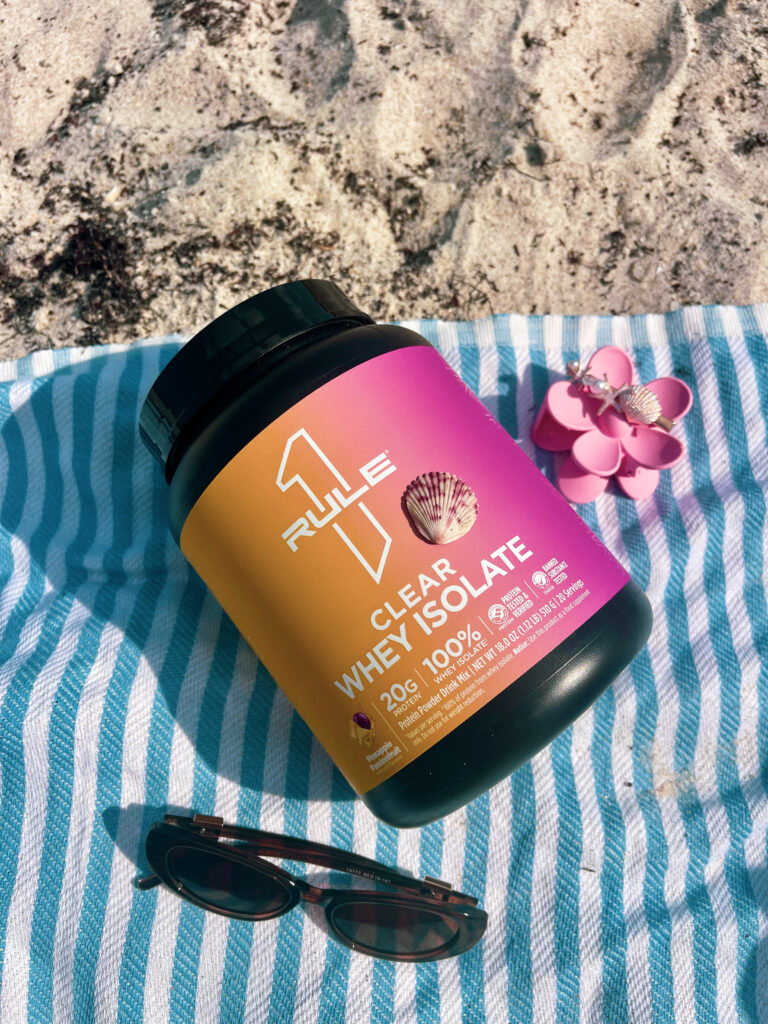
Hey friends, it’s Lizzie! You’ve seen me talk about Rule One’s protein lineup a lot, but I keep getting asked about the black tub with the orange label — Rule One LEAN — so let’s actually talk about what it is instead of you guessing from a photo.
What Rule One LEAN Actually Is
LEAN is not a protein powder. It’s a non-stimulant weight management capsule — but non-stimulant does not mean caffeine-free. Rule One notes that the decaffeinated coffee and tea extracts contain small amounts of caffeine, which matters if you need to avoid it.
The formula leans on a mix of non-stim ingredients aimed at metabolism and nutrient utilization: things like forskolin extract, apple cider vinegar, Capsimax (a cayenne-derived compound), Grains of Paradise, green coffee bean extract, vitamin D, and L-carnitine tartrate. It’s Informed Choice Certified, meaning it’s third-party tested by LGC for banned substances — the same certification I’ve mentioned on their protein line.
What It’s Actually For (and What It’s Not)
I want to be straightforward about this one, because weight management supplements get oversold constantly. LEAN is positioned as support for your body’s existing calorie-burning processes and for managing cravings — it is not a replacement for eating well or training, and I am not going to tell you a capsule alone changes your body composition. Nothing does that. It’s a supporting piece, not the plan.
If you’re already eating with intention and training consistently, this is the category of product that’s meant to nudge the margins — not create results out of nothing.
What’s Actually in Each Serving
The capsule version gives you two capsules per serving, and here’s the honest breakdown of what’s in that dose:
- Forskolin extract, 250mg — the compound behind the “non-stim thermogenic” positioning. It’s derived from the Coleus forskohlii plant.
- L-Carnitine Tartrate, 250mg — involved in how your body shuttles fat into cells for energy use.
- Apple Cider Vinegar, 150mg — the same ingredient people take as a shot, just in capsule form without the taste.
- Capsimax®, 50mg — a cayenne pepper extract used for its thermogenic reputation.
- Grains of Paradise, 40mg — a West African spice relative of ginger, also used in thermogenic formulas.
- BioPerine®, 5mg — black pepper extract, added to most formulas like this specifically to help your body absorb the other ingredients better.
One honest correction to the “non-stim” framing: the label does note trace amounts of caffeine from decaffeinated extracts. It is not a zero-caffeine product in the most literal sense — it is a genuinely low-stim one compared to anything built around a real caffeine dose.
How to Actually Take It
Straight from the label: two capsules with 8–12oz of water, ideally before a meal or before your workout, on a relatively empty stomach. A 60-capsule bottle is 30 servings, so at two capsules a day that’s a full month.
It also comes in a powder format if capsules aren’t your thing — one scoop mixed into 8–12oz of cold water, consumed right away. The powder version swaps a couple of the capsule ingredients (it uses coconut water powder instead of the forskolin extract, for instance), so if you specifically want the forskolin, the capsule is the one to grab.
At $24.99 for a 30-day supply, that puts it around 83 cents a day — worth factoring in against whatever else is already in your supplement budget before you add a new one.
Who Might Actually Consider It
- You’re comparing non-stimulant formulas, while keeping in mind that LEAN is not caffeine-free.
- You already have your training and nutrition dialed in and are looking at the smaller levers, not the big ones.
- You want third-party tested ingredients rather than a proprietary blend with no certification behind it.
Who it’s probably not for: anyone looking for a shortcut around actually eating well, or anyone hoping a capsule solves a problem that diet and training haven’t touched yet.
Non-Stim vs Stimulant-Based: Why the Distinction Matters
A lot of the “fat burner” category leans hard on caffeine, sometimes stacking several hundred milligrams into a single serving. That works for some people and genuinely wrecks sleep and anxiety for others — I’ve been there, jittery and wired at 11pm because I took a stim-heavy product too late in the day.
A non-stim formula like this trades that jittery-energy effect for something quieter. You’re not going to feel LEAN kick in the way you’d feel a pre-workout kick in. That’s not a flaw, it’s the actual design — the ingredients here are aimed at metabolism and appetite over time, not an immediate energy spike you can feel in twenty minutes.
If what you actually want is an energy boost, this isn’t that product, and comparing it to a stim-based fat burner on that basis isn’t a fair comparison. Non-stimulant marketing is not a promise that it will leave your sleep unaffected. I would not treat it as a guaranteed sleep-neutral bedtime supplement; follow the current label and check with your clinician if caffeine sensitivity is a concern.
A Few More Honest Cautions
Forskolin and some of the other ingredients here have documented interactions with certain blood pressure and blood-thinning medications. This is exactly the kind of detail that gets glossed over in supplement marketing, so I want to say it plainly: if you’re on any prescription medication, especially anything for blood pressure, blood sugar, or blood clotting, talk to your doctor or pharmacist before adding this or anything like it.
I’d also skip it if you’re pregnant or nursing, managing a heart condition, or under 18 — none of those situations are what this product was formulated or tested for.
An Honest Note
I am not a doctor or a dietitian, and this is not medical advice. If you’re pregnant, nursing, on medication, or managing a health condition, that’s a conversation for your doctor before you add any new supplement — including this one. Ingredients like forskolin and stimulant-adjacent compounds can interact with certain medications and conditions.
More protein reads:
Your Questions, Answered
Does Rule One LEAN contain caffeine or stimulants? Rule One markets LEAN as non-stimulant, but its decaffeinated coffee and tea extracts contain small amounts of caffeine. Non-stimulant does not mean caffeine-free. Check the current label and ask your doctor or pharmacist before combining supplements if you need to limit caffeine.
Is Rule One LEAN safe to take with other supplements? For most healthy adults, non-stim ingredients like these are generally used alongside a normal supplement routine, but I’m not a doctor and I’m not going to tell you it’s safe for your specific situation. If you’re taking medication or managing a health condition, run it by your doctor or pharmacist first.
Will Rule One LEAN help me lose weight on its own? No, and I don’t think any honest answer to this question is yes. It’s positioned as support for your existing habits — metabolism and cravings — not a replacement for eating well and training. Go in with realistic expectations.
Is Rule One LEAN completely caffeine-free? Not quite, technically. The label notes trace amounts of caffeine from decaffeinated extracts used in the formula, so if you are avoiding caffeine entirely for a medical reason, that is worth knowing. It is a genuinely low-stim product, just not a literal zero.