



Morning Workouts vs. Evening Workouts: What Works Best in Your 30s?
Affiliate Disclosure: This article contains affiliate links. If you purchase through them, we may earn a small commission at no extra cost to you. We only recommend items we genuinely find useful.
Your 30s are packed: meetings, commutes, kids, side projects, social life. There’s no “perfect” time that suits everyone, which is why the morning workouts vs. evening workouts debate misses the real point. The best time is the one you’ll stick to, with energy left for the rest of your life. Below, you’ll find a clear comparison, decision frameworks, and simple routines you can start this week—plus recovery tactics to protect sleep and consistency.
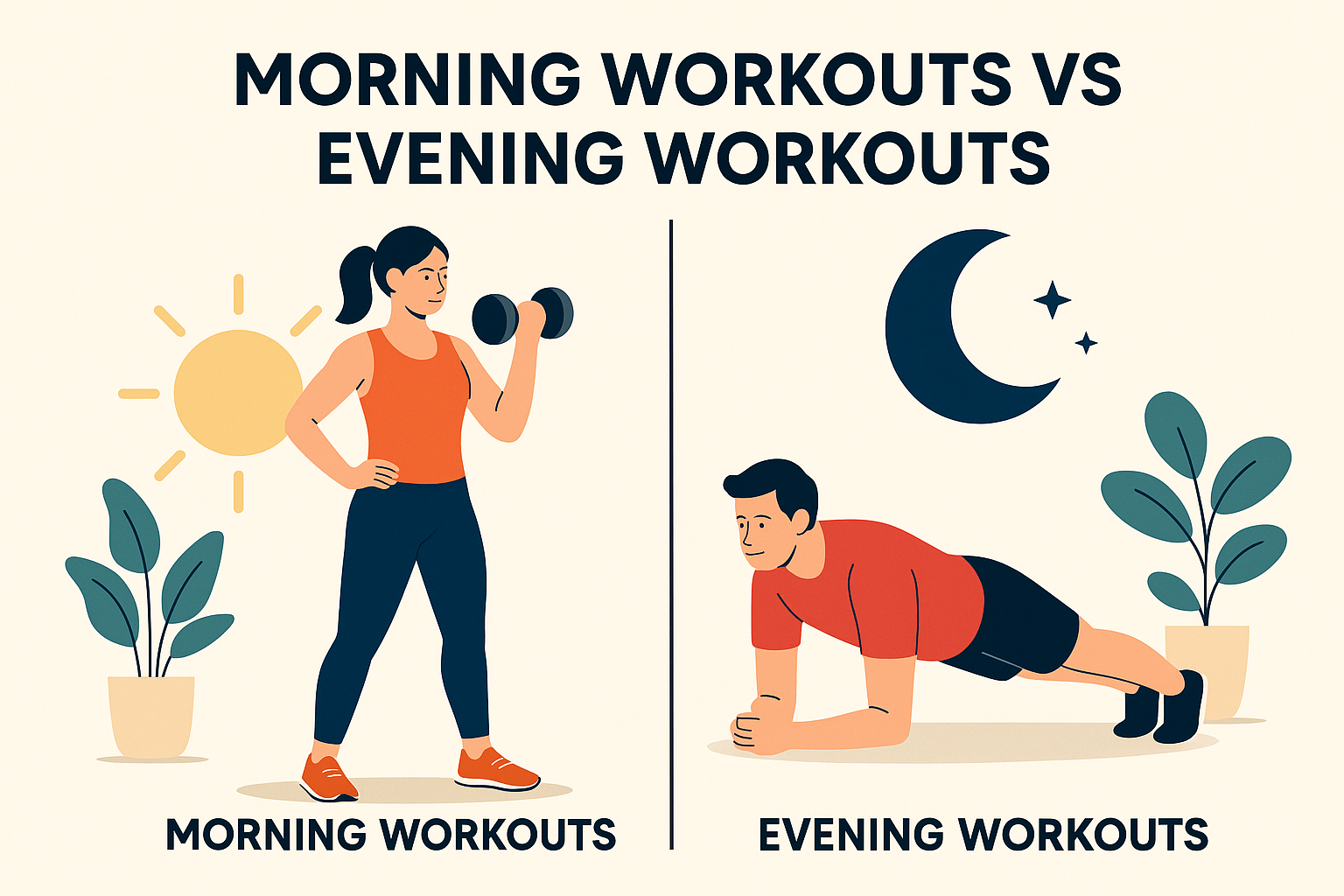
Morning Workouts vs. Evening Workouts: Pros & Cons at a Glance
Why Morning Workouts Win
- Fewer conflicts: You finish before the day can hijack you.
- Mood & focus: Early wins create momentum and better food choices.
- Gym crowd: Often quieter, especially very early.
Morning Friction Points
- Body feels stiff; you’ll need a longer warm-up.
- Sleep debt crushes motivation—bedtime discipline is key.
- Strength may feel 2–5% lower vs later in the day.
Why Evening Workouts Win
- Peak strength: Many feel strongest late afternoon/evening.
- Social support: Classes and training partners are easy to book.
- Stress release: Training marks a clean boundary after work.
Evening Friction Points
- Work overruns or family duties can derail plans.
- Late intensity can nudge bedtime later if you don’t cool down properly.
- Gyms can be crowded during peak hours.
Morning Workouts vs. Evening Workouts: The Energy & Sleep Equation
Morning training trades warm-up time for a virtually guaranteed “done” feeling before life starts. Evening training gives you more strength but risks schedule collisions. Either way, one rule rules them all: protect your sleep. Finish evening sessions with a calm cooldown; support mornings with an earlier bedtime and a simple wake routine.
Pro tip: Track your week for 7 days. Note sleep time, training time, and how you felt during the first and last set. Patterns make the decision for you.
Morning Workouts: A 35-Minute Template That Just Works
Use this when you want a no-drama plan that fits before work or school runs.
- Gentle Wake (3–5 min): Light water, nasal breaths, neck/hip circles.
- Warm-Up (5 min): Jump rope or brisk walk, then hip openers and shoulder CARs.
- Main Lift (10–12 min): 3×5 goblet squats or Romanian deadlifts (leave 1–2 reps in reserve).
- Superset (10 min): 3 rounds of 8–12 push-ups + 8–12 rows + 20–30s plank.
- Finisher (3–4 min): 20 sec brisk / 40 sec easy, x4 rounds.
- Post (1–2 min): 4 slow exhales, then protein and water.
Morning Helpers: Keep hydration visible with a motivational water bottle. For quick recovery, mix a scoop of Rule One Proteins (use code LILO) right after training.
Evening Workouts: A Strong-Later Template (40–45 min)
Leverage higher evening strength, then land the plane gently to protect sleep.
- Arrival (5 min): Brisk walk / rower + dynamic hips/ankles.
- Main Lift (15–18 min): 5×3 on a compound move (deadlift, front squat, or bench). Rest longer, keep technique crisp.
- Skill or Conditioning (10–12 min): Pads or bag rounds if you enjoy kickboxing, or a technique EMOM (every minute on the minute).
- Cooldown (5 min): 2 minutes nasal breathing, 3 minutes light stretching (calves/hips/thoracic). Screens dimmed after.
Evening Edge: If kickboxing is your jam, train safely with Hayabusa gloves & wraps (code LILO). Sensitive to late caffeine? Skip preworkout and lean on a steady protein-rich dinner afterward.
Morning Workouts vs. Evening Workouts: Nutrition Tweaks
- Morning plan: Small carb before (half banana or toast + honey). After: 20–30 g protein + hydration.
- Evening plan: Balanced lunch; 60–90 minutes pre-gym have a light snack (fruit + yogurt or toast + nut butter). After: calm dinner with protein and slow carbs.
Sleep support: If evenings run late, keep the last 10–15 minutes of training gentle and screens dim afterward. Some people like a magnesium routine (only if appropriate for you), such as Calm Magnesium with warm water.
Choosing Your Side: A Quick Decision Framework
- Identity: Are you more “done before dawn” or “strong after work”?
- Constraints: Commute, childcare, meeting blocks, gym hours.
- Signals: Which time leaves you energized, not wired?
- Experiment: Commit to 2 weeks morning, evaluate; then 2 weeks evening. Pick the winner and stick for 8–12 more weeks.
Morning Workouts vs. Evening Workouts: Common Pitfalls
- All-or-nothing thinking: 25 minutes counts. Momentum beats perfection.
- Skipping warm-ups (AM): Cold joints need extra love; add 3–5 minutes mobility.
- Redlining late (PM): End on breathing and light stretching so bedtime stays intact.
- No plan B: Have a 20-minute “anywhere” circuit for chaotic days.
Your 20-Minute “Anywhere” Backup Workout
Save this for travel, meetings-ran-late, or kid-bedtime chaos. No equipment needed.
- 3 minutes brisk marching / high knees / arm circles.
- AMRAP 14 minutes (quality > speed):
- 10 squats
- 8 incline push-ups on a counter/chair
- 10 hip hinges (hands on hips to groove pattern)
- 20-second side plank per side
- 3 minutes nasal breathing + calf/hip stretch.
Morning Workouts vs. Evening Workouts: Recovery Habits That Protect Consistency
- Steps: Walk 6–10k steps most days; recovery thrives on circulation.
- Shoes: Daily joint comfort matters; cushioned options like New Balance Fresh Foam help with errands and post-workout walks.
- Protein rhythm: 25–35 g per main meal + a shake where needed keeps you on track (consider Rule One Proteins, code LILO).
- Hydration cue: Keep that motivational bottle within reach.
FAQ: Morning vs. Evening—Answering the Tricky Bits
What if I’m exhausted in the morning?
Go micro. Do the warm-up and a single main lift set. If energy rises, finish the plan; if not, stop after 15 minutes. You protected the habit without digging a fatigue hole.
What if work always runs late?
Shift to mornings for 2 weeks and streamline bedtime to 30–45 minutes earlier. Lay out clothes, prep your shaker, and charge headphones near your shoes.
Will late workouts ruin my sleep?
They don’t have to. End with 2–3 minutes of nose-only breathing and gentle stretches, keep lights low post-gym, and avoid caffeine after early afternoon.
How many days should I train?
Three is a sweet spot for most people in their 30s. Add a fourth only if you wake refreshed, lifts are progressing, and steps stay high.
Your 7-Day Trial Plan (Pick Morning or Evening)
- Day 1: Main lift + superset (template above)
- Day 2: 20–30 minutes walk + mobility
- Day 3: Main lift + superset
- Day 4: Rest or easy walk
- Day 5: Main lift + conditioning (pads/bag or intervals)
- Day 6: Optional hike/play
- Day 7: Rest + plan next week
Lock It In: Put your three training blocks on the calendar now. If evenings include kickboxing, gear up with Hayabusa gloves & wraps (code LILO). Keep recovery simple with Rule One Proteins (code LILO).
About HowToLive30: Practical fitness, mindset, skincare, and budgeting for your best decade. We keep guides simple, science-aware, and doable.
🥊 My go-to gloves: Hayabusa
The exact gloves I've trained in for 10 years — unreal wrist support, and they fit smaller hands.