


Heads up, friends: this post has affiliate links, and if you shop with my code I may earn a little something at no extra cost to you. I only ever share what I genuinely love. 💛
Hey friends, it's Lizzie! If you have smaller hands like me, you already know the struggle — so many boxing gloves feel like oven mitts, sliding around and killing your form. After 10 years of training, here's exactly what to look for (and the pair I swear by).
⚡ In a hurry? My pick is the Hayabusa T3 gloves — use code LILO to save. Shop now →
Why small hands need different gloves
A glove that's too roomy is more than annoying — it's a safety issue. When your hand shifts inside the glove, your wrist loses support and your knuckles aren't where the padding expects them to be. That's how tweaks and sore wrists happen. The right fit keeps your hand locked in one solid unit.
What to look for
- A snug hand compartment that holds your fingers without extra room at the tips.
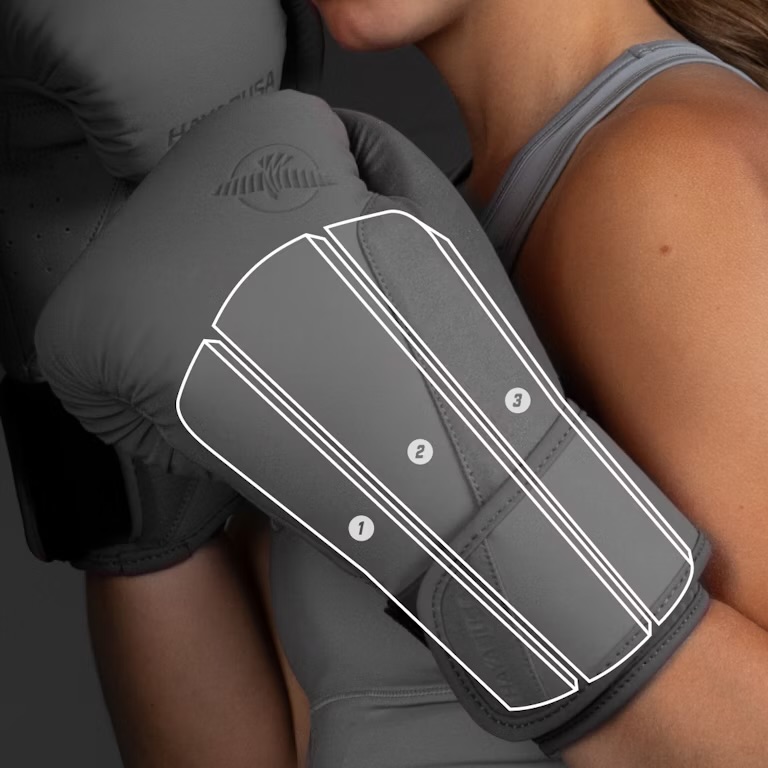
- Real wrist support — a firm, wide cuff and a secure strap (this matters even more for smaller wrists).
- The right weight — 12oz is the sweet spot for most women for bag and pad work; 14–16oz if you'll spar.
- Quality padding that doesn't pack out, so your knuckles stay protected.
The sizing trick
Glove weight (oz) is about padding, not hand size — so a smaller person still wants a proper weight, just in a brand cut to fit slimmer hands. Always wear hand wraps, which also snug up the fit. My full sizing guide walks you through it.
How to test the fit at home
Before you commit, do this quick check once your gloves arrive: make a tight fist inside the glove. Your fingers should reach the end without cramming, and there shouldn't be a big air gap at the tips. Now shake your hand firmly — if your hand slides around, it's too big. Strap the wrist and bend it side to side; it should feel supported and firm, not floppy. A glove that passes all three is one you'll train in happily for years.
The mistakes I see most
- Sizing up “to be safe.” A roomy glove feels comfy on the couch and terrible on the bag — go for a secure fit.
- Skipping wraps. Wraps protect your hands AND snug the fit; never train without them.
- Buying the cheapest pair. Bargain gloves pack out fast and rarely fit smaller hands well — you end up rebuying. Buy once, cry once.
How I’d choose between the T3 and the E1
The T3 gets all the attention, but the E1 is the other Hayabusa pair I train in, and honestly it’s where I’d send a lot of beginners first. It’s the softer, more forgiving line — noticeably more cushioned than my T3s — and it still gets right the two things smaller hands actually need — a compartment your fingers don’t swim in, and a wrist that stays locked down.
Before you buy, here is my verified Hayabusa discount code.
Here’s the thing. This isn’t good glove versus bad glove, it’s how much glove you need for how you actually train. A couple of classes a week, bag rounds, pad work? The E1 fits my hands cleanly and does the job. Training most days, sparring, or you’ve already worn out a pair? The T3 is the one I’d spend on, and mine has been through years of it.
Real talk, don’t buy the pricier pair to prove you’re serious. Buy for the training you’re doing right now and upgrade when your training earns it. A well-fitted E1 beats a T3 you sized up.
Wrap first, then judge the fit
This one trips up almost everybody. You try gloves on bare-handed in your living room, they feel perfect, then you show up to class wrapped and suddenly they’re tight across the knuckles. Your hand wraps are part of the fit, so run the at-home fit test with them on, every time.
And wrap the same way each session before you decide anything. Pile bulk into your palm one day and barely cover it the next, and the same glove will feel like two different gloves. Then you’ll blame the glove.
Gloves also settle. The padding softens a little over your first stretch of hard rounds, so a pair that feels snug the first time you wrap up is usually right, and a pair that already feels roomy is only going to get roomier. Trust that first wrapped fit instead of waiting on a break-in to fix it.
🥊 My pick for smaller hands: Hayabusa
The T3 is the pair I've trained in for 10 years — genuinely the best fit I've found for smaller hands. Code LILO saves you at checkout.
Why I keep coming back to the T3
I've tried a lot of gloves, and Hayabusa's T3 is the one that finally fit my hands right — secure through the fingers, unreal wrist support, and it's lasted me years. Here's my full Hayabusa T3 boxing gloves review if you want the honest 10-year breakdown. Your hands deserve gear that actually fits them, friend. 🥊🌴
Outside the US? Use code LIZZIE on the Hayabusa EU store for the UK and Europe, or shop my Australia storefront.
On choosing between the two models I train in: T3 vs E1.
Measure your hand before you buy anything
This is the step almost everyone skips, including me the first time. Before you look at a single product page, take a soft tape measure and wrap it around your dominant hand at the widest point of your palm, just below the knuckles, with your thumb out of the way. Write the number down.
Do the same around your wrist. Those two numbers tell you more about whether a glove will fit you than the ounce weight ever will, and brands publish sizing guidance against them — Hayabusa has its own chart on the site, and I’d start there rather than guessing.
The reason this matters more for us: glove interiors are usually built around an average adult male hand. A smaller hand in that same shell doesn’t just feel roomy, it sits in a different position inside the glove.
What actually goes wrong when a glove is too big
I spent my first year assuming the problem was me. It wasn’t — the glove was simply bigger than my hand, and these are the things that follow from that:
- You grip to keep it on. Your hand quietly clenches the whole session to stop the glove shifting. You notice it as forearm fatigue and blame your conditioning.
- The wrist never feels locked. A wrist closure designed for a larger wrist runs out of overlap on a smaller one, so it fastens but doesn’t really hold.
- Your hand slides on impact. A little internal movement each time adds up over a long session.
- It never breaks in around you. Padding molds to a hand that fills the glove. A hand swimming inside one leaves it the same shape it came in.
That last point is the one I care about most, and it’s the honest reason I stopped buying cheaper gloves. Over about two years in my Venum Contenders and before that a basic Everlast pair, none of them ever changed shape. My T3s did — they took the shape of my hand specifically. That only happens when the glove actually fits you to begin with.
Wraps change the measurement
Whatever you measure bare, you will be adding wraps on top of it. A quick wrap adds very little; a long traditional wrap with several passes around the hand adds noticeably more. If you wrap thickly and you’re between sizes, that is an argument for the larger option — and if you barely wrap at all, it is an argument for the smaller one.
It’s worth deciding how you wrap before you buy, rather than buying and then changing your wrap to make the glove work.
Your Questions, Answered
What makes a glove better for small hands? A narrower hand compartment and a shorter cuff. Standard gloves often leave slack that lets the hand shift inside, which undermines wrist support.
Should I just buy a smaller weight? Not necessarily — weight and internal fit are different things. A 12oz glove can still be too wide, which is why fit-specific models exist.
Will gloves stretch to fit? They break in and mold somewhat, but they will not shrink. Buying too large hoping it works out is the wrong direction.