



Heads up, friends: this post has affiliate links, and if you shop with my code I may earn a little something at no extra cost to you. I only ever share what I genuinely love. 💛 As an Amazon Associate I earn from qualifying purchases.
Hey friends, it's Lizzie! Pickleball is the easiest sport to start — but the rules confuse everyone at first (the “kitchen”? the weird scoring?). Let me explain them simply so you can walk onto the court with confidence.
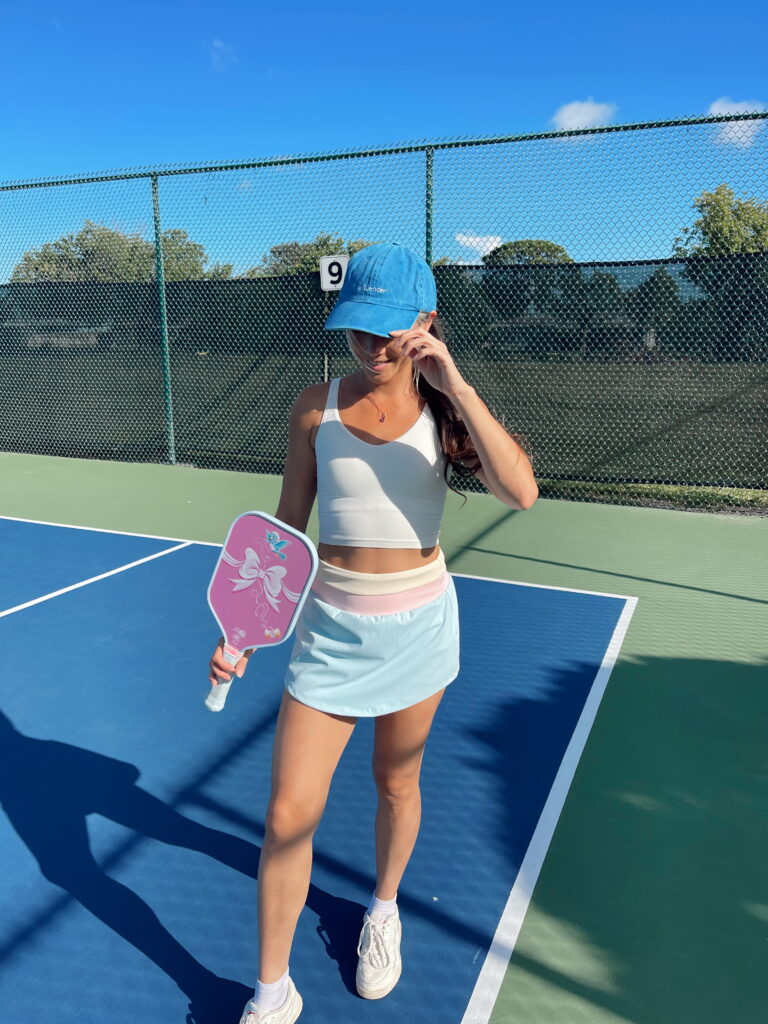
The basics
- The serve is underhand, hit diagonally, and must land past the no-volley zone.
- The double-bounce rule: the ball must bounce once on each side before anyone can volley (hit it out of the air).
- The kitchen (the no-volley zone) — you can't volley while standing in it. Step back first.
- Scoring: only the serving side scores, games go to 11 (win by 2).
Common beginner fouls
The big ones: volleying in the kitchen, serving overhand, and forgetting the double-bounce rule on the return. Don't stress — everyone messes these up at first, and your fellow players will happily remind you.
A few etiquette tips
Pickleball is a friendly, social sport, and a little court etiquette goes a long way as a beginner: call the score clearly before you serve, call your own faults honestly, retrieve stray balls from neighboring courts (and return them between points, not during), and always paddle-tap at the end of a game — it's the pickleball handshake. People are genuinely welcoming, so don't be shy about asking questions.
Just get on the court
You'll learn the rules 10x faster by playing than by reading — and everyone remembers being new. Show up to an open-play session, tell people it's your first time, and let them help. Within a game or two, the kitchen and the scoring will click. 🎾
How the score actually works in doubles (that three-number call, explained)
Real talk, the thing that confused me most as a beginner wasn’t the kitchen, it was people shouting three numbers before every serve. “Four, two, one!” Whaaat? Here’s the secret: in doubles the score is always three numbers, and once you know the order it clicks fast.
- First number = your team’s score.
- Second number = the other team’s score.
- Third number = which server you are, 1 or 2.
So “4-2-1” means your side has 4, they have 2, and you’re the first server. Each team gets two servers per turn. When the first server loses a rally the serve passes to their partner, and when the second server loses a rally it’s a side-out and the ball goes to the other team.
The one weird exception: at the very start of the game the first team to serve gets only one server before the side-out, so they call it “0-0-2” on the opening serve. It’s just the game keeping things fair, since serving first is a small advantage. Don’t overthink it, say the numbers out loud every time, and your partner and opponents will happily keep you straight while you learn.
In or out? The line-call rule beginners always get backwards
Here’s the thing nobody tells you on day one: a ball that lands on the line is IN. All of it, the baseline, the sidelines, even the kitchen line. If any part of the ball kisses the line during a rally, it’s good. Coming from other sports this feels backwards, and I definitely argued a call or two before it finally sank in.
There’s exactly one exception, and it’s on the serve. A serve that lands in the kitchen or touches the kitchen line is out, because the serve has to clear the whole no-volley zone. But land on the baseline, sideline, or centerline on that same serve? Totally in.
- During a rally: ball touches any line = in.
- On the serve: kitchen or its line = out; every other line = in.
One more etiquette piece that pairs with this: your side calls the balls that land on your end of the court, and you only call one out when you’re truly sure. If you and your partner can’t agree or honestly can’t tell, it goes to the other team. Sounds almost too polite, but that’s the culture, and when in doubt, give it to them.
What to bring to your first open play
Real talk: you need less than you think. A paddle (borrow one the first time if you can), a can of outdoor balls if your courts don't supply them, court shoes or clean sneakers with grip, a water bottle you will actually finish, and a set you can move in. Everything I play in is in my Amazon pickleball list below, and nothing on it is fancy.
The one rule I still get wrong
Real talk: I still occasionally volley from inside the kitchen and get the look. Everyone does. The rules on this page take a game or two to understand and a season to stop breaking, and the people you play with will forgive every one of them as long as you call your own faults and laugh about it. That is the whole culture of the sport, and it is why I keep showing up every week.
The fastest way to learn
Honestly? Just play. Find a local open-play session (they're incredibly welcoming to beginners), grab a beginner paddle, and you'll pick up the rules in a game or two. Pickleball is the most fun you'll have getting fit in your 30s — see my beginner guide for the rest. 🎾🌴
Quick questions
Can you volley in the kitchen? No — you can't hit the ball out of the air while standing in the no-volley zone. Step back behind the line first, then volley.
How do you win a pickleball game? Games go to 11 points and you have to win by 2. Only the serving side can score, which is why rallies matter so much.
Is it hard to learn? Not at all — most beginners are rallying within their first session. The rules click fast once you play.
Do I have to serve underhand? Yes — pickleball serves must be underhand and hit diagonally past the no-volley zone.
🛍️ My Amazon list: Pickleball
The paddles, sets and court fits I actually play in, all in one place.
What are the basic pickleball rules? Serve underhand diagonally, let the ball bounce once on each side before volleying, and stay out of the non-volley zone when hitting in the air. Those three cover most beginner confusion.
What is the kitchen in pickleball? The non-volley zone near the net. You cannot hit the ball out of the air while standing in it, though you may enter it to play a ball that has bounced.
How do you score in pickleball? Traditionally only the serving side scores, and games commonly go to 11, win by 2. Rally scoring exists in some formats, so check what your group uses.