
Heads up, friends: this post has affiliate links, including Amazon. As an Amazon Associate I earn from qualifying purchases, at no extra cost to you. I only ever share what I genuinely use and love. 💛
Hey friends, it’s Lizzie! Pickleball gear has gotten genuinely fun to shop for, and I want to talk about the part nobody covers: how to actually put together a set that looks like you instead of like everyone else on the court.
You do not need a specific brand’s whole matching kit to look pulled together. You need a paddle you like, a bag that fits your life, and a couple of small details that make it feel like yours.
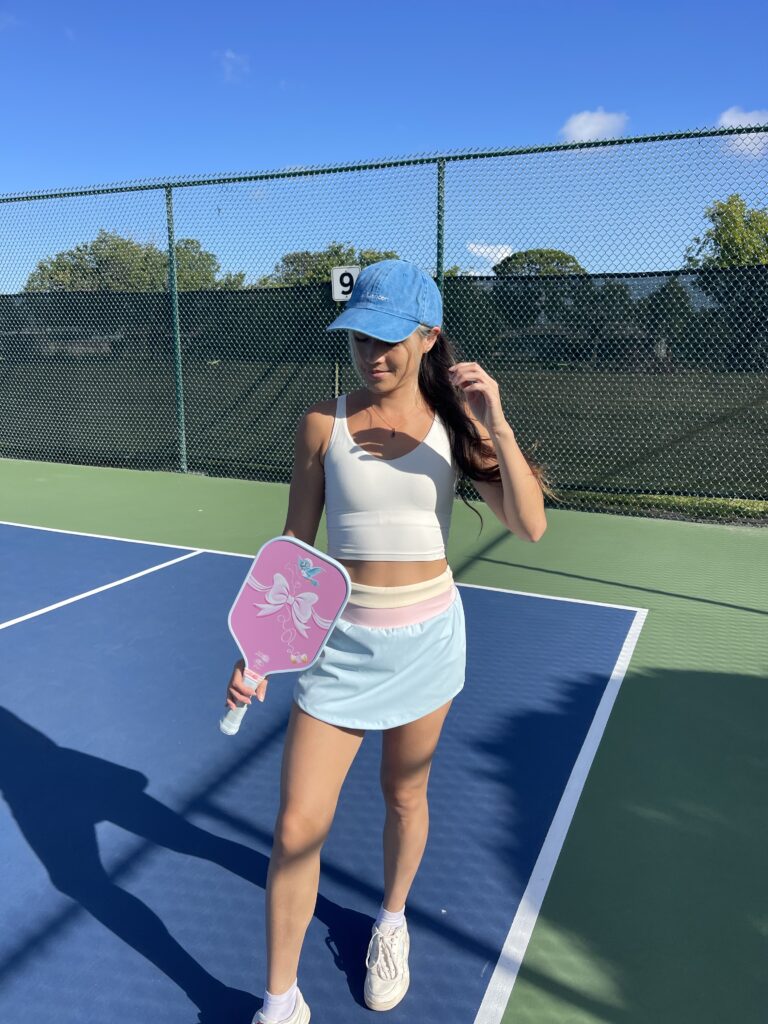
Start With the Paddle, Not the Aesthetic
It’s tempting to shop by color first, but paddle weight and grip size affect how your wrist and elbow feel after an hour on the court way more than the pattern does. Try before you buy if you can — borrow a friend’s, demo one at a local shop, whatever gets a paddle in your hand before you commit. Once you know the weight and grip that feel right, then go shop for the look you actually want.
Mixing and Matching Actually Works
One of my favorite things about where pickleball gear is right now is that you genuinely do not need one brand’s matching set. A bold tie-dye paddle can sit next to a neutral bag and still look intentional, not mismatched. The court is honestly a great place for color you might not wear anywhere else — nobody’s judging a bright paddle the way they might judge a bright blazer at the office.
What Actually Belongs in the Bag
- A paddle cover. Cheap insurance against dings and scratches, and most bags have a dedicated slot for it anyway.
- Extra balls. They crack more than you’d expect, especially outdoors, and nothing kills momentum like a mid-game ball hunt.
- A small towel. Florida humidity does not care about your grip tape.
- Sunscreen, even for indoor courts near windows. I learned this one the hard way.
- Something to actually carry it all in. A dedicated pickleball bag beats stuffing gear into a gym bag — the paddle-specific pockets keep things from getting crushed.
Court Outfits: Function First, Cute Second
The best pickleball outfits are the ones you forget you’re wearing mid-game. Look for something with actual pockets or a built-in ball pocket on the shorts — you will not want to be holding a ball in your hand between every serve. Beyond that, wear whatever color makes you want to actually show up. That’s the whole secret.
Shoes Deserve Their Own Conversation
I mentioned court shoes briefly, but this is worth its own section because it’s the piece of gear people most often get wrong. Running shoes are built for forward motion — heel-to-toe, straight line. Pickleball is constant side-to-side movement, quick stops, and pivots, and a running shoe’s raised heel and narrow base genuinely increase your risk of rolling an ankle on that kind of movement. A dedicated court shoe or a stable cross-trainer with a flatter sole handles lateral movement the way the sport actually demands.
You don’t need to buy court shoes before your first game. But if you find yourself playing regularly, this is the upgrade I’d prioritize before a fancier paddle.
Indoor vs Outdoor Changes What You Need
Outdoor courts mean sun, wind, and heat are all part of the equation — sunglasses with a strap, a hat, and more sunscreen than you think you need. Wind also affects the ball more than people expect, so don’t assume a shot that worked indoors will behave the same way outside. Indoor courts strip out the weather variables but usually mean a harder, less forgiving surface underfoot, so cushioning in your shoes matters more.
If you play both, it’s worth having a slightly different mental checklist for each rather than assuming one kit covers everything.
Taking Care of What You’ve Got
Paddles take more abuse than people expect, especially edge guards from being set down on concrete between games. Rinse grime off after outdoor play, let paddles air dry rather than leaving them in a hot car, and store them out of direct sun when you’re not using them — heat and UV break down the paddle face faster than normal wear does. None of this is complicated, it’s just easy to skip when you’re rushing to the next thing.
Budget Tiers, Roughly Speaking
Paddle prices span a huge range, and more expensive doesn’t automatically mean better for where you’re at. An entry-level paddle is genuinely fine for figuring out if you like the sport and for casual, occasional play — there’s no reason to spend big before you know your grip and weight preference. A mid-range paddle is where most regular players land once they’ve played enough to know what they want, and it’s usually the sweet spot for value. The premium tier tends to matter most for people playing competitively or multiple times a week, where small performance differences actually show up in how you play.
If you’re just starting, resist the urge to buy the most expensive option “so you don’t have to upgrade later.” You’ll actually know what to upgrade to once you’ve played more, and that decision is worth waiting for.
You Don’t Need to Match Your Partner
This one’s just personal preference, but I’d rather see two people on a court in completely different colors that both feel like them than a matched set that feels like a costume. Pickleball is supposed to be fun. Let your gear reflect that instead of a color-coordinated theme.
Your Questions, Answered
Do I need matching pickleball gear to look put together? No, and honestly mismatched-but-intentional usually looks better than a full matching set. A bold paddle with a neutral bag, or a bright outfit with a simple paddle, both work fine. Pick pieces you like individually rather than shopping for a themed set.
What paddle weight is best for beginners? There’s no single right answer, and it depends on your arm and how you play, but a mid-weight paddle is the common starting point while you figure out your preference. If you can demo a few different weights before buying, that beats guessing from a spec sheet.
What should actually be in a pickleball bag? A paddle cover, extra balls, a small towel, sunscreen, and water cover the basics. Beyond that it’s personal — some people carry a change of shoes, others just want the essentials. Start minimal and add what you find yourself wishing you had.
Are running shoes okay for pickleball, or do you really need court shoes? Running shoes are built for straight-line forward motion, and pickleball is constant side-to-side movement, which raises your risk of rolling an ankle in a shoe that is not built for lateral stability. You can start in whatever athletic shoes you already own, but if you keep playing, a real court shoe is worth the upgrade before almost anything else.
How often should you replace a pickleball paddle? There is no fixed timeline, but a paddle that is chipped, delaminating, or feels noticeably “dead” compared to when it was new has lost performance and is worth replacing. For casual players, that might be a year or more; for people playing several times a week, it can come around faster.
🛍️ My Amazon list: Pickleball Favorites
Paddles, sets and court-day essentials, all in one place.
Related reading
- Cute Pickleball Paddles for Women (Pretty Picks)
- At-Home Kickboxing Workout for Women Over 30 (No Equipment)
- Best Boxing Gloves for Women: The Complete Buyer’s Guide
- Best Pickleball Courts in Brevard County
- Best Pickleball Paddle for Beginners (2026)
- Loving Pink Again in My 30s (And Still Doing the Badass Sports)