


This post contains affiliate links. If you shop through them I may earn a small commission at no extra cost to you — I only ever recommend what I genuinely use and love. 💛
Hey friends, it’s Lizzie! 💛 I get asked about my gloves more than almost anything else on this site, and I’ve never actually given the T3s a page of their own — every mention has been buried inside a comparison post or a “best of” list. That felt backwards, because these are the gloves I’ve spent more hours in than any other piece of equipment I own. So here’s the real one: ten years, one pair of gloves I keep coming back to, no comparison chart in sight.
The short version
My dilemma, some weeks: kickboxing plus a new pair of gloves equals a real dent in the budget. A new pair of gloves and a tight budget equals talking myself out of it. Kickboxing and a tight budget equals wearing the T3s one more season, because they’ll genuinely go the distance.
That’s the whole review, honestly. The T3s are the gloves I actually train in, they hold up over years and not months, and at $169 with my code they’re a real purchase but not a reckless one. Everything below is just the detail behind that.
What they’re actually like to train in
The first thing you notice putting them on isn’t the padding, it’s how little they move around your hand. No shifting mid-round, no re-tightening between rounds because the wrist strap crept loose. That sounds small until you’ve trained in a pair that doesn’t do that, and then you realize how much attention you were spending on your gloves instead of on the bag.
The wrist support is the part I’d point to first if someone asked what the price is actually buying you. Ten years in, my wrists still feel the same after a heavy pad session as they did before it. That’s not nothing — a lot of gloves start to feel like work by year three.
Bag work, pad work, mitts — that’s where I’ve put the vast majority of my hours in these, and that’s where they’ve earned the recommendation. I’m not going to pretend to you they’re a specialty sparring glove, because that’s not primarily how I’ve used them.
How they’ve held up, honestly
This is the part most reviews skip, because most reviewers haven’t owned a pair long enough to answer it. I have.
The leather has softened with use, the way good leather does, without splitting or cracking anywhere. The stitching at the seams — usually the first thing to go on a cheaper glove — is intact. The padding has compressed slightly with thousands of rounds behind it, which is just physics, not a defect; it still does its job.
The one thing I’d actually recommend, brand aside: let them air out fully between sessions rather than shoving them straight back in a closed gym bag. It’s the cheapest thing you can do for any pair of gloves, and it’s the thing most people skip.
Three pairs, and the honest reason I own three
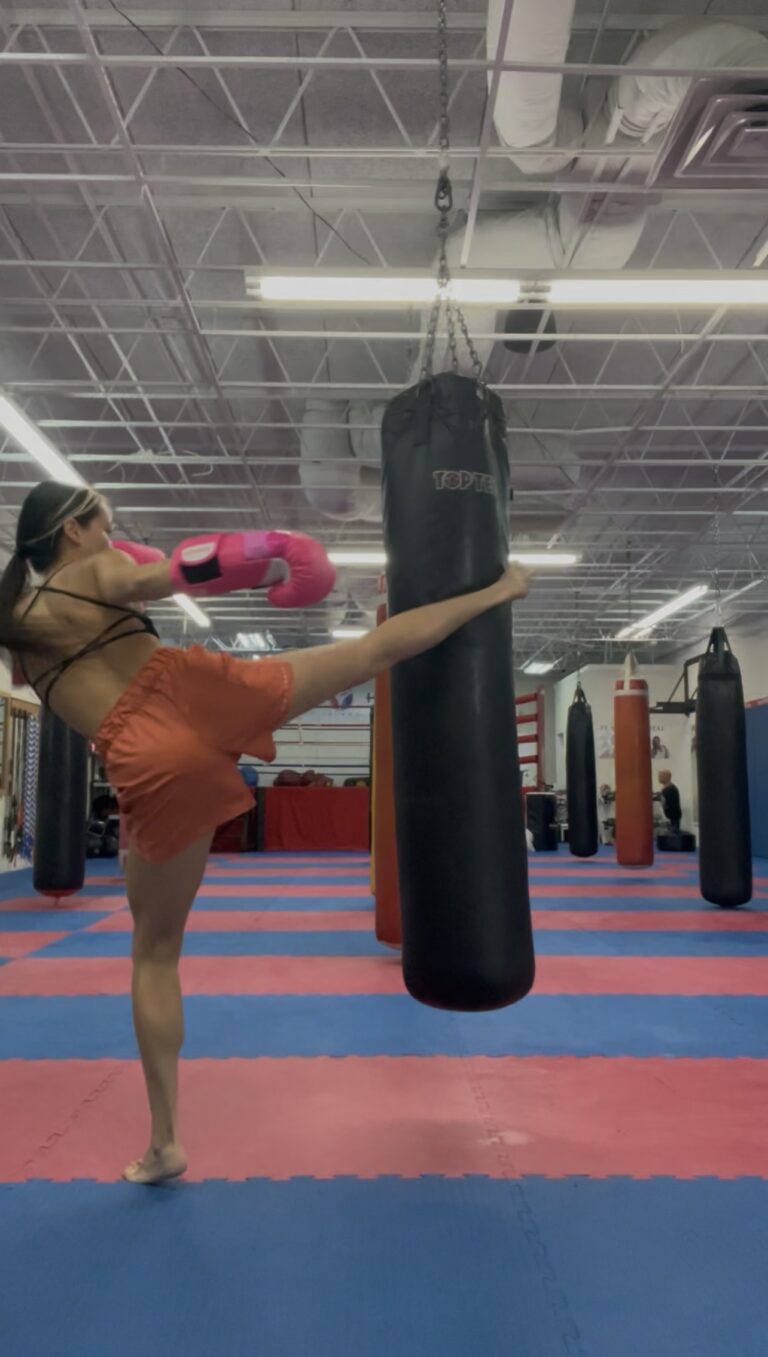
I have the T3 in white, pink and black. The practical reason is rotation: gloves need a full day to dry out, and with three pairs no pair goes back on while it is still damp, which is a big part of why mine have lasted the way they have. The honest reason is that the colors are fun and I like matching my gloves to what I am wearing. Both reasons are allowed.
Each pair broke in on its own schedule. A new T3 takes a few weeks to mold to your hand, and once it has, it fits you and nobody else. That molding is the thing no cheaper glove I owned ever did.
What they replaced
Before Hayabusa I trained in a gray Venum Contender for about two years, and before that a basic pink Everlast pair. Both were fine for what they cost. The switch to the T3 was night and day on exactly three things: wrist support, durability, and the way the glove molded to my hand instead of staying generic. Ten years later those are still the three things I would point to first.
Where my other gloves fit around them
The T3 is my default, but it is not the only pair in the bag. My blue E1s are softer and absorb more of the punch, so they come out for long heavy-bag sessions and they give the T3s a rest day. My 12oz T360s, which came in my ambassador package, are the firmer, more structured pair for days when wrist lockdown is the whole point. If you can only buy one, it is still the T3, and T3 vs E1 is where I explain how to choose.
Sizing — get this right before anything else
The single most common mistake I see beginners make isn’t about the T3s specifically, it’s about glove sizing generally: people guess, and they guess wrong, and then they blame the glove. I wrote a full breakdown here: what size boxing gloves do I need — read that before you order, not after.
If you’re newer to training and trying to figure out whether you’re even ready for a pair at this price point, buying your first Hayabusa is the honest starting point I’d send you to first.
🥊 The gloves I actually train in
T3s are $169, and my code takes 10% off. It doesn’t stack with a sale — one code per order — so if theirs is bigger, use theirs. Ten years in, still my answer when someone asks what to buy.
Code: LILO
Who I’d actually point at these
Get the T3s if: you’re training more than a couple times a week, you’ve been at it long enough to know you’re staying, and you want one pair that stops being a decision you have to revisit. That’s exactly who I bought mine as.
Consider the E1s instead if: you’re newer, or you’re not ready to spend $169 on something you haven’t fully committed to yet. They’re $99.99, they’re a real glove from the same brand, and I’ve written about that pairing in my full breakdown of every Hayabusa model.
I’ve also put the T3s directly up against other brands if you’re still deciding between manufacturers, not just models: Hayabusa vs Rival and T3 vs Venum vs Sanabul both go deep on that.
T3 Review FAQ
Are the Hayabusa T3 gloves true to size?
Yes, in my experience — but glove sizing depends more on your hand and your wrap thickness than on the brand. Check my full sizing guide before you order rather than guessing off a general chart.
How long do Hayabusa T3 gloves actually last?
Mine have held up for years of regular bag and pad work — stitching intact, leather softened but not cracked. How long any glove lasts depends heavily on how often you train and whether you let them dry out between sessions.
Are the T3s good for sparring, or just bag work?
I’ve used mine primarily for bag work, pad work and mitts. If sparring is your main use case, that’s worth factoring into your decision alongside your gym’s own glove requirements.
Should I get the T3 or the E1?
T3 if you’re training regularly and know you’re staying. E1 if you’re newer, or you want something softer underhand — it’s a real glove, not a downgrade, just an earlier step. I own both, and I compared them properly in T3 vs E1.
This is my honest experience after years of actually wearing these — not a spec sheet. Prices are what I saw when I wrote this and can change, so always check before you check out.
Looking at the other models? Hayabusa T360 vs E1.
Outside the US? Use code LIZZIE on the Hayabusa EU store for the UK and Europe, or shop my Australia storefront.
Weighing it against the other pair I own? Hayabusa T3 vs E1.