



Budgeting in Your 30s: Smart Habits That Build Wealth Over Time
Affiliate Disclosure: This article may contain affiliate links. If you purchase through them, we may earn a small commission at no extra cost to you. We only recommend resources we trust.
In your 20s, money often feels like survival mode: paying rent, juggling student loans, maybe saving a little. By your 30s, the stakes rise. Family, homes, retirement, and lifestyle upgrades all compete for dollars. The good news? Budgeting in your 30s doesn’t mean penny-pinching forever—it means creating smart systems that let wealth grow automatically over time. This guide breaks down simple, repeatable habits that work no matter your income level.
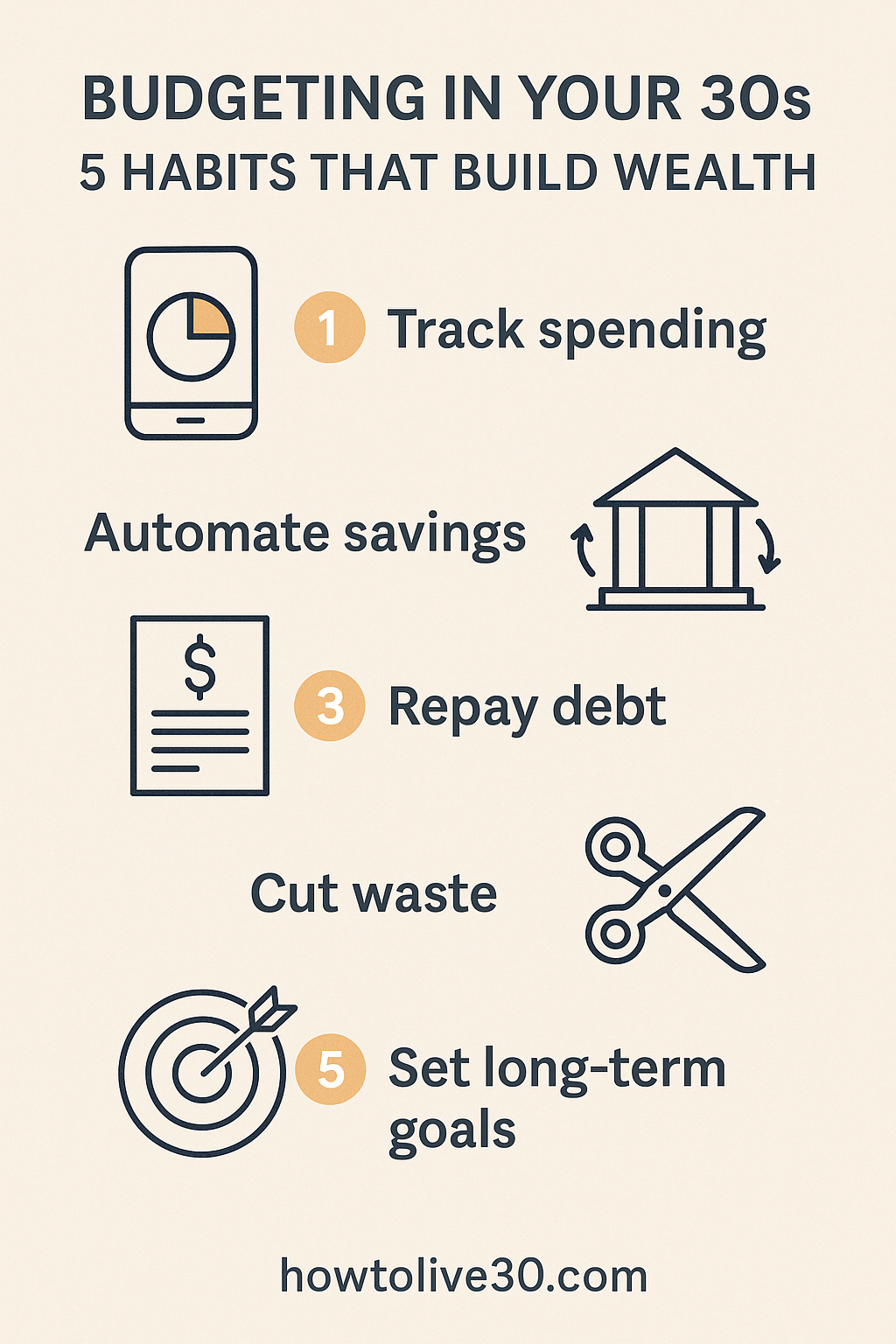
Budgeting in Your 30s: Why It Matters
Your 30s are a wealth-building decade. Time is still on your side, but responsibilities add up. Every dollar you save or invest today compounds into thousands later. Without a budget, it’s easy to drift into debt and miss opportunities.
Budgeting in Your 30s: The Core Habits
- Track your spending: Awareness beats guessing. Use a simple app or spreadsheet.
- Set clear goals: Debt freedom, a home down payment, retirement, travel—your budget serves these.
- Pay yourself first: Automate savings and investments before spending.
- Cut waste: Subscriptions, fees, and impulse buys often add up to hundreds monthly.
Budgeting in Your 30s: The 50/30/20 Framework
A simple system:
- 50% needs: Housing, food, bills.
- 30% wants: Fun, travel, shopping.
- 20% savings/debt repayment: Automate this category first.
Pro Resource: Many people in their 30s automate investing into index funds. If you’re US-based, consider providers like Vanguard or Fidelity. Always research before investing and consult a financial professional for advice.
Budgeting in Your 30s: Emergency Fund First
Life happens—job loss, car repairs, health bills. Having 3–6 months of expenses in a savings account prevents debt spirals. Start with $1,000 as a mini-goal, then build steadily.
Budgeting in Your 30s: Debt Strategy
- Snowball: Pay smallest balances first for quick wins.
- Avalanche: Pay highest interest first to save money long-term.
Either works—what matters is momentum.
Budgeting in Your 30s: Automate, Automate, Automate
Set up automatic transfers for savings, investments, and bills. Removing willpower from the equation is the secret weapon of successful budgeters.
Budgeting in Your 30s: Lifestyle Inflation Check
Raises and promotions are golden opportunities—if you avoid inflating expenses. Try this: every time your income grows, save at least half of the increase before upgrading your lifestyle.
Budgeting in Your 30s: Long-Term Vision
Think beyond next month. A budget is the tool that funds future freedom—retirement, travel, a family home, or even starting a business. The habits you lock in now set up the decades ahead.
Pro tip: Review your budget once a month, not daily. The goal is sustainable systems, not obsessive tracking.
Your Next Step: Budgeting in Your 30s Made Simple
Budgeting doesn’t need to be restrictive. Start with awareness, automate the basics, and align spending with your values. Over time, budgeting in your 30s shifts from a chore to a freedom plan—because your money works for you, not the other way around.
Action Step: This week, cancel one unused subscription and redirect that money to savings. Small moves compound into real wealth.
Don’t Stop at Saving — Put the Money to Work
Here’s the part most budgeting advice skips right over: where that 20% actually goes once it leaves your checking account. Saving cash in a plain account feels responsible, but over time inflation quietly chips away at it. Your 30s are when you want that money growing, not just sitting still.
If your employer offers a 401(k) match, that’s the first place your savings should go — it’s the closest thing to free money you’ll ever get, and skipping it is like turning down a raise. After that, a Roth or traditional IRA gives your money a tax advantage that a regular savings account never will. You don’t need to understand every detail to start. You just need to open the account and set up one automatic contribution.
And no, you don’t need to be a stock-picker. Boring, low-cost index funds do the heavy lifting for most people. The goal isn’t to get clever — it’s to be consistent. The same discipline that builds an unbreakable habit in the gym is exactly what builds wealth here: small, repeatable, automatic.
The Budgeting Mistakes I Made (So You Don’t Have To)
A budget doesn’t fail because you’re bad with money. It usually fails because of a few quiet traps that catch almost everyone. Here are the ones I see most:
- Making it too strict. If your budget leaves zero room for fun, you’ll abandon it by week two. Build in guilt-free spending on purpose.
- Forgetting the irregular stuff. Car registration, holidays, that annual subscription — they’re not surprises, they’re just spread out. Skipping them wrecks an otherwise solid month.
- Checking it once and never again. A budget isn’t a document, it’s a habit. Five minutes a week beats a perfect spreadsheet you never open.
- Comparing your chapter to someone else’s highlight reel. The vacations and renovations you see online are often funded by debt you can’t see.
If your 20s were about figuring out how money works, your 30s are about forgiving yourself for the lessons it took to learn — and adjusting instead of quitting.
Sinking Funds: The Trick That Ends Money Panic
Want to know the single change that made budgeting actually click for me? Sinking funds. The idea is simple: instead of getting blindsided by a big expense, you save for it a little at a time, in advance.
Take any predictable-but-occasional cost — say a $600 expense you know is coming in six months. Divide it across those months and set aside $100 each time. When the bill lands, the money’s already there. No scrambling, no credit card, no stress. You can do this with a few separate savings accounts or just label categories in your budgeting app.
This works beautifully for anyone with uneven income too. If you’ve got a side hustle that fits a busy 30s lifestyle, budget off your lowest typical month and funnel the extra into sinking funds and savings. The freedom you feel when an “emergency” is just a Tuesday? That’s the whole point.
About HowToLive30: Practical fitness, mindset, skincare, and budgeting for your best decade. We keep guides simple, science-aware, and doable.