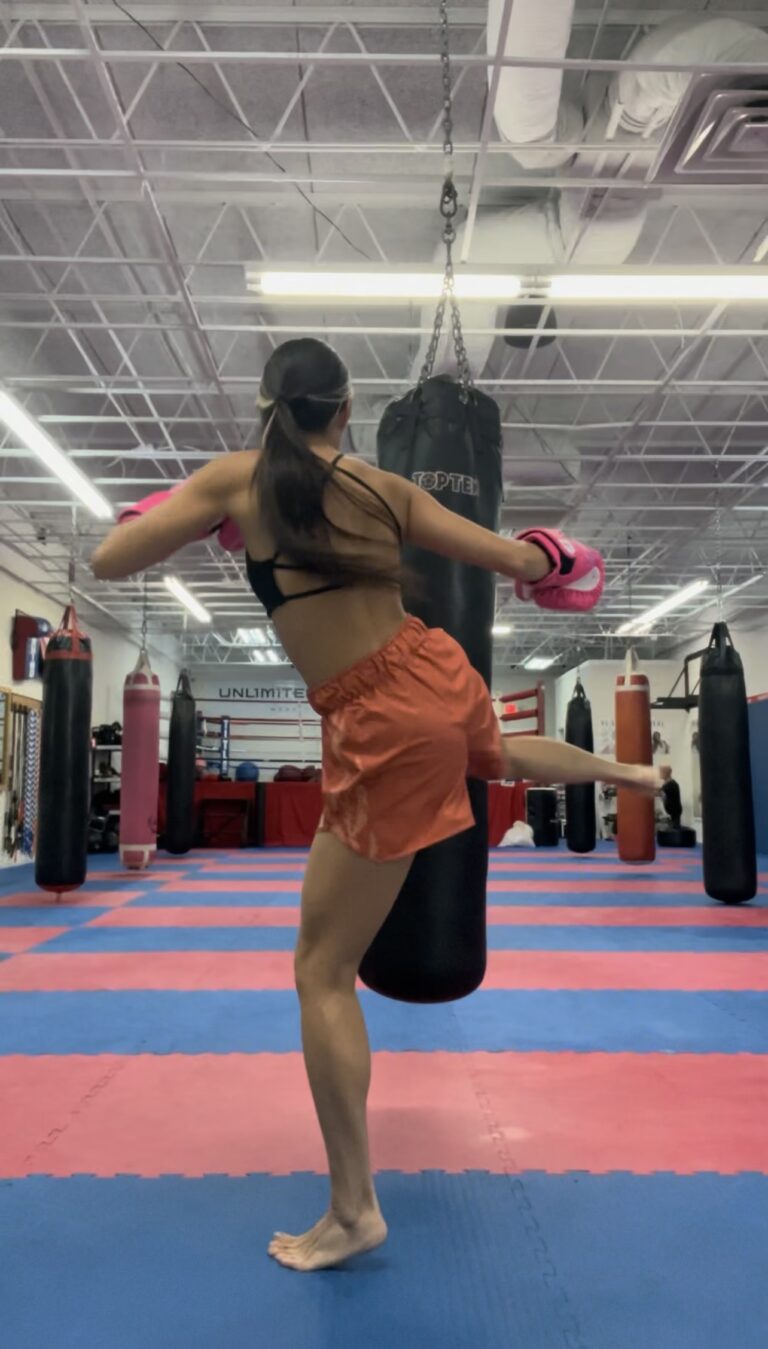



Hey friends, it’s Lizzie! I trained in the gray Venum Contender for about two years before Hayabusa, and my 12oz T360s came to me in my ambassador package when that model first launched. So this is a real before-and-after, not a spec-sheet exercise.
Heads up: I’m a Hayabusa ambassador and I earn a small commission if you use my code or shop through my links. No extra cost to you, and it doesn’t change what’s below.
Short version: they’re not really competing for the same buyer, and once you see why, the decision gets easier.
The quick answer
Venum if you’re newer, on a budget, or you want one solid pair without a big commitment. The Contender 1.5 runs about $44.99–$49.99.
Hayabusa T360 if you’re training regularly and you want the most locked-down wrist of anything in the Hayabusa range. Mine are $169, and they’re what I reach for when I want a cardio-intense session and to build strength.
What the T360 does that the Contender never did
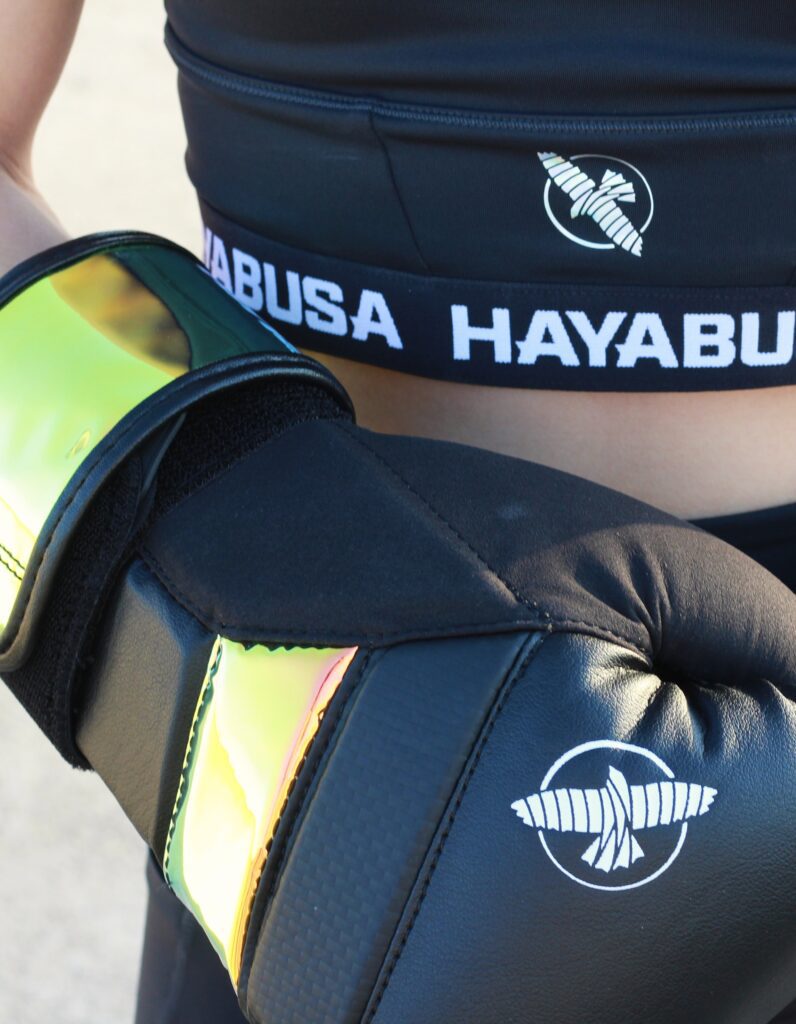
The T360’s whole personality is the dual-cross wrist strap system. It wraps and locks in a way nothing I owned before Hayabusa came close to. My Venums held my wrist fine early on, and less well as they aged — the T360 doesn’t drift like that.
They’re also built from engineered microfiber rather than real leather, which sounded like a downgrade before I owned a pair. It isn’t. Mine have molded to my hand and stayed intact, and the layered padding hasn’t flattened the way my old Contenders eventually did.
That molding is the thing that keeps surprising me. My Venums held the exact shape they shipped in for the whole two years I owned them. The T360 slowly became mine.
Where the Contender is still the smarter buy
I’d be doing you a disservice if I only sold you the upgrade.
At around $45, the Contender 1.5 is a genuinely good glove, and two years of regular training out of it was a fair return for the money. If you’re not yet sure you’re staying with the sport, spending $169 to find out is the worse decision. Venum also makes the Elite line at roughly $99.99–$109.99 — I’ve never trained in those, so I won’t offer a verdict on them.
Price, side by side
- Venum Contender 1.5 — about $44.99–$49.99
- Venum Elite — about $99.99–$109.99 (never trained in these)
- Hayabusa T360 — $169, about $152 with my code
Who the T360 is actually for
Not every session, for me. I use my 12oz T360s specifically when I want a cardio-intense session and to build strength — lighter on the hand than my T3s, with the wrist doing more of the work so I’m not thinking about it.
If you want the pair I still reach for most overall, that’s my T3s, and I compared the two properly in T3 vs T360. If cushioning for long bag sessions is what you’re after instead, see T360 vs E1.
The cost-per-year math
A $45 glove replaced every couple of years and a $169 glove that holds its shape for far longer land closer together than the shelf prices suggest. That doesn’t make the Contender the wrong choice — it makes it a cash-flow decision, not a value one. I ran the full numbers in is Hayabusa worth the money.
Sizing if you’re switching brands
Don’t assume your Venum size carries over. Hayabusas run snug before break-in and the fit changes once you’re wrapped. My sizing guide, and this one if you have smaller hands like me.
Where my experience ends
To be precise: the Venum I owned was the gray Contender, so that’s the pair I can speak to first-hand. I haven’t trained in their Elite or Giant lines. My T360 assessment is from years of actually wearing mine. I’ve also owned Everlast and Sanabul — the full ladder is in four glove brands in ten years.
Price and the code
My code LILO takes 10% off Hayabusa in the US, and it doesn’t stack with a site-wide sale — one code per order.
Shop Hayabusa with code LILO →
Outside the US? Use code LIZZIE on the Hayabusa Europe store, or shop my Australia storefront.
What those two years actually looked like
Regular classes, a fair amount of bag work, nothing especially high-intensity by design — the Contenders were entirely adequate for that. What I notice now, looking back, is that I never once thought about my wrists during that period. It’s only in hindsight, after training in the T360’s lockdown, that I can tell you what I was missing.
That’s the honest case for trying the upgrade before you think you need it, not after.
The two, side by side
| Venum Contender 1.5 | Hayabusa T360 | |
|---|---|---|
| Price | About $44.99–$49.99 | $169 (about $152 with my code) |
| Closure | Single strap | Dual-cross strap, the most locked-down I own |
| Material | Synthetic | Engineered microfiber, not real leather |
| My pair | Gray, about two years | 12oz, from my ambassador package |
| I reach for it when | It was my only pair | Cardio-intense sessions, building strength |
Why microfiber turned out not to matter
“Not real leather” sounded like a downgrade before I owned a pair. In practice mine have molded to my hand and the layered padding hasn’t flattened, which is more than I can say for the leather-look synthetic on my old Contenders.
The material spec is the part people argue about online. The closure is the part you actually feel every session.
If you are upgrading from a budget pair
Expect the wrist to feel different before anything else does. The padding difference is real but gradual; the closure difference is immediate, and it is the thing you will notice on your first session.
Expect a short adjustment too. Any glove with more structure takes a little getting used to if you have been in something softer, and that is not a sign you bought wrong.
What I would check before ordering
Your size, wrapped, not bare-handed — and do not assume your Venum size carries over. Beyond that, decide honestly how often you train. The T360 earns its price at several sessions a week. At one session a week, the Contender was genuinely adequate for me for two years.
The one-line version
The Contender is a good $45 glove that lasted me two years. The T360 is a $169 glove I am still training in, and the difference is the wrist and the way it molded to my hand.
Start where your budget and your certainty actually are. Both answers are defensible; only buying the expensive pair before you know you are staying is genuinely a mistake.
Also worth reading: Hayabusa T3 vs Venum and my full T360 review.
Your Questions, Answered
Is the T360 better than Venum? For me, clearly — the wrist lockdown and durability aren’t close. But the Contender is a genuinely good $45 glove, and it isn’t a mistake if that’s where you’re starting.
Which is better for beginners? The Venum Contender, if you’re not yet sure the sport will stick.
What do you actually use the T360 for? Cardio-intense sessions and building strength — it’s lighter on the hand than my T3s while still locking the wrist down.
Is the Venum Elite comparable to the T360? I’ve never trained in the Elite, so I won’t guess. I only write first-hand about gear I’ve actually worn.
Is the T360 worth it over a Venum Contender? If you are training regularly, yes — the dual-cross closure is the most locked-down of anything I own, and the microfiber has held its shape. If you are unsure about the sport, the Contender at around $45 is the sensible stop first.
Is engineered microfiber worse than leather? It sounded like a downgrade to me before I owned a pair. In practice mine molded to my hand and the padding has not flattened, which is more than my old synthetic Contenders managed.
What weight T360 should I get? Mine are 12oz, which suits the cardio-intense sessions I use them for. Weight is a personal preference — fit matters more than the number on the cuff.
Can I use the T360 for sparring? Ask your gym. Most have their own rules on glove weight and condition for partner work, and that decides it more than the model does.
T360 or T3 if I can only buy one? The T3 is my overall favorite and the one I reach for by default. The T360 wins if wrist lockdown is your priority.
Some links above are affiliate links — I earn a small commission at no extra cost to you, and I only link gear I actually train in.