


Hey friends, it’s Lizzie! This comparison comes up constantly, and it usually gets answered badly — because these two gloves aren’t really competing for the same buyer.
The disclosure first, because it belongs at the top.
Where my experience ends
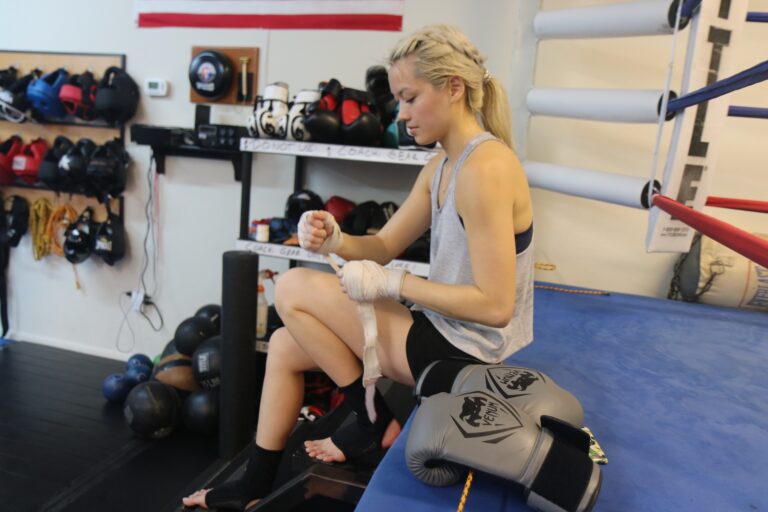
I have never trained in Winning. My Hayabusa assessment is ten years of kickboxing across a T3 in three colourways, a 12oz T360 and an E1. Winning I’m discussing on price, positioning and reputation — not on my own use.
I’m not going to review a $390 glove I’ve never put on, and I’d be a bit suspicious of anyone who does.
The price gap is the whole conversation
- Winning MS-500 (14oz) — around $390 from the official US store, and often more through resellers
- Hayabusa T3 — $169, about $152 with my code
- Hayabusa E1 — $99.99, about $90 with my code
Winning is roughly two and a half times a T3 and close to four times an E1. At that gap, “which is better” stops being the useful question. The useful question is what you’re actually doing in them.
What Winning is known for
Winning’s reputation is built on one thing above all: hand protection. They’re widely regarded as the benchmark for sparring padding, and people who spar seriously and often are the ones who tend to consider them worth the money.
That’s a genuine, specific reputation, and I’m happy to report it as reputation rather than dress it up as my own finding.
Who each one is actually for
Winning makes sense if you spar frequently, you’re training at a high level, and protecting your hands over years is worth a serious outlay to you.
Hayabusa makes sense if you’re like most people reading this — training a few times a week, doing bag work, pads and classes, maybe some sparring, and you want excellent gear without a four-hundred-dollar decision.
For my training, the T3 at $169 is the right answer, and after ten years I’ve never once felt under-equipped.
What I can speak to
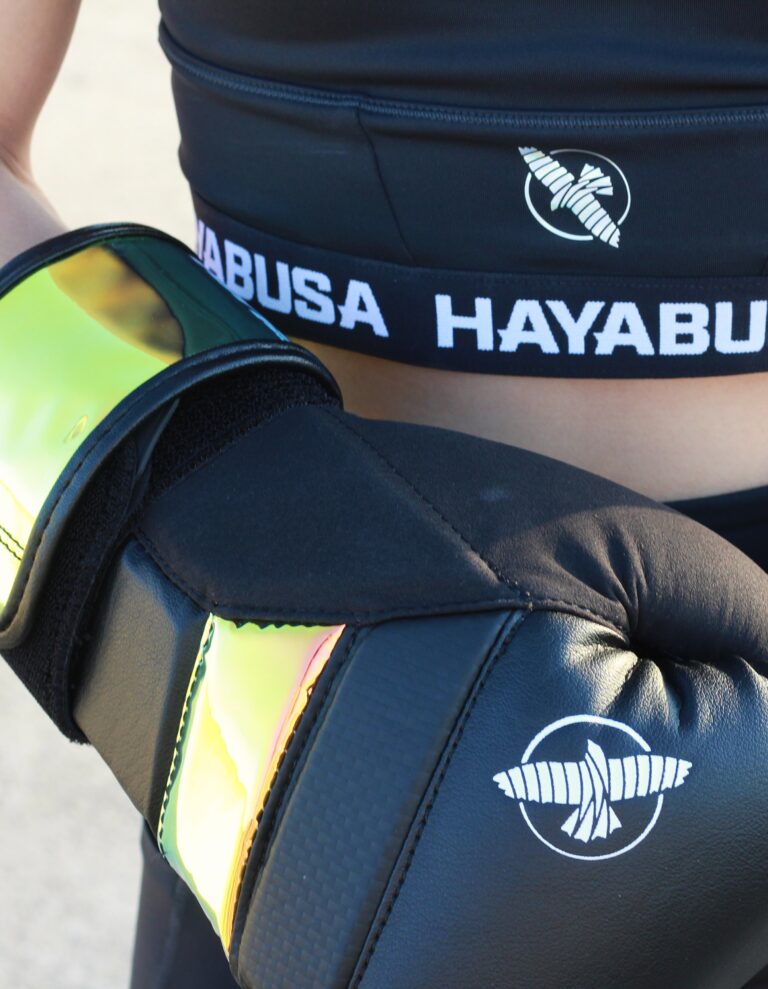
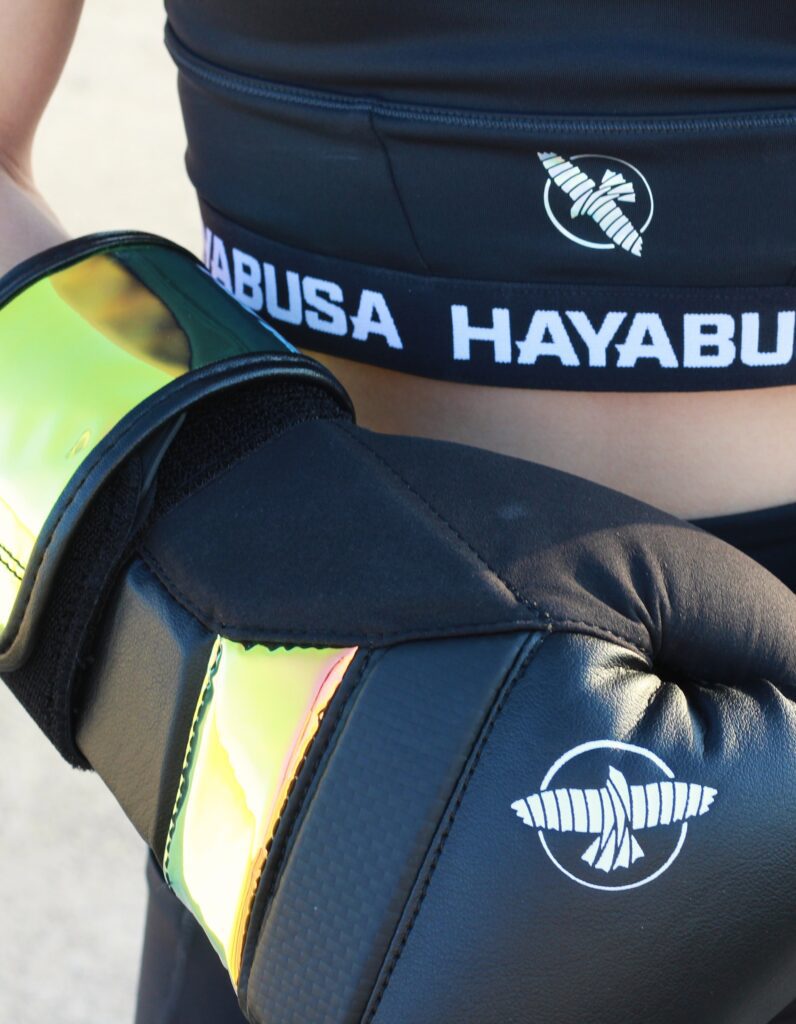
My T3s give me the right amount of protection while still letting me feel where my punches land — which is exactly the trade I want. The wrist support is the reason I’d buy them again, and the reason I don’t finish sessions noticing my wrists.
They also moulded to my hand over time, which none of the cheaper gloves I owned before ever did. If you want the softest, most absorbing option in the range for long bag sessions, that’s the E1; my full T3 write-up is here.
The honest middle ground
If you’re asking this question at all, you’re probably not a professional. And the realistic version of “should I spend $390?” is usually: spend $169 on a T3, and put the other $220 toward a second pair, decent wraps, and actually training more.
Rotating two pairs so each dries properly will do more for your hands over five years than one very expensive pair that never gets a day off. That’s the logic behind why I rotate my gloves.
If you’re sizing up either
Fit decides more than brand does. Gloves run snug before break-in and change once you’re wrapped. My sizing guide, and this one if you have smaller hands like me.
Price and the code
My code LILO takes 10% off Hayabusa in the US, and it matches whatever site-wide sale is running if that one’s bigger.
Shop Hayabusa with code LILO →
Outside the US? Use code LIZZIE on the Hayabusa Europe store, or shop my Australia storefront.
What I’d actually do with the $220 difference
If someone asked me directly — and people do — I wouldn’t tell them to bank it. I’d tell them to put it toward a second pair and a proper set of wraps, so nothing ever goes back on damp and one bad session doesn’t put you out of gear entirely. That’s a more useful upgrade than a single more expensive pair for most people training a few times a week.
The honest signal that you’ve outgrown a mid-tier glove
It isn’t a number of months or sessions. It’s noticing your wrists specifically, before your arms, at the end of a session. That’s the wrist support conversation, and it’s the same reason I reach for the T3 over anything cheaper I owned before it.
The two, side by side
| Hayabusa T3 | Winning MS-500 | |
|---|---|---|
| Price | $169 (about $152 with my code) | Around $390 from the official US store |
| Have I trained in it | Yes, years — white, pink and black | No |
| Known for | Wrist support and durability | Hand protection, the sparring benchmark |
| Who buys it | Regular training, bag, pads, some sparring | Frequent, high-level sparring |
| Availability | Straightforward | Often limited stock, resellers charge more |
What the price gap buys in practice
At two and a half times the price, the question stops being “which is better” and becomes “how often are your hands taking real impact from another person.” If the answer is most weeks, the people who spar seriously make a case I’m not going to argue with. If the answer is rarely, the T3 has never once left me wanting more glove in ten years.
A note on buying Winning secondhand
Because stock is limited, a lot of Winning listings are resale. If you go that route, be aware you’re buying padding with unknown history — and padding history is precisely what you’re paying Winning for in the first place.
Also worth reading: is Hayabusa worth the money.
Your Questions, Answered
Are Winning gloves worth $390? If you spar often and at a high level, people who do say yes. For most people training a few times a week, I’d genuinely struggle to justify it.
Is Hayabusa as good as Winning? I can’t tell you that honestly, because I’ve never worn a Winning. What I can tell you is that ten years in Hayabusa has never left me wanting more glove.
What’s the best glove under $200? The Hayabusa T3 at $169 is my pick, and it’s what I actually train in.
Have you trained in Winning? No. First-hand, I can only speak to Hayabusa, Venum, Everlast and Sanabul.
Are Winning gloves worth $390? If you spar frequently and at a high level, the people who do say yes. For most people training a few times a week, I would struggle to justify it — and I say that as someone who has never trained in a pair.
What makes Winning so expensive? Their reputation is built on hand protection, and they are made in relatively small volumes in Japan. I am reporting that as reputation, not as something I have tested.
Is Hayabusa as protective as Winning? I genuinely cannot tell you, because I have never worn a Winning. What I can say is that ten years in Hayabusa has never left me wanting more glove for the training I actually do.
What should I buy if I spar every week? That is exactly the situation where the Winning argument gets serious. Talk to people at your gym who spar as often as you do — their hands are the relevant evidence, not mine.
Is there a middle option? The T3 at $169 is the middle option, and it is the one I train in.
Some links above are affiliate links — I earn a small commission at no extra cost to you, and I only link gear I actually train in.