


This post contains affiliate links. If you shop through them I may earn a small commission at no extra cost to you — I only ever recommend what I genuinely use and love. 💛
Hey friends, it’s Lizzie! Let me guess — you tried a scoop of some neon pre-workout, and instead of feeling like a warrior, you felt like you’d chugged six espressos and gotten bad news at the same time. Shaky hands, racing heart, a little anxious, and then a hard crash two hours later. I’ve been there. After a decade of kickboxing on the Space Coast, I’ve cycled through more pre-workouts than I’d like to admit, and I’ve learned that the jittery, wired feeling isn’t a sign it’s “working.” It usually means the formula is fighting you.
The good news? You can absolutely get real, usable training energy without the buzzy mess. It comes down to understanding what causes the jitters in the first place, then choosing (and dosing) a smoother option. Let’s break it all down honestly — the real pros, the real cons, and who each option is actually for.
What actually causes the jitters
The jitters aren’t random. There are usually a few culprits working together, and once you can spot them, picking a better product gets a lot easier.
- Too much caffeine. A lot of “hardcore” pre-workouts pack 300-400mg of caffeine per scoop. That’s the equivalent of three or four cups of coffee hitting your system at once. For most people, that’s simply more than the body wants in one sitting.
- Your personal sensitivity. Caffeine tolerance is genetic — some of us metabolize it slowly, so even a moderate dose lingers and feels intense. If coffee makes you anxious, pre-workout will too, only more so.
- An empty stomach. Slamming stimulants with zero food is a fast track to shakiness, nausea, and that hollow, over-caffeinated feeling.
- Proprietary blends. When a label says “energy blend: 6,000mg” without telling you how much of each ingredient is in there, you have no idea how much caffeine or how many random stimulants you’re actually taking. That guesswork is where a lot of bad reactions come from.
Notice that most of these are fixable. You’re not doomed to be a “can’t handle pre-workout” person — you just need a smarter formula and a smarter approach.
How to find a smoother option
When I’m reading a pre-workout label now, I look for a short list of green flags. These are the things that separate a clean, focused energy product from a jittery mess.
- Moderate caffeine, around 100-200mg. This is my sweet spot for training energy without the overload. It’s enough to feel switched-on and strong, but not so much that your heart is pounding before you even warm up.
- L-theanine in the formula. This is the big one. L-theanine is an amino acid (naturally found in tea) that takes the sharp, anxious edge off caffeine and turns it into calm, smooth focus. A caffeine-to-theanine pairing is honestly the single best thing you can look for if jitters are your problem.
- Fully disclosed doses, no mega-stim blends. You want to see exactly how much caffeine you’re getting, and you want to skip products stacking three or four stimulants on top of each other. More stims does not equal a better workout — it usually just equals more side effects.
- Ingredients you recognize. Citrulline for pump, beta-alanine for endurance (that’s the harmless tingle, not jitters), electrolytes for hydration — those are workhorse ingredients that don’t wire you up.
Stim vs. non-stim pre-workout
Here’s something a lot of people don’t realize: you don’t actually need caffeine to have a great workout. Pre-workouts come in two camps, and both have a place.
Stim pre-workouts contain caffeine and give you that alert, energized push. They’re great for early morning sessions, sluggish days, or when you genuinely need to wake up and move. The trick, as we covered, is keeping the dose moderate and looking for L-theanine alongside it.
Non-stim (stim-free) pre-workouts skip the caffeine entirely and rely on ingredients like citrulline, beta-alanine, and electrolytes for pump, endurance, and hydration. These are perfect for evening training when you don’t want caffeine wrecking your sleep, or for anyone who’s genuinely caffeine-sensitive and wants zero jitter risk. You still get a real performance boost — just without the buzz. Honestly, if pre-workout has never agreed with you, a good non-stim option is worth trying before you write the whole category off.
Many people do best rotating: a moderate stim option for morning training, and a non-stim on late or high-anxiety days. There’s no rule that you have to pick one forever.
My honest picks for 2026
I want to be upfront — everyone’s body is different, so I can’t promise any single product will feel perfect for you. But these are the ones I keep coming back to because they respect the “energy without the mess” philosophy.
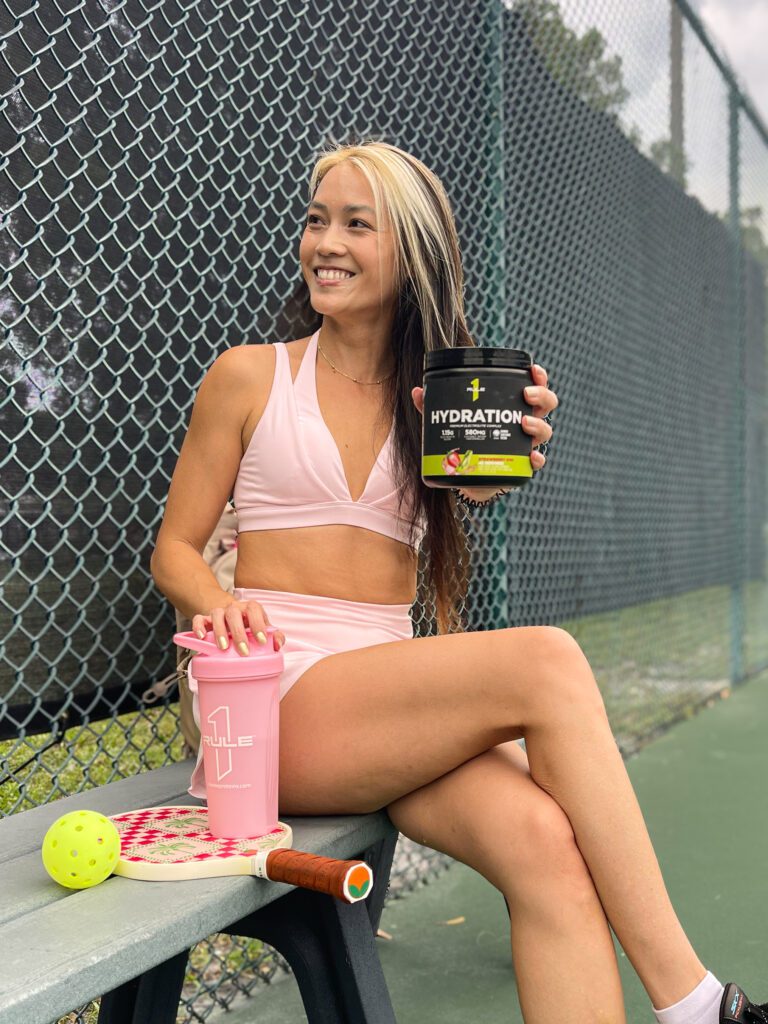
For actual training: a moderate, clean option like Rule One. This is my go-to for kickboxing and lifting sessions. The caffeine sits in that sensible moderate range rather than blasting you, and the formula leans on the real workhorse ingredients instead of a laundry list of stimulants. It gives me focused, steady energy that carries through a full session without the shaky comedown afterward. If you want to try it, my code LILO works at checkout. Start with a half scoop your first time — I mean it — so you can feel how your body responds before committing to a full dose.
For lighter everyday energy: Celsius. This one isn’t a traditional pre-workout, and I’d never pretend it is. But on days when I want a gentle lift for a walk, some light cardio, or honestly just a mid-afternoon slump, a Celsius does the job without the intensity of a full scoop of pre. It’s my “I don’t need the big guns today” option. If that sounds like your speed, I’ve got a link for Celsius on my deals page too.
The pattern here is simple: match the tool to the day. Hard training gets the real pre-workout at a sensible dose. Easy days get something lighter. Neither one needs to leave you jittery.
Timing, food, and dialing in your dose
The right product is only half the equation. How you take it matters just as much, and this is where a lot of jitter problems quietly disappear.
- Never take it fully fasted. Have a little something first — a banana, a rice cake with peanut butter, half a protein bar. Even a small snack takes a lot of the edge off.
- Time it about 20-30 minutes before you train. That’s the window where caffeine peaks. Taking it too early means it fades mid-session; too late means it hits while you’re already going.
- Start with a half scoop. Always. I can’t say this enough. Your caffeine tolerance is unique to you, and the label’s “one scoop” serving is a suggestion, not a law. Half a scoop lets you find your effective dose instead of someone else’s.
- Respect the clock. Caffeine can linger 6+ hours. If you train in the evening, that afternoon-and-later pre-workout might be the reason you’re staring at the ceiling at midnight. Switch to non-stim for late sessions.
- Hydrate. A lot of “I feel weird” pre-workout moments are actually just dehydration. Drink water alongside it, not instead of it.
At the end of the day, pre-workout should make you feel capable and focused — not anxious and wired. If yours has always felt like the second thing, it’s almost never a you problem. It’s a dose-and-formula problem, and both are completely fixable. Try a moderate, L-theanine-friendly option, start low, eat a little something first, and I really think you’ll be surprised how good training energy can feel when it’s done right. You’ve got this, friend.
Frequently Asked Questions
How much caffeine should a pre-workout have if I get jittery easily?
Aim for the moderate range of about 100-200mg per serving rather than the 300-400mg you’ll find in hardcore formulas. Even better, look for a product that pairs caffeine with L-theanine, which smooths out the sharp, anxious edge. And regardless of the dose on the label, start with a half scoop your first time so you can gauge your own tolerance before going full strength.
Does L-theanine really stop pre-workout jitters?
It genuinely helps for a lot of people. L-theanine is an amino acid found naturally in tea, and when it’s paired with caffeine it tends to convert that jittery, racing feeling into calmer, smoother focus. It won’t cancel out an enormous 350mg caffeine dose, but combined with a sensible moderate caffeine amount, a caffeine-to-theanine pairing is one of the most reliable ways to get energy without the shakes.
Can I take pre-workout on an empty stomach?
I really don’t recommend it if jitters are your issue. Taking stimulants fasted is one of the fastest ways to feel shaky, nauseous, and over-caffeinated. Have a small snack first — a banana, a rice cake with peanut butter, or half a protein bar is plenty. That little bit of food takes a surprising amount of the edge off.
For the protein side of this, see my Rule One vs Optimum Nutrition comparison.
If jitters are your deal-breaker, this one matters: how Celsius and Alani Nu compare.