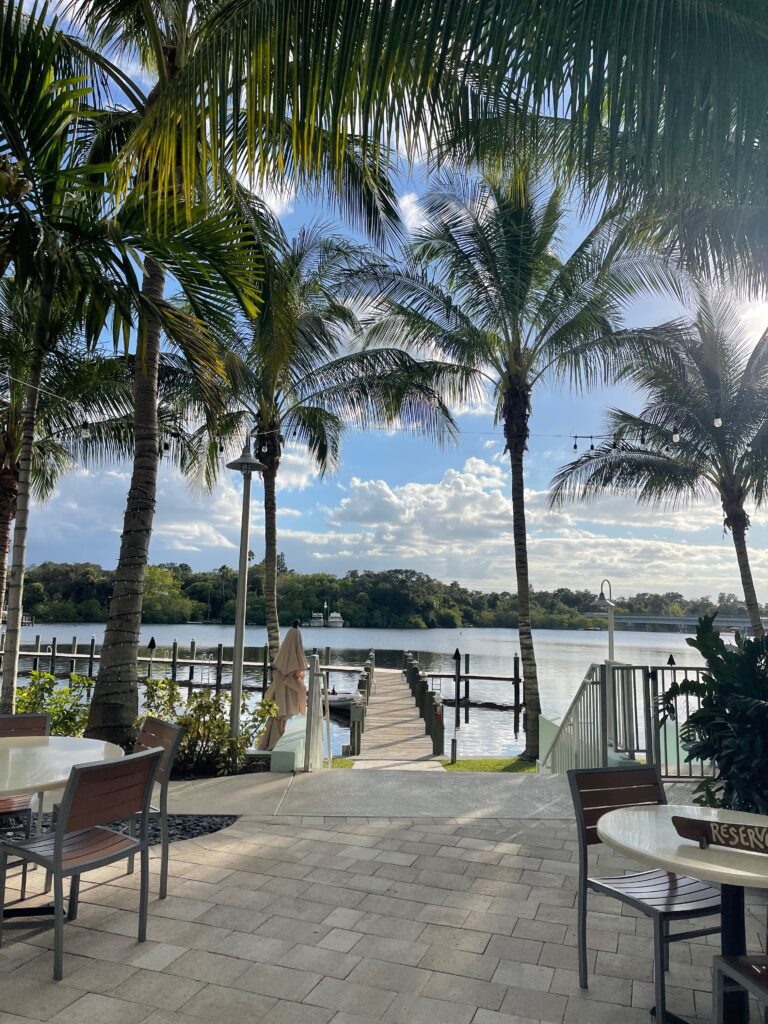



Hey friends, it's Lizzie. I didn't always know how to slow down. For a long time I mistook “busy” for “important,” and rest felt like something I had to earn. Living on Florida's Space Coast — where the ocean sets the pace and rockets launch over the water like it's no big deal — quietly taught me a different way to live. Here's what this stretch of coastline gave me.
The ocean doesn't rush, and it's the most powerful thing here
There's a lesson in watching the tide. It comes in, it goes out, it never hurries — and it's still the strongest force for miles. I used to think slowing down meant falling behind. The ocean taught me the opposite: steady beats frantic, and the things with real staying power aren't the ones moving fastest. Now, when I catch myself spinning, I try to move like the tide — deliberate, unbothered, sure.
Mornings are sacred here
A slow Space Coast morning — coffee in hand, salt in the air, the sky doing that soft pink thing over the water — reset my whole relationship with time. I stopped grabbing my phone the second I woke up and started giving the first part of my day back to myself. Those quiet minutes before the world wakes up aren't wasted. They're the foundation everything else stands on.
Nature keeps you humble (and present)
It's hard to stay stuck in your head when a rocket is climbing into the sky, or dolphins roll past the pier, or a summer storm rolls in fast and clears like nothing happened. This place is constantly reminding me that I'm a small part of something big and beautiful — and honestly, that's a relief. It takes the pressure off. Not everything is as urgent as my anxious brain insists.
Slowing down isn't lazy — it's intentional
Our culture treats rest like a character flaw. But I've learned that slowing down on purpose is how you actually hear yourself — what you want, what's working, what needs to change. Some of my best ideas and clearest decisions have come on a slow beach walk, not at a desk grinding. Rest isn't the opposite of productivity. It's part of it.
Romanticizing the ordinary
The Space Coast taught me to find the magic in a regular Tuesday: the way the light hits the water at golden hour, the ritual of an evening walk, a sunset I've seen a thousand times that still stops me. You don't need a vacation to feel alive. You need to actually notice the life that's already yours. Presence is the whole secret, and it's free.
What I'd tell you
You don't have to live by the ocean to learn this — you just have to decide that your life isn't an emergency. Protect a slow morning. Take the walk. Put the phone down and watch the sky. Move through your days like the tide: steady, sure, and in no rush to be anywhere but here. Your 30s are the perfect time to stop racing and start living — and I promise, the good stuff is happening at this slower pace. 🌊💛
About Lizzie — “Liz Lightning”
Lizzie is a 10-year kickboxer and the founder of How To Live 30. Writing from Florida's Space Coast, she shares honest, tried-and-tested guidance on fitness, wellness, relationships, and loving your 30s. More about me →
How the Change Actually Happened
It wasn’t a decision so much as an accumulation. Living somewhere with less urgency built into it gradually changes your defaults — not because you resolve to slow down, but because the environment stops rewarding the alternative.
That’s the part I’d underline for anyone trying to make this shift where they already live: environment does more of the work than willpower does.
Slowing Down Without Moving
Most people can’t relocate, and the useful parts of this transfer anyway. Protect one part of the day that isn’t scheduled. Put one thing outdoors into your week, however small. Reduce the number of commitments you make by default rather than trying to be more efficient about keeping them all.
The mistake is treating slowing down as a thing you’ll do once things calm down. Things don’t calm down on their own — the space gets made deliberately or not at all.
What I Had Wrong About It
I used to think a slower life meant doing less and being less ambitious, and that turned out to be backwards. What actually changed is that fewer things get my full attention instead of everything getting a fraction of it.
Being honest, some days still get away from me entirely. This isn’t a solved problem — it’s a preference I keep choosing, badly and inconsistently, which is probably the realistic version.
The Trade-Off Worth Naming
A slower pace costs you something, and pretending otherwise would be dishonest. You’re less available, you hear about things later, and there’s a kind of momentum that comes from being in a busy environment that you genuinely give up.
Whether that’s a loss depends entirely on what you were using the momentum for. For me it was mostly motion without direction, so losing it wasn’t much of a loss — but I wouldn’t tell someone building something time-sensitive that they’d feel the same.
Your Questions, Answered
What does living on the Space Coast actually change day to day? Mostly the pace. Water access being ordinary rather than a special trip removes a lot of the buildup that makes rest feel like an event.
Do you need to live near a beach to slow down? No. The location makes it easier, but the actual mechanism is having somewhere unhurried that you can reach without planning.
Is the Space Coast a good place to move to in your 30s? It suits people who want outdoor access and a slower rhythm over nightlife and density. That trade is the whole decision.