


Heads up, friends: this post has affiliate links, and if you shop with my code I may earn a little something at no extra cost to you. I only ever share what I genuinely love. 💛
Hey friends, it’s Lizzie! If there’s ONE nutrition change that’s made the biggest difference for me in my 30s, it’s prioritizing protein. Here’s why it matters more now — and roughly how much you actually need.
Why protein matters more in your 30s
You’ll hear a lot about muscle and aging once you hit your 30s, and protein comes up in every one of those conversations. I’m not a nutritionist, so I won’t pretend to be one. What I can tell you is that paying attention to protein is the food habit that stuck for me.
So how much do you need?
The official baseline for adults, the RDA, is 0.8 grams of protein per kilogram of body weight a day, and sports nutrition groups often suggest more for people who train hard. Where you land is a question for a registered dietitian, not a blog. (I’m a creator sharing what works for me, not a nutritionist — check with a pro for numbers specific to you.)
How to actually hit it
The trick is protein at every meal, not one giant chicken breast at dinner:
- Breakfast: eggs, flavored yogurt, or a protein smoothie (this is where most people fall short).
- Lunch & dinner: a palm-plus of chicken, fish, lean beef, tofu, or beans.
- Snacks: a protein shake, cottage cheese, jerky, or edamame.
If you think you’re falling short
I’m not going to diagnose anyone from a blog post. If you feel run-down or your training feels flat for weeks, that’s worth a conversation with your doctor or a registered dietitian, who can actually look at what you eat.
The breakfast fix that changes everything
If you only change one thing, make it breakfast. Most of us eat a carb-heavy morning (toast, cereal, a muffin) and don’t touch real protein until lunch — which means we spend the whole morning under-fueled and snacky. Adding a real protein source at breakfast, like eggs, flavored yogurt or a protein smoothie, is the easiest change on this whole list.
What a training day actually looks like for me
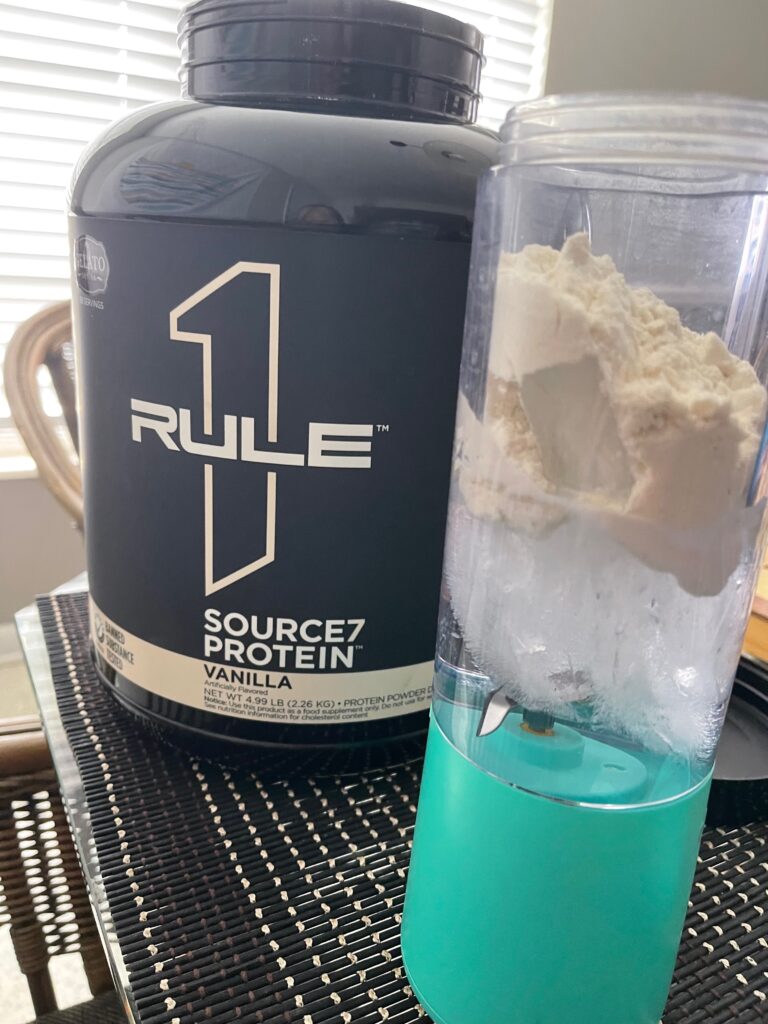
Real talk: I train pretty much every single day, and the days I actually hit my protein aren’t the days I plan some elaborate meal-prep spread. They’re the days I make it stupid easy on myself. My non-negotiable is a Rule One protein shake after I train (I use it, code LILO) because honestly it’s the one moment I’ll reach for protein without even thinking about it. I just came off the bag, I’m sweaty and starving, and a shake goes down way easier than trying to cook chicken right then.
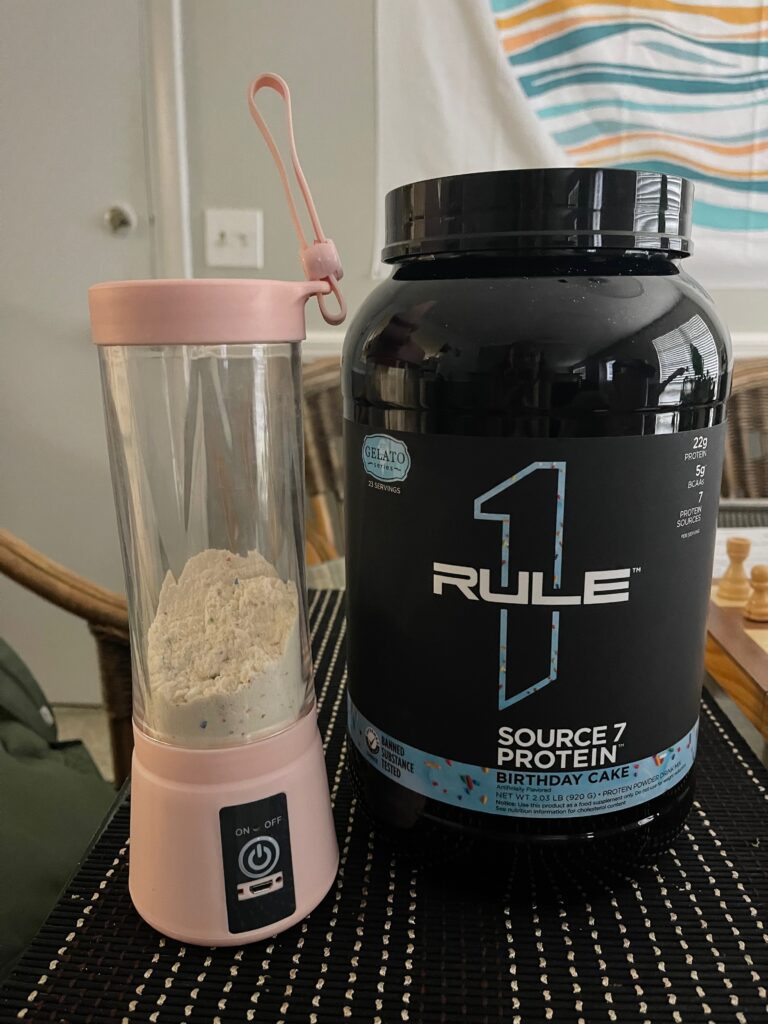
The tubs on my shelf right now are Source7 in Vanilla and Birthday Cake, from the Gelato series — those are the two flavors I keep stocked, so the post-training shake never gets boring enough to skip.
That’s the whole trick for me. I stopped trying to be perfect and just anchored one guaranteed protein moment to something I already do every day. If you train, tie your protein to your workout the same way. It takes the decision out of it completely, and the meals you build around it start to feel like a bonus instead of a chore. I’m not a nutritionist, so I’m not going to hand you a magic number, but I can tell you the habit that actually stuck for me was this one.
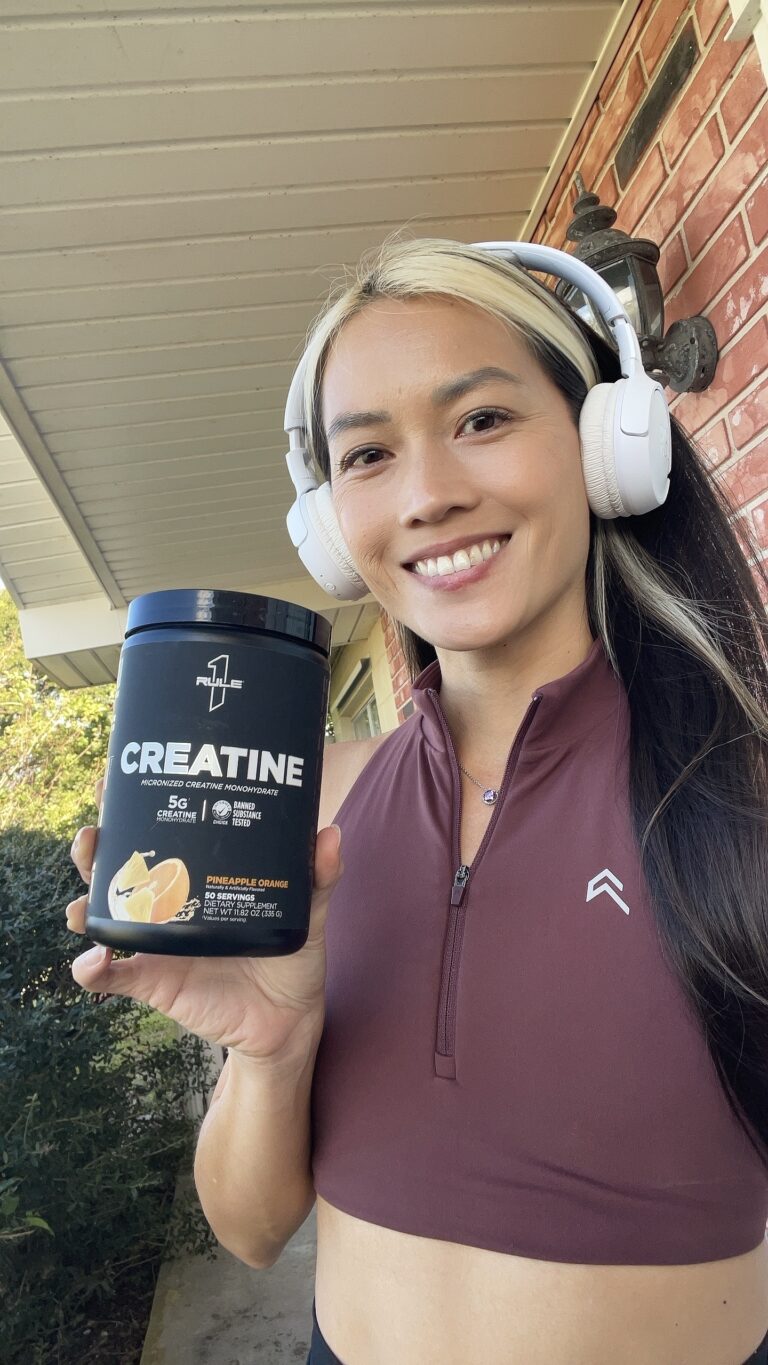
Protein is the anchor, but my wider Rule One shelf stays simple: citrulline, beta-alanine, and creatine. That’s the whole stack. I’d rather have a few things I actually use than a cabinet full of tubs I don’t.
How to hit protein when you really don’t feel like cooking
Now the part nobody talks about. Some nights I just do not want to cook, and that used to be exactly when my protein tanked. So I keep a little arsenal of zero-effort options around, so a lazy night doesn’t turn into a chips-for-dinner night. None of this is fancy and none of it needs a recipe. The goal is to make the easy choice and the high-protein choice the same choice, so when you’re tired and over it, you still land somewhere decent without a single ounce of willpower.
- A rotisserie chicken from the grocery store, my desert-island pick because it covers a couple of meals with zero work.
- A tub of cottage cheese you can eat straight from the fridge.
- A bag of frozen edamame you microwave in about three minutes.
- Pre-cooked shrimp you just thaw and throw on a salad.
- Eggs you hard-boil in a batch on Sunday.
- A couple of shakes stashed in your gym bag for the days that get away from you.
💪 My protein: Rule One
Clean, actually-tasty protein that makes hitting your goal easy. Code LILO can save you some money at Rule One — sometimes it stacks with a sale or takes a little off on its own; it just depends on whatever sale Rule One is running at the time, and during some sales it might not work at all. Either way, using my code helps support me, and it never costs you anything extra.
A simple high-protein day
Protein iced coffee + flavored yogurt bowl (breakfast) → chicken power bowl (lunch) → a shake (snack) →
salmon + veggies (dinner). None of it takes much effort. Fuel her well, friend. 💪🌴
How I Use Snacks to Close the Gap
Snacks are where the day is won or lost for me. Breakfast, lunch, and dinner already have a palm-plus of chicken, fish, lean beef, tofu, or beans, so the snack slot is the one I use to top things up — a protein shake, cottage cheese, jerky, or edamame. On a training day, that shake after I train is the anchor, and a second snack later keeps me from arriving at dinner starving. Same foods, smaller portion, between meals.
What I Keep in the Fridge for a No-Cook Week
When a week is busy, I shop for the no-cook list. A rotisserie chicken from the grocery store covers a couple of meals with zero work, a tub of cottage cheese sits in the fridge, a bag of frozen edamame microwaves in about three minutes, and pre-cooked shrimp thaws onto a salad. Eggs I hard-boil in a batch on Sunday, and a couple of shakes stay stashed in my gym bag. Nothing in that list needs a recipe, and that is exactly why I keep it stocked.
And if you are picking a powder: Rule One vs Optimum Nutrition.
The takeaway
The takeaway is simple: protein at every meal, not one giant chicken breast at dinner. Fix breakfast first, anchor one guaranteed protein at each meal, and let snacks and a shake close the gap on the days that get away from you. The RDA baseline is 0.8 grams per kilogram, and active people often need more — but your exact number is a question for a registered dietitian, not a blog.
Your Questions, Answered
How much protein does a woman in her 30s need? It depends on body weight and activity, and general guidance ranges widely. Active people typically need more than the basic recommended minimum, so it is worth calculating from your own weight rather than using a single number.
Can you eat too much protein? For healthy people, moderately high intakes are generally well tolerated. If you have kidney concerns or a medical condition, talk to a doctor before significantly increasing intake.
Does protein timing matter? Far less than total daily intake. Spreading it across meals helps with fullness, but hitting your overall target is what actually matters.
If you have a protein habit that actually works for you — a breakfast you love, a snack that saves the day — tell me in the comments. I am always looking for one more easy win.