


Heads up, friends: this post has affiliate links, and if you shop with my code I may earn a little something at no extra cost to you. I only ever share what I genuinely use. 💛
Hey friends, it's Lizzie! If you're picturing my training week as a spreadsheet, it isn't one. Ten years into kickboxing, in my 30s, living on the Space Coast, my week is a handful of non-negotiables, a couple of things I do for fun, and rest I finally take seriously. Here it is, honestly, with the caveat that I'm not a trainer and this is my week, not a plan for yours.
The non-negotiables
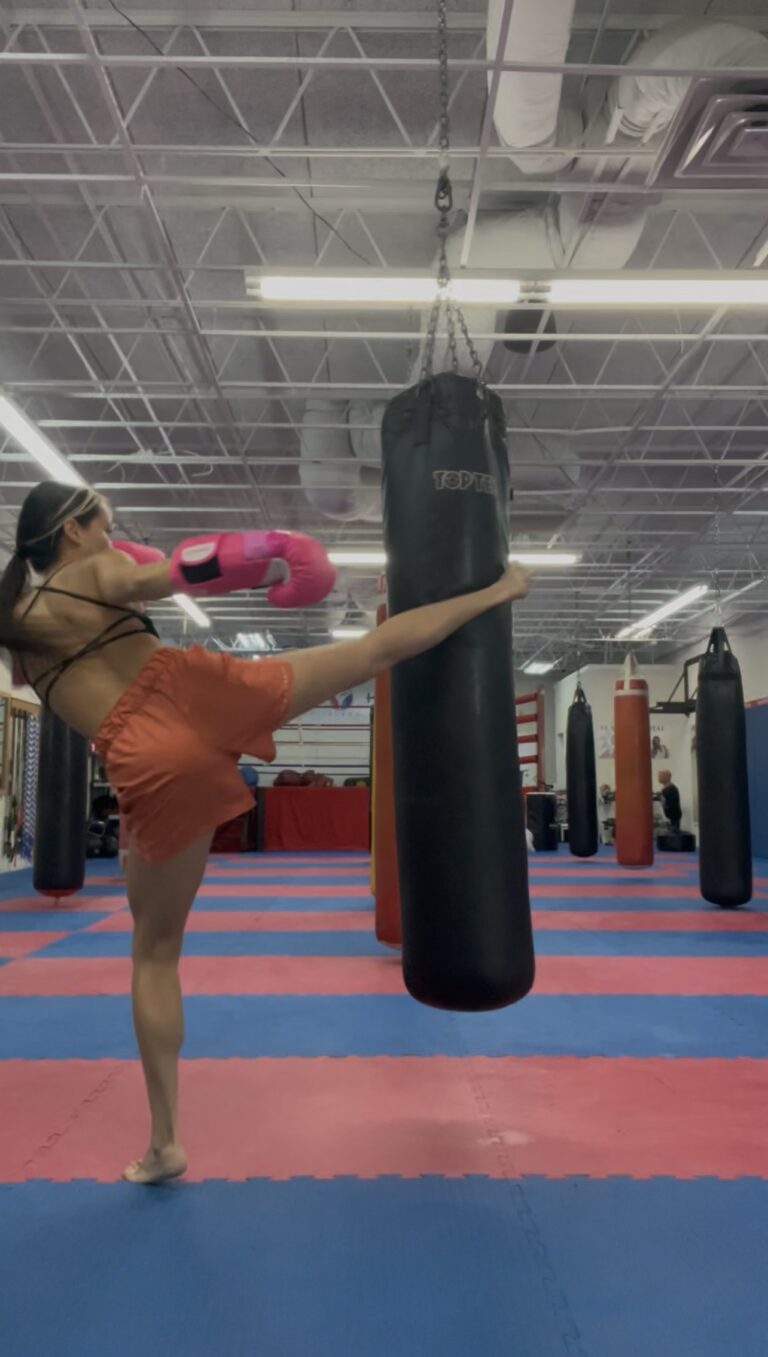
Kickboxing a few times a week. That's the spine of everything else. The exact mix changes week to week, and the number matters less than the fact that it happens. If I only protect one thing in a busy week, it's the classes.
Pickleball, at least once a week. It is the most reliably fun part of my week. It's social, it's outdoors, and it's the reset after a hard training week rather than another session to survive.

A typical week, roughly
- Class nights: kickboxing is the spine of the week. Celsius before, Cure packet in the bottle during. Gloves out of the bag the second I'm home.
- Sparring weeks: still nervous going in, honestly. Mouthpiece in, shin guards on, and time to check how I feel afterwards. Pain or injury is a reason to stop and get appropriate advice, rather than automatically swapping in another workout.
- Gentle days: a beach walk if I can, filming or work the rest of the day.
- Pickleball: at least once a week. Laughing, sun, and the best part of the week.
- The driving range, lately: golf is the newest thing on my hobby list and I am fully in my beginner era. Or a boat day. Or nothing.
- Rest, properly: a walk at most. Gear gets cleaned, wraps get washed, the bag gets emptied and left open. The week resets.
What changed in my 30s
Rest days used to be accidental. Now they're planned, and honestly they're the reason I still train hard at all. My body recovers on its own schedule, and I'd rather respect that than override it. Sleep is treated like an appointment on training nights. Food is a real meal after class, not a snack. None of this is exciting, and all of it is why I'm still here ten years in.
The fun stuff is not optional either
Real talk: if my week were only kickboxing, I would have burned out years ago. Pickleball, the range, beach walks and boat days are not rest days from training; they're the reason training feels good. A sport you do for yourself plus a sport you do with people is a combination that has kept me consistent longer than any amount of discipline ever did. I wrote about why in pickleball vs kickboxing.
How filming fits without eating the week
Tuesday and one training session. That's it. I set the pod up once, film one round, and the rest of the session belongs to me. A short clip of real work is plenty, so a full week of filmed classes would be worse content and worse training. If you make content around your sport, pick a filming day and defend the others.
The weeks that don't look like this
Travel weeks, canceled classes and the weeks when life is loud need a smaller plan. If I am well enough, that might be one familiar session or a walk. Sick or injured weeks are different: rest comes first, and there is no minimum-session rule to meet. Return when it is appropriate for you, with medical advice if needed. I wrote about the travel version in how to keep training while you travel.
What I'd tell a friend building her own week
- Pick one regular activity to plan around and put it in the calendar before anything else.
- Add one thing that is purely fun. Not another workout. A game, a range session, a walk with a friend.
- Plan the rest day. If you don't, your body will plan it for you, and it won't be on a Sunday.
- Keep the minimum version ready for the weeks that go sideways, because they will.
- Stop comparing your week to someone else's highlight reel, including mine. This is the honest version, and it still isn't a spreadsheet.
What a training week cost me to figure out
Years. The week above is the boring result of a decade of getting it wrong: fewer sessions than I once thought I needed, more rest than I once thought I deserved, and one fun thing on purpose. If you take nothing else from this post, take the order I built it in. Anchor first, fun second, rest third, everything else after.
The gear that makes the week frictionless
A bag that's always packed: gloves, wraps, shin guards, mouthpiece in its case, a Cure packet, a spare hair tie. A second pair of wraps and a second pair of fight shorts so nothing goes back on damp. Everything in my gym bag is there so that a class night never starts with hunting for something. Small friction beats big intentions every time.
If you only have two hours a week
One class and one walk. Truly. Two hours of the right things, kept for a year, beats ten hours of the perfect plan that lasts a month. Pick the class you can make when you're tired, pick a walk you'd take anyway, and protect both. Add the fun sport when the two hours stop feeling like effort, which happens faster than you'd expect.
🥊 What the whole week runs on: Hayabusa
The gloves, shin guards and mouthpiece in my kit. Buy the pieces your training calls for. Code LILO at checkout, one code per order; if a bigger sitewide sale is running, take the sale.
Your Questions, Answered
How many times a week should you do kickboxing? A few times a week with rest in between is a good place to start. More is not better at the start; ask your coach what fits your gym's classes and build from what you can actually keep.
Can you do kickboxing and other sports in the same week? Yes, and I'd argue you should. Kickboxing is the thing I do for myself; pickleball and the driving range are the fun that keeps it sustainable. Put the fun on the days you would otherwise do nothing.
What does a rest day look like for a kickboxer? For me, a walk at most, a real meal, an early night and a gym bag emptied out to dry. Rest days are part of the plan in my 30s, not a guilty secret.