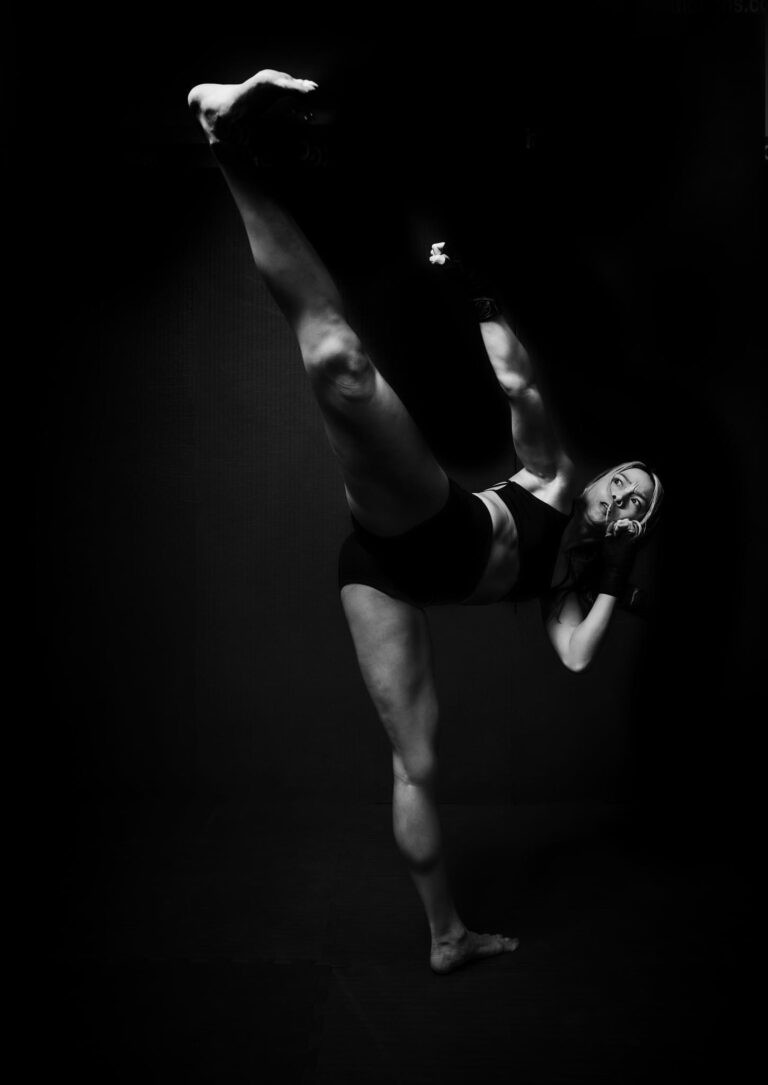



Hey friends, it's Lizzie! Somewhere in my 30s I stopped apologizing at the gym, and it changed how I train more than any technique ever did. Ten years of kickboxing, most of it as one of a few women in the room, taught me the difference between manners, which I keep, and apology, which I dropped. Here is the list of things I no longer say sorry for, and what I say instead.
Taking the bag I was given
I used to drift to the corner bag so nobody had to work around me. Now I take the bag the coach points at, in the middle of the room, and I hit it. The room is for everyone who paid to be in it. “Sorry, is this one free?” became “I'm on this one.”
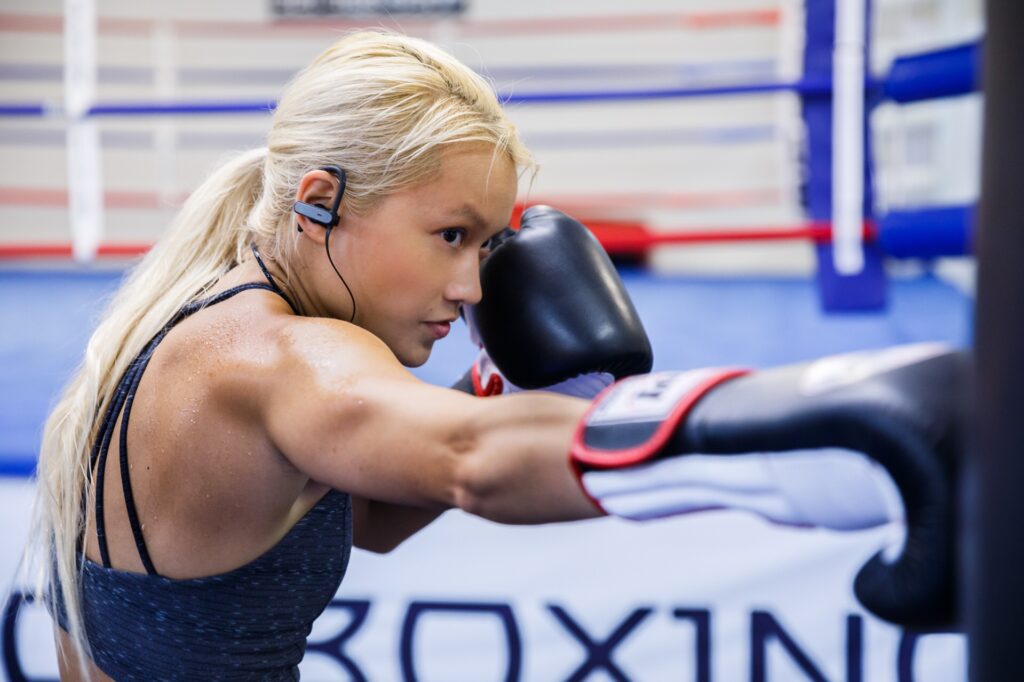
Hitting the pads properly
Agree on power and timing with your coach and pad holder. Light, controlled strikes have a place, and neither partner should feel pressured to hit or hold harder than is appropriate.
Asking someone to go light
“Sorry, could you maybe go a bit lighter?” became “Light, please.” Every decent training partner hears that the first time. The intensity is set by the lighter partner, and asking for it is not a weakness or an imposition; it's the rule. Anyone who makes you feel like it's a favor is telling you who they are.
Being new at something
I'm a beginner at golf right now, in my driving-range era, and I refuse to apologize for a bad bucket to anyone. Apologizing your way through a first year of kickboxing buys nothing except a reputation for saying sorry. Being bad at something new is the price of the new thing. It doesn't need an apology, only reps.
Saying “got it” instead of explaining
When a coach corrects me, I used to launch into why my hand was down: tired, distracted, thought I was doing it. Nobody needs the story. “Got it” is respect for the coach's time and mine, and it's also the fastest way to fix the thing. Ten years in, it's still the whole response.
Declining uninvited coaching
There is one coach in the room. When someone with less time on the mats than me decides to fix my kick, I used to nod and apologize for the kick. Now it's “thanks, I'm going to stick with what coach said,” and I keep my hands up. Polite, final, and it ends the conversation without starting a different one.
Taking rest days
Rest used to come with a guilty explanation to anyone who'd listen. In my 30s it's part of the plan, and it needs no announcement. A 30s body recovers on its own schedule, and respecting that is how you keep training hard. “Sorry I missed class” became nothing at all, because nobody is keeping a register.
Being nervous before sparring
I still get nervous before sparring, ten years in, and I don't treat that as something to apologize for; nerves are not a character flaw. They aren't. Nerves are the price of doing something real, and the people who love sparring most are often not the fearless ones; they're the ones who found a room where being nervous was allowed. I wrote about it in the fear of getting hit.
Filming my own training
I set up the pod, film one round, and put it away. I ask first, I keep people out of frame, and I don't block the floor, which is manners. What I no longer do is apologize for making content about a sport I love. It's my work and my hobby at once, and both are allowed in the same room.
What I still say sorry for
Being late. Walking behind someone mid-swing at the range. A stray kick that finds a stranger. Forgetting to wipe down a bag. Manners are not apology, and the gym runs on manners. The difference is that manners are about other people's space, and the apologies I dropped were about my own right to take up any.
What changed when I stopped
I trained better, because attention that went to apologizing went to the round instead. Partners treated me as a partner. Coaches corrected me the same way they corrected everyone, which is the only thing I ever wanted. And the room got friendlier, not colder, because it turns out people respect the woman who takes her bag and hits her pads more than the one who keeps asking permission to exist. If you're new and you recognize yourself in the top half of this list, start with one: take the bag. The rest follows.
The one I'm still working on
Real talk: I still say sorry when I'm late on a pad combination, and the answer is always “don't apologize, reset.” The habit runs deep, and I'm not going to pretend a list on a blog cured it. What's changed is that I notice it now, and noticing is most of the fix. “Again” is slowly replacing “sorry,” and ten years in, I'll take that.
What this looks like at the range and the courts
Same list, different sport. I don't apologize for a bad bucket at the range or a bad game of pickleball, and I don't narrate my own mistakes to whoever's nearby. Being a beginner at golf has been good practice for this, because there's so much to apologize for and absolutely no reason to. Hit the ball, miss the ball, tee up the next one.
Why it matters more for women
Because the apology habit is taught to us early and rewarded for years, and a fight gym is one of the few rooms where it costs you immediately: a soft pad round, a partner who doesn't take you seriously, a correction you didn't absorb because you were busy explaining. Dropping it in the gym made it easier to drop everywhere else, which might be the most useful thing kickboxing has given me that has nothing to do with kickboxing.
Start with one
Don't try to drop the whole list at once; that's a resolution, and I don't make those. Take the bag this week. Next week, hit the pads properly. The week after, try “got it” instead of the story. Each one makes the next one easier, and in a month the room will have noticed before you have.
The takeaway
The takeaway is simple: manners stay, apologies go. Take the space your coach assigns you, say what you need plainly — ‘Light, please,’ ‘Got it’ — and let rest days be part of the plan, not something to explain. Start with one thing on the list, and watch what changes when the attention that went to apologizing goes to the round instead.
Your Questions, Answered
How do you stop feeling self-conscious at the gym? Take the space your coach assigns, ask questions, and agree on appropriate intensity with your partners. You can ask for lighter work or stop a round without apologizing.
Is it okay to ask a sparring partner to go lighter? Yes. Agree on intensity before the round and respect requests to lighten or stop. Involve the coach if your partner does not respect the agreed limits.
How do you handle unsolicited advice at the gym? “Thanks, I'm going to stick with what coach said.” Polite, final, hands up. There is one coach in the room.
Which one on this list are you dropping first? Tell me in the comments — and if you are new to a fight gym, start with the bag your coach points at.