



Supplements That Actually Work in Your 30s: A Science-Backed Guide
Affiliate Disclosure: This article contains affiliate links. If you purchase through them, we may earn a small commission at no extra cost to you. We only recommend products we genuinely trust.
The supplement industry is loud. Walk into any store and shelves scream with “miracle” formulas. But once you hit your 30s, chasing every capsule isn’t just expensive—it’s unsustainable. The truth is, supplements that actually work in your 30s come down to a short, reliable list. This article cuts through the noise and gives you the science-backed picks that support real life: energy, recovery, focus, and longevity.
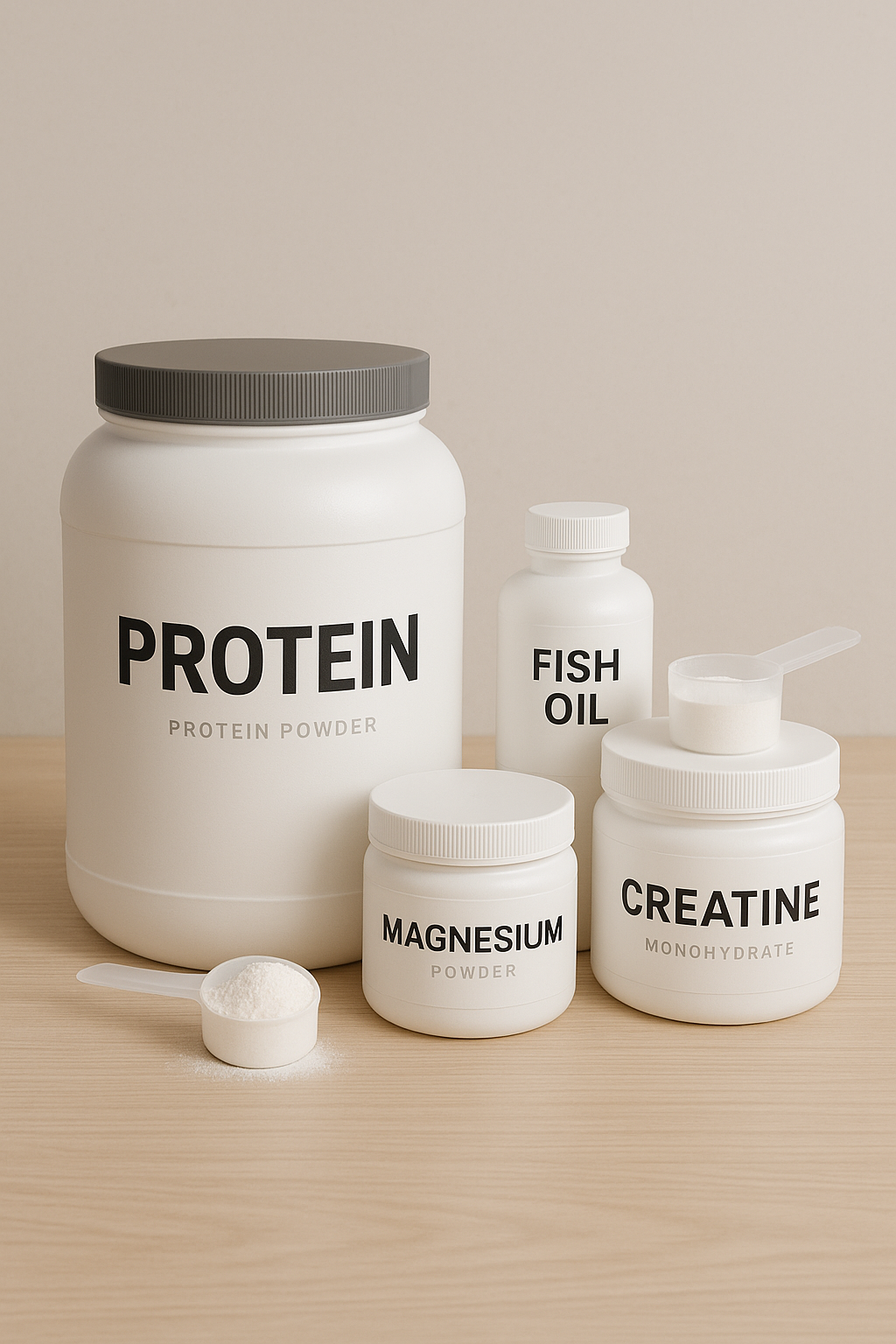
- Protein powder: Supports muscle repair, appetite control, and consistent nutrition.
- Creatine monohydrate: Improves strength, performance, and supports brain health.
- Omega-3 fatty acids: Linked to heart, brain, and joint health.
- Magnesium: Aids relaxation, recovery, and sleep quality.
Trusted Options:
- Rule One Proteins — high-quality whey isolate for recovery (use code LILO).
- Calm Magnesium — supports evening relaxation.
Protein Powder: The Baseline Supplement
If your diet falls short on protein, powders bridge the gap. Whey isolate is quickly absorbed; casein works well before bed; plant blends cover dairy-free needs. They aren’t magic—they’re convenience in a scoop.
Creatine Monohydrate: Still King
Backed by decades of research, creatine remains one of the most effective supplements for strength and endurance. A daily 3–5 g dose works for most people. Bonus: evidence supports cognitive benefits, too.
Omega-3 Fatty Acids: The Anti-Inflammatory Ally
If your diet lacks fatty fish, omega-3 supplementation may reduce inflammation and support brain and heart health. Look for EPA + DHA content around 500–1000 mg per day.
Magnesium: The Recovery Mineral
Magnesium plays a role in hundreds of cellular processes. Many adults are low, especially with high-stress lifestyles. Supplements like Calm Magnesium help fill the gap and may improve sleep and stress management.
Supplements That Actually Work in Your 30s: Optional Additions
- Vitamin D: Especially in low-sunlight regions.
- Electrolytes: On hot days or long training sessions.
- Caffeine: Simple, cheap, effective when used wisely.
Supplements That Don’t Live Up to the Hype
Avoid falling for flashy packaging. Many blends add under-dosed ingredients or fillers. If it claims overnight fat loss, “detox,” or extreme results, it’s not worth your money.
Pro tip: Build your base with food first. Supplements fill gaps—they don’t replace balanced meals, hydration, or sleep.
Your 3-Step Supplement Plan for Your 30s
- Start with the basics: protein + magnesium.
- Add creatine and omega-3 if needed.
- Reassess every 6 months—are you still using them consistently and seeing benefits?
Closing Thoughts: Supplements That Actually Work in Your 30s
You don’t need a cupboard full of pills. The supplements that actually work in your 30s are a short list: protein, creatine, omega-3s, and magnesium. Keep it simple, save money, and let real food and sleep do the heavy lifting.
Next Step: Try one supplement at a time. A scoop of Rule One Proteins (code LILO) after training or Calm Magnesium at night may be all you need to feel the difference.
When To Actually Take Them (Timing Matters More Than You Think)
Here’s something nobody tells you when you’re standing in the supplement aisle: when you take something can matter almost as much as whether you take it at all. If your 20s were about throwing back whatever, whenever, your 30s are about a little intention — and it pays off.
A few simple rules I actually follow:
- Creatine — timing barely matters, so take it whenever you’ll remember. Consistency beats perfect scheduling every single day.
- Magnesium — evening, hands down. It pairs beautifully with winding down, and a calm nervous system at night is half the battle for sleep.
- Omega-3s — with a meal that has some fat in it. Take them on an empty stomach and you’ll likely get the dreaded fishy burps (and absorb less).
- Caffeine — cut it off by early afternoon. What felt harmless at 25 quietly wrecks your deep sleep at 35.
Stack your supplements onto habits you already have — magnesium next to your toothbrush, omega-3s by your coffee mug. That’s the whole trick to actually being consistent, and it’s the same logic behind building any unbreakable habit in your 30s.
How To Read a Label Without Getting Played
Flashy packaging is doing a lot of heavy lifting in this industry, and most of us were never taught how to look past it. The good news? You can spot a quality product in about thirty seconds once you know where to look.
Flip the bottle over and check for these:
- A “proprietary blend” with no individual doses — this is a red flag. It usually means the good stuff is in there in amounts too tiny to matter.
- Third-party testing — look for an independent quality seal. It means someone other than the company actually checked what’s inside.
- A short, readable ingredient list — you shouldn’t need a chemistry degree to understand it. More ingredients rarely means more results.
- Honest doses — compare what’s on the label to the ranges that are actually studied. Under-dosed-but-pretty is the oldest trick in the book.
You don’t need the most expensive jar on the shelf — you need an honest one. If you want a starting point that won’t waste your money, I rounded up some of my go-tos in this post on Amazon finds under $50, and you can grab some of what I personally use with code LILO over at my shop.
The Quiet Truth: Supplements Can’t Outwork the Basics
This is the part the industry would rather you forget. No capsule, powder, or “stack” will out-perform the boring fundamentals — and in your 30s, the fundamentals are the whole game.
Think of supplements as the last 10%, not the first. If you’re not sleeping, not moving, and not eating real food, you’re trying to pour water into a bucket with a hole in it. Before you reorder a single thing, ask yourself: am I genuinely getting enough protein in my 30s? Am I walking, lifting, sleeping seven-plus hours? Nail those, and your supplements suddenly start working — because now they have something to support.
One last gentle reminder: supplements are exactly that — supplemental. They’re not a replacement for a doctor, and if you’re on medication, pregnant, or managing a health condition, run your list past a professional before you add anything. That’s not me being overly cautious — it’s just the grown-up move, and your 30s are the decade you finally start making it.
About HowToLive30: Practical fitness, mindset, skincare, and budgeting for your best decade. We keep guides simple, science-aware, and doable.
💪 My protein: Rule One
Clean macros, mixes smooth, and the flavors don't taste like chalk. My daily staple.