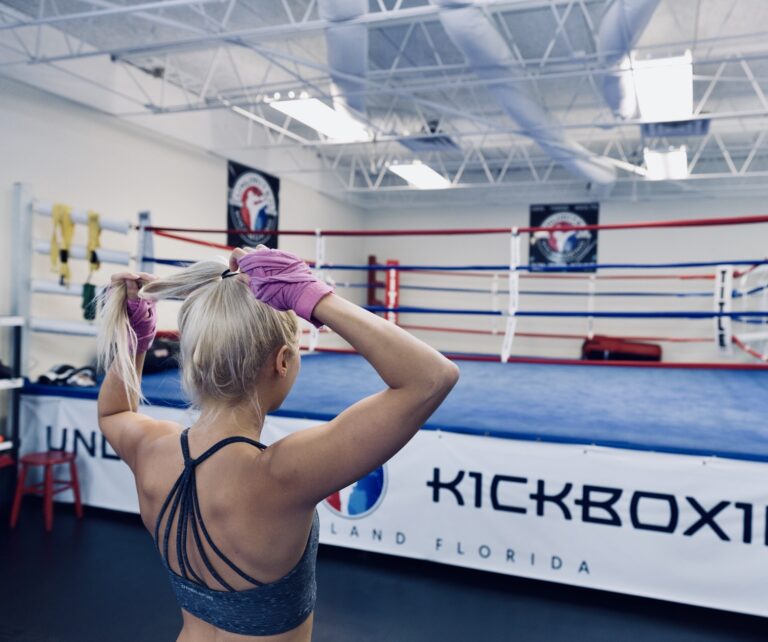



Hey friends, it's Lizzie! A lot of people treat the warm-up as the boring bit before class starts. They arrive as the bell goes, wrap their hands during the skipping, and throw their first real punch cold. Ten years in, I do the opposite, and it makes every single session better. Here is what I actually do before class and why it matters. I'm not a trainer; this is my routine, and your coach's warm-up beats mine.
Why it matters
A gradual warm-up helps you ease into the movement and effort ahead. The American Heart Association recommends building up gradually rather than starting at full intensity. Warming up matters at any age, and it does not guarantee an injury-free session. Pain or unusual symptoms deserve attention rather than an extra round.

Before the bell
- Arrive early. The whole routine depends on this. A few minutes gives me time to wrap, breathe, and say hi, which means class starts with me already in the room instead of arriving mid-round.
- Wrap slowly. Wrapping is the first mental switch. Phone away, wraps on, the day left in the car.
- Move the joints that kickboxing uses. Wrists, shoulders, hips, ankles. Circles and gentle swings, nothing heroic. Hips get the most attention because that's where kicks come from.
The class warm-up, and how I use it
Most gyms run the same shape: skipping or light movement, then shadowboxing, then a few mobility drills. The part people waste is the shadowboxing. I use it to run the combinations I know I'm bad at, slowly, with my hands actually coming back to my face. Five minutes of honest shadowboxing does more for my combinations than an extra bag round ever has, and it looks silly for exactly two weeks before it stops mattering.
The combinations I rehearse
Whatever my coach corrected last week. If it was hands dropping after the cross, every shadowboxing rep is one-two, hands home. If it was a lazy pivot on the hook, it's hook, pivot, reset, over and over at half speed. I'm not inventing anything; I'm repeating a correction until it stops needing thought before the round where it matters.
Kicks: the slow ones first
Real talk: the first roundhouse of the night is never the good one. So I throw slow, low kicks in the air before I throw anything at a pad, and I throw a few teeps to remember where my balance lives. The switch kick still gets a few slow reps before it gets a fast one. Balance is the thing that goes first when I skip this, and it's the thing that shows up on the pads immediately.
What I don't do
Long static stretches before class; they go at the end. Jumping straight into full-power bag work instead of building up gradually. Skipping the warm-up because I'm late, which is why I'm not late. And filming during it, ever; filming can wait.
The warm-up on a sparring night
Longer and quieter. More shadowboxing, more slow defense, a mouthpiece in early so it's not new when the round starts. I still get nervous before sparring, ten years in, and a proper warm-up is the one thing that reliably turns nerves into readiness. The routine gives my head something to do while my body gets ready.
What changed in my 30s specifically
Warming up matters at every age; turning thirty does not create a neat line between safe and unsafe training. For me, it is also the most peaceful few minutes of the day: the transition between whatever the day was and a room where nothing else exists. I’d keep it for that alone.
If you're new
Arrive early, wrap slowly, move your joints, and take the class warm-up seriously even when it feels pointless. Ask your coach what they want you doing during shadowboxing rather than guessing. And notice, after a month, how differently the first round feels when you've been in the room for fifteen minutes instead of fifteen seconds. Everything else about starting is in kickboxing for beginners.
The mental half of the warm-up
Real talk: the wrap is a ritual as much as a protection. By the time the second hand is done, the day is somewhere else. I use those minutes to decide one thing to work on that session, whatever the last correction was, so I walk onto the mat with a plan instead of a vague hope to do well. One thing. If I try to fix five, I fix none, and the warm-up is where I choose which one gets the night.
What I'd change on a bad day
Tired, flat or sore: that is a reason to check in with the coach before class. A lighter session or rest may be more useful than a longer warm-up. If movement brings pain or unusual symptoms, stop and get appropriate advice. The warm-up can help you assess how you feel; it is not a promise that the rest of class will be a good idea.
Gear that makes it easier
Wraps I've wrapped a thousand times, gloves with velcro I can strap alone, a mouthpiece already in its case in the bag on sparring nights. The warm-up is short enough that fumbling for anything eats it, which is one more reason the gym bag is always packed. The whole kit is in what's in my gym bag.
If you arrive late
Tell the coach you missed the warm-up and ask how to join safely. They may have you warm up separately, start with lighter work or sit out part of the session. Do not treat a couple of minutes of jabs in the parking lot as permission to jump straight into a hard round.
Your Questions, Answered
How do you warm up for kickboxing? Most classes run light movement, shadowboxing and a few mobility drills. I add a few minutes before the bell: wrap slowly, move wrists, shoulders, hips and ankles, then rehearse whatever my coach corrected last week during the shadowboxing. Ask your coach what they want; their warm-up beats a blog post.
Should you stretch before kickboxing? Ask your coach which movements and stretches fit the session. I use the warm-up for gradual movement rather than forcing a stretch. Stay within a comfortable range; a warm-up does not guarantee you will avoid injury.
Why might the first round feel difficult? A difficult first round can have several causes, including effort, sleep, recovery or how you prepared. Warm up gradually and tell your coach if it keeps happening. Pain or unusual symptoms should not be brushed off as a cold start.