


Hey friends, it's Lizzie! My first kickboxing class was ten years ago, and I remember exactly nothing about the technique. What I remember is how overwhelming it was, and how much I loved the workout anyway. So this is the cheat sheet I wish someone had handed me at the door: the words you'll hear in your first month, explained the way a friend would explain them, with none of the ego.
Stance and the basics
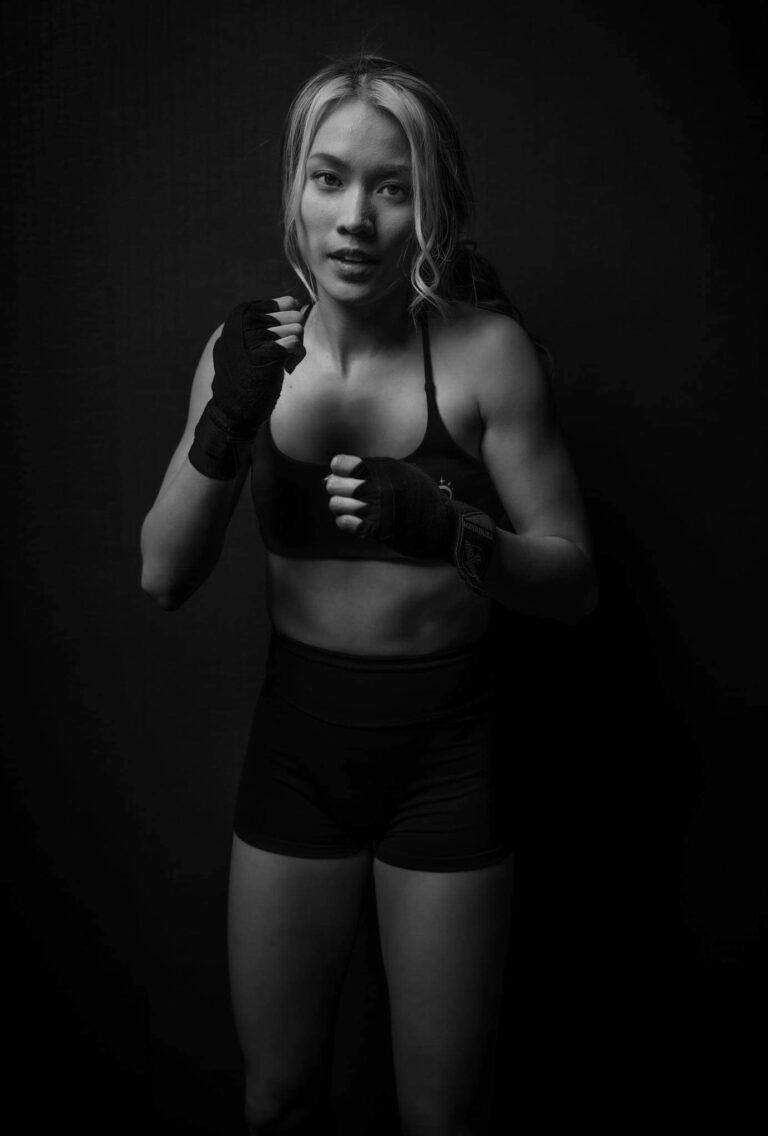
- Stance. How you stand: feet about shoulder width, one foot in front, knees soft, hands up. Everything starts here.
- Orthodox / southpaw. Orthodox means your left foot and left hand lead (most right-handers). Southpaw is the mirror image. If a coach asks “are you orthodox?” they just want to know which foot goes in front.
- Guard. Your hands protecting your face. “Hands up” and “chin down” are the two things you will hear most in your first year. Ten years in, I still hear them.
- Reset. Come back to your stance and your guard after a combination. It's the coach's way of saying “don't just stand there admiring your kick.”
The punches (and the numbers)
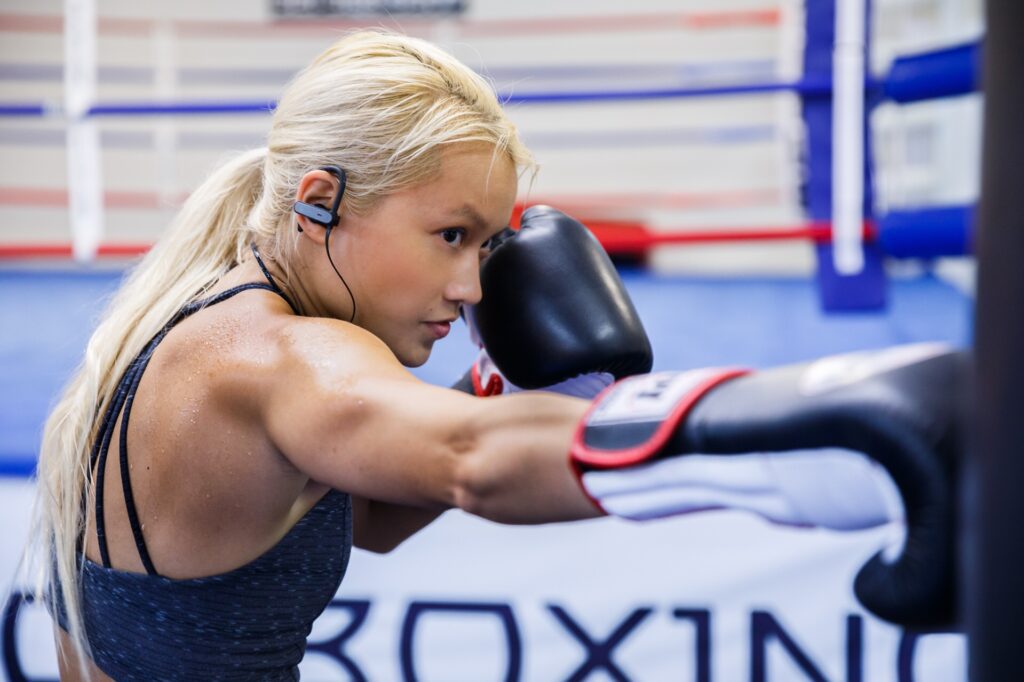
- Jab (1). A quick straight punch with your lead hand. It sets everything else up.
- Cross (2). A straight punch with your back hand, with your hips turning into it. “One-two” is a jab then a cross, and it is the most-called combination in any gym on earth.
- Hook (3 and 4). A punch that comes around from the side, elbow bent. Lead hook is usually a 3, rear hook a 4, though numbering varies by gym.
- Uppercut (5 and 6). A punch that travels upward, usually aimed at the chin. Same story: lead and rear, numbers vary.
- Combination (combo). Punches and kicks strung together. When a coach calls “one-two-three,” they mean jab, cross, lead hook. Ask your gym for its numbering; most stick a chart on the wall.
The kicks
- Teep (push kick). A straight kick with the ball of your foot, used to push an opponent or a bag away. Not food.
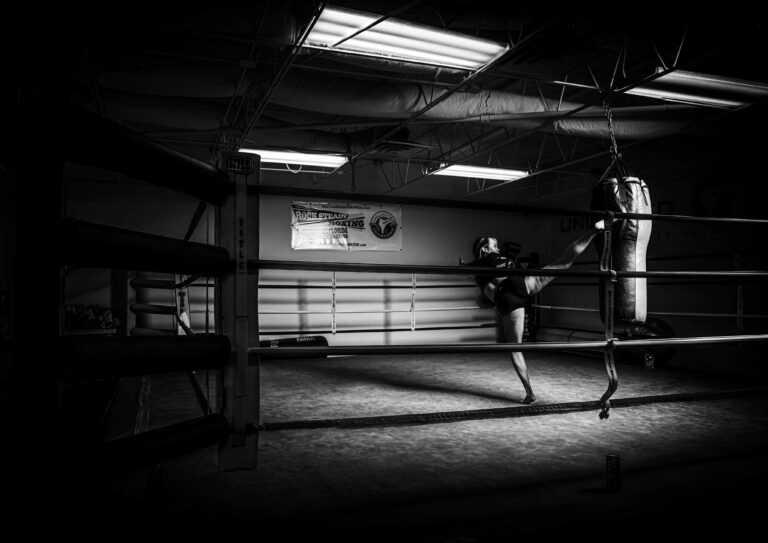
- Roundhouse. The classic kickboxing kick: your leg swings around and you connect with the shin. Called low, mid or high depending on where it lands (leg, body, head).
- Switch kick. A roundhouse thrown after a quick hop that swaps your feet, so your lead leg becomes the kicking leg. Feels impossible for a month, then suddenly doesn't.
- Knee. Exactly what it sounds like, driven upward or forward. You'll hear it more in Muay Thai-flavored classes.
- Check. Lifting your shin to block an incoming low kick. This is the reason shin guards exist.
Defense words
- Slip. Moving your head just off the line of a straight punch.
- Roll. Curving your upper body in a small arc under a hook, so the punch passes over you, then coming up on the other side.
- Bob-and-weave. Bending your knees to dip under a punch, then moving your head off to one side as you come back up.
- Parry. Redirecting a punch with your hand instead of blocking it.
- Cover / block. Taking a shot on your gloves, forearms or shin instead of on you.
- Pivot. Turning on your lead foot to change angle. Coaches love it. Beginners forget it.
Equipment words you'll hear at the counter
- Wraps. Long strips of cloth wrapped around your hands and wrists under your gloves. Buy these before class one.
- Oz. Glove weight, which really means padding. Beginner classes mostly see 12 to 16oz. Ask your gym what it requires before buying anything.
- Heavy bag. The big hanging bag. Double-end bag is the small one on elastic that punishes lazy hands.
- Thai pads / focus mitts. What a partner or coach holds for you. Thai pads are the long rectangular ones for kicks and knees; focus mitts are the small hand targets for punches.
- Mouthpiece. The mouthguard. In before any contact round, no exceptions.
Class-structure words
- Round. A timed block of work, usually two or three minutes, followed by a short rest. The bell you hear is the round timer.
- Shadowboxing. Throwing combinations at the air, usually to warm up. It looks silly for about two weeks and then it's the most useful thing you do.
- Pad rounds / bag rounds. Rounds on the pads with a partner, or on the heavy bag alone.
- Partner drills. Practicing set combinations with a partner at low intensity. Not sparring.
- Sparring. Live rounds with a partner. Technical or light sparring means low power and a focus on movement; hard sparring is fight-pace and not for beginners. At a good gym, sparring is optional and earned. I wrote about knowing when you're actually ready.
- Clinch. Grabbing behind your partner's head or body at close range. More Muay Thai than kickboxing, but it comes up.
The words nobody defines but everyone uses
“Sit down on it.” Bend your knees and put your weight into the punch. “Turn it over.” Rotate your fist and hip on a hook. “Breathe.” You are holding your breath. Everyone holds their breath. “Relax.” Your shoulders are up by your ears. Everyone's creep up when they get tired.
If you can walk into your first class knowing what a teep is and which hand throws the jab, you're already ahead of where I was. The rest comes from showing up. And if you want the full beginner picture, start with my kickboxing for beginners guide.
What a typical class sounds like, start to finish
Hearing the words in order helps more than a list, so here is a beginner class at most gyms, translated.
- “Wraps on, let's move.” Warm-up: skipping, shadowboxing, some mobility. Nobody is judging your shadowboxing. Truly.
- “Partner up, one holds, one hits.” Pad rounds. One of you holds Thai pads or focus mitts, the other throws the combination the coach calls. You swap halfway.
- “One-two, low kick, reset.” The combination for the round: jab, cross, roundhouse to the leg, back to your stance.
- “Switch!” Swap roles, or swap stance, depending on the gym. If you're not sure, look at what everyone else does and copy them.
- “Bags!” Bag rounds: the same combinations on the heavy bag, alone, at your own pace.
- “Conditioning, then stretch.” The bit at the end that everyone groans at, followed by the stretch that everyone skips and shouldn't.
Kickboxing, boxing and Muay Thai: which words belong where
Boxing gives you the punch names and the numbers. Kickboxing adds the kicks, and depending on the gym you'll hear both “roundhouse” and “round kick” for the same thing. Muay Thai adds the clinch, the elbows and a lot of the Thai vocabulary, teep included, and its gyms tend to count in rounds rather than combinations. If your class calls itself kickboxing but the coach keeps saying “clinch,” you are in a Muay Thai-flavored room, and that is a good thing. I wrote about which one to start with if you're still choosing.
Three things to say back
You will be asked three questions in your first month, and here are the honest answers. “Orthodox or southpaw?” If you don't know, say orthodox and see how it feels. “What oz are those?” Look at the wrist of your glove; the number is printed there. “Want to hold first?” Say yes. Holding pads teaches you more about timing than hitting them does, and it makes you the partner people want.
Your Questions, Answered
What does 1-2 mean in kickboxing? Jab then cross: a quick straight punch with your lead hand, followed by a straight punch with your back hand. It is the most-called combination in any gym.
What is a teep? A push kick: a straight kick with the ball of your foot used to push an opponent or a bag away. It is often the first kick a beginner learns.
What is the difference between kickboxing and Muay Thai terms? Most punch and kick names overlap. Muay Thai classes add more knees, elbows and clinch work, and you will hear Thai words like teep more often. Your gym will tell you which it teaches.
Related reading
- Kickboxing for Beginners: The Complete Guide
- What to Wear to Your First Kickboxing Class
- Boxing vs Kickboxing for Beginners: Which Should You Try?
- When You’re Actually Ready to Start Sparring
- How Long Does It Take to Get Good at Kickboxing? An Honest 10-Year Timeline
- Kickboxing Class Etiquette: The Unwritten Rules I Wish Someone Had Told Me