

Heads up, friends: this post has affiliate links, and if you shop with my code I may earn a little something at no extra cost to you. I only ever share what I genuinely love. 💛
Before you buy anything: Book a beginner trial and ask what the gym provides. You do not need a full gear haul to find out whether you enjoy the class.
Hey friends, it's Lizzie! Kickboxing changed my whole life — ten years, a nickname (“Liz Lightning”), and a second family later, I still believe your 30s are the perfect time to start. If you've been curious but nervous, this is your complete beginner's guide. Let's get you ready. 🥊
Why kickboxing is perfect in your 30s
Kickboxing does about five things at once, which is why it's so addictive: it's incredible cardio (without the mind-numbing treadmill), it builds real strength and power (every punch and kick fires your core and legs), it's the best stress relief I know, it's a huge confidence builder, and it's genuinely fun — which is why people actually stick with it. Read more on why your 30s are the best time to start.
What to expect in your first class
Most beginner classes follow a similar rhythm: a warm-up (jog, jump rope, bodyweight moves), technique drilling (basic punches and kicks), bag or pad work to put it together, and a conditioning finisher. You'll feel uncoordinated for about ten minutes — and then it clicks. The secret nobody believes until they experience it: nobody is watching you. Everyone in that room was new once. Fight gyms are some of the most welcoming places I've ever been.
Before you book your first class
Here is the short list I would take to a new gym:
- Is this fitness kickboxing, technique training, or a class with partner contact?
- Is it suitable for a complete beginner?
- Can I borrow gloves, and do I need to bring wraps?
- What footwear does this gym require?
- Will the coach show me how to wrap my hands and adjust the session?
- What does the trial cost, and does booking it commit me to anything else?
Choose a class that answers those questions clearly. You can decide on your own gloves after you know what the gym requires and whether you want to keep going.
What to wear
Fitted (not baggy) activewear you can move in, a supportive sports bra, and bare feet or thin grip socks (most gyms train barefoot on the mats — leave the sneakers at the door). My full first-class outfit guide and workout clothes guide cover it all.
The gear you need
Good news: you need very little to start. Most gyms lend gloves for your first class, so don't buy gloves before class one. The one thing worth buying early is a pair of hand wraps ($10–15) to protect your hands and keep loaner gloves hygienic. Once you know you're hooked, your own gloves are the upgrade that changes everything.
🥊 My top pick: Hayabusa T3
Ten years of training and still the best wrist support and fit I've found — especially for smaller hands. Code LILO at checkout.
⚡ Short on time? My pick is the Hayabusa T3 gloves — use code LILO to save. Shop now →
Basic techniques to know
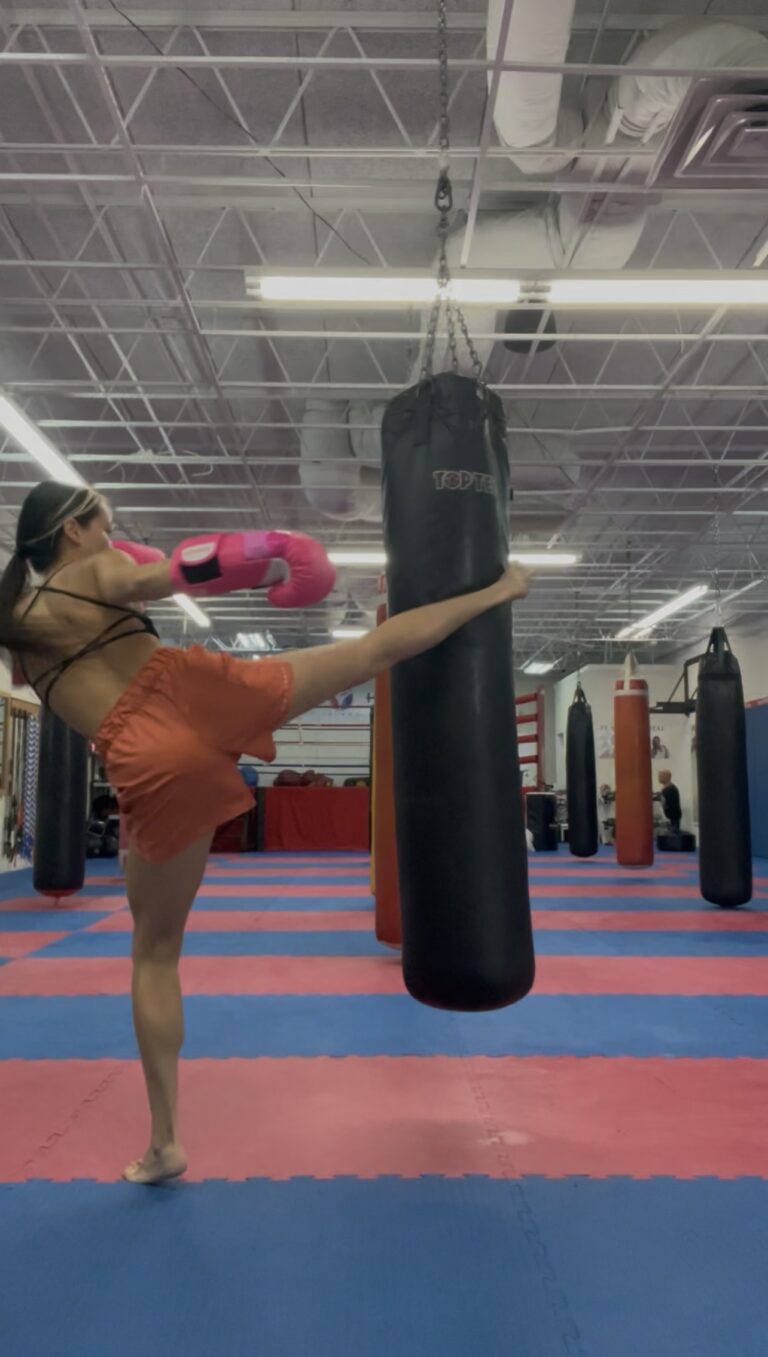
You'll learn these first: the jab (lead hand), cross (rear hand, pivot your back foot), hook (turn your hip into it), plus front kicks and knees. Keep your hands up by your cheeks, stay light on the balls of your feet, and exhale sharply on every strike — that breath is where the power lives. Don't worry about looking perfect; clean and controlled beats fast and sloppy every time.
A simple at-home starter
Can't get to a gym yet? You can absolutely start at home. Try my at-home kickboxing workout for women over 30 — a no-equipment, 20-minute follow-along that teaches you the basics and gets you a real sweat.
Nutrition & recovery basics
Training is only half the equation. Eat real meals, stay well hydrated (electrolytes if you sweat a lot), and respect rest days — recovery is when you actually get stronger. You can't out-train poor fuel and sleep.
How often should you train?
Start with 2–3 classes a week with rest days between — a starting point to discuss with your coach and adjust to your fitness and recovery. Consistency at a sustainable pace beats going all-in for two weeks and quitting. Give yourself a few weeks; the coordination clicks and the confidence compounds.
Common beginner mistakes
Buying a full gear haul before class one, going too hard too fast, holding your breath (exhale on strikes!), dropping your hands, and comparing yourself to the person who's been training for years. Be patient and kind with yourself — everyone starts somewhere.
Frequently asked questions
Is kickboxing good for beginners in their 30s? A beginner-friendly class can be a way to start. Ask how the coach adapts the session for new people and whether the class includes contact.
Will I get hurt? No sport is risk-free, and I would not promise that wraps or a slower start eliminate injuries. Ask what the class involves, tell the coach about any limitations, and get qualified medical advice if you are unsure whether the activity is appropriate for you. Beginner fitness classes and sparring are different decisions.
Do I need to be fit first? You do not need to arrive with boxing skills or match the pace of an experienced classmate. Ask for a beginner-appropriate session and take breaks when you need them.
What do I need to bring? Water, clothes you can move in, and whatever equipment your gym asks you to bring. Ask about loaner gloves, wraps and footwear before class.
What kickboxing gave me beyond fitness
I came for the workout and stayed for everything else. Kickboxing gave me a confidence that spilled into every corner of my life — my work, my relationships, how I carry myself walking into a room. There's something about learning you can do genuinely hard things, take up space, and throw a real punch that rewires how you see yourself. It gave me discipline, stress relief, and a second family. That first class cracked my whole life open — ten years later, I'm still so grateful past-me put on the gloves and walked in. If you've been on the fence, this is your sign, friend. 🥊💛
About Lizzie — “Liz Lightning”
Lizzie is a 10-year kickboxer and the founder of How To Live 30. Writing from Florida's Space Coast, she shares honest, tried-and-tested guidance on fitness, wellness, relationships, and loving your 30s. More about me →
💛 Read next
If you want to go deeper: if Muay Thai is what you are actually after.
Related and probably useful: roughly how many calories a session burns.