


Hey friends, it’s Lizzie! Heavy bag work is hard on gloves in a way that classes and pad rounds simply aren’t. It’s repeated, it’s blunt, and it’s the thing that flattens padding and wrecks wrists faster than anything else people do in a gym.
I’ve been kickboxing for ten years and I own four pairs of Hayabusas, so this is genuinely what I rotate through — not a list I assembled from spec sheets.
The short answer
For long heavy bag sessions I reach for the E1, because it’s the most cushioned pair I own and it absorbs more of the impact. For shorter, sharper bag work where I want to feel exactly where my punches land, I want the T3.
That’s the whole decision, really: how much you want the glove to absorb versus how much you want to feel.
Why the E1 is my heavy bag pair
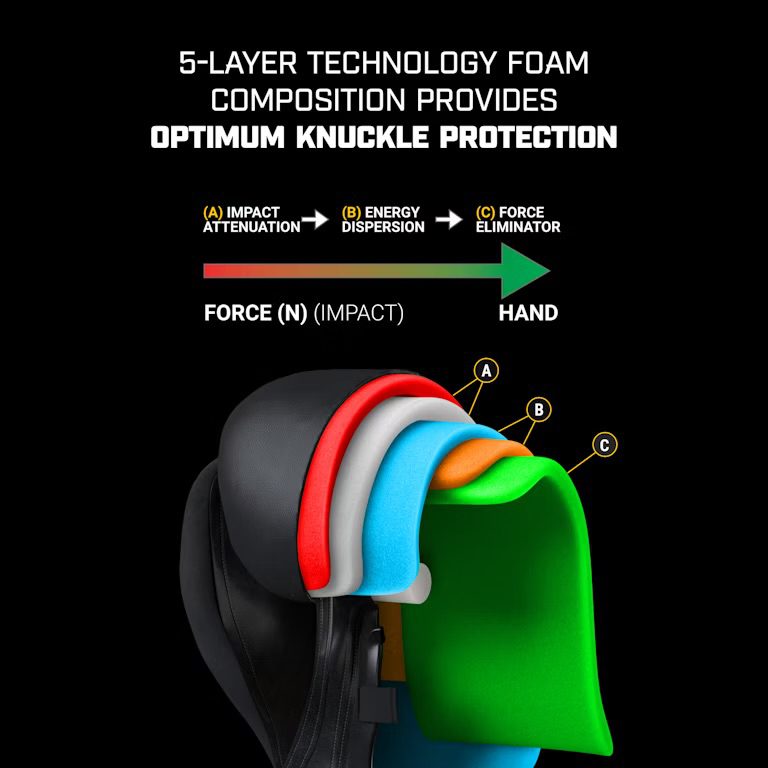
The E1 is noticeably plusher than my T3s. On a long bag session that matters, because the accumulated impact is the thing you feel afterwards — not any single punch.
There’s a second reason I use it, and it’s less obvious: it gives my favourite T3s a day off. A glove you hammered on Monday is still damp on Tuesday, and damp padding that gets compressed again doesn’t recover properly. Rotating pairs is the cheapest thing you can do for gear you spent real money on, and I wrote about that properly in why I rotate my boxing gloves.
Full write-up: my E1 review.
Why the T3 is still the one I’d buy first
The T3 is my favourite pair and has been for years. It’s the right amount of protection for me while still letting me feel where my punches land, and that feedback is the thing I’d miss most if it went away.
The wrist support is the real argument for it on a bag, though. Heavy bag work is where sloppy wrist position turns into a session you end early, and the T3’s closure locks things down without me having to think about it. My honest long-term take is in my T3 review.
Where the T360 fits
My T360s are 12oz, and they come out when I want a cardio-intense session and to build strength rather than a long grinding bag round. The dual-cross strap system is the most locked-in of anything I own.
They’re also the pair I’ve had longest from my ambassador package, and the engineered microfiber has held its shape rather than flattening — which is the failure mode I’d watch for in any bag glove. More in my one-year update.
Glove weight, honestly
I’m not a trainer, so I’ll stick to what I actually do rather than prescribing anything. I use 12oz when I want speed and volume, and a heavier glove when I want the session to feel like load. Plenty of people do it differently and are perfectly right to.
What I would say with more confidence is that the weight matters less than the fit. A well-fitted pair at a weight you like beats a “correct” weight you sized wrong.
The thing that actually kills bag gloves
It isn’t punching. It’s storage. Gloves that live zipped inside a gym bag overnight stay damp, and damp is what breaks down padding and starts the smell everyone complains about.
Mine come out of the bag the moment I get home, every time. That single habit has done more for how long my gear lasts than anything I’ve bought. If yours are already past saving, here’s how I clean mine.
Don’t skip the wraps
Bag work without wraps is the fastest way to make a good glove feel like a bad one. Wraps are cheap, they wear out quietly, and owning several pairs means you’re never reaching for a damp one. More on that here.
Sizing first, model second
Whichever you land on, get the size right before you get attached to a colourway. These run snug before break-in and the fit changes once you’re wrapped. My sizing guide covers it, and if you have smaller hands, start here instead.
What it costs
My code LILO takes 10% off the US store, and it doesn’t stack with a site-wide sale — one code per order, so if theirs is bigger, use theirs.
Shop Hayabusa with code LILO →
Outside the US? Use code LIZZIE on the Hayabusa Europe store for the UK and Europe, or shop my Australia storefront.
Which of mine goes on for what
| Session | What I reach for | Why |
|---|---|---|
| Long heavy-bag round | E1 | Softest pair I own; absorbs the accumulated impact |
| Sharper bag work | T3 | I want to feel where the punch lands |
| Cardio-intense, building strength | T360 12oz | Lighter on the hand, wrist locked down |
What actually wears out on a bag glove
Not the shell, in my experience — the foam. It compresses, stops rebounding, and you notice it as a duller, flatter feeling through the knuckles rather than as visible damage. That’s why a glove can look fine and still be finished.
The habit that matters more than the glove
Bag work puts more sweat into a glove than anything else I do. Mine come out of the bag the moment I get home, every time. If you only change one thing after reading this, change that rather than the gloves.
Wraps matter more on the bag than anywhere else
Bag work is repetitive in a way that pads and sparring are not — the same impact, the same angle, over and over. That is exactly the situation where wraps earn their place, and where skipping them is most noticeable afterwards.
Own several pairs. They are cheap, they wear out quietly, and the one thing worse than forgetting them is reaching for a damp pair from your last session. More on wraps here.
How I know a bag glove is finished
Not by looking at it. The shell usually still looks fine. What changes is the feeling through the knuckles — duller, flatter, less rebound — and it creeps up gradually enough that you can train in a finished glove for weeks without registering it.
If you have had a pair a long time and cannot remember the last time they felt sharp, that is your answer.
One thing I would not do
I would not buy a dedicated bag-only pair as your first second pair. Rotation between two general gloves does more for you than specialising early, because the real benefit is drying time rather than the glove being bag-specific.
Also worth reading: bag gloves vs sparring gloves and every Hayabusa model, ranked.
Your Questions, Answered
What gloves do you use on the heavy bag? The E1 for long sessions because it’s the most cushioned pair I own, and the T3 for shorter, sharper work where I want to feel the punch land.
Can you use the same gloves for the bag and for class? You can — I did for years. Once you’re training more than a couple of times a week, a second pair mostly earns its place by letting each one dry out.
Do heavy bag gloves need to be heavier? Not necessarily. I use 12oz when I want speed and volume. Fit matters more than the number on the cuff.
How long should bag gloves last? Mine have lasted years, and the biggest variable by far is whether they get to dry properly between sessions. More here.
What gloves are best for heavy bag work? The E1 for long sessions because it is the most cushioned pair I own, and the T3 for shorter sharper work where I want to feel the punch land.
Should heavy bag gloves be heavier? Not necessarily. I use 12oz when I want speed and volume. Fit matters more than weight.
Can I use sparring gloves on the bag? You can, though many people prefer to keep sparring gloves fresher by not using them for bag volume. Your gym may also have its own view on this.
How long do bag gloves last? Mine have lasted years. The biggest variable is whether they get to dry properly between sessions, not how hard you hit.
Do I need bag gloves and regular gloves? No. One good pair covers both for most people — a second pair is about drying time more than specialisation.
Some links above are affiliate links — I earn a small commission at no extra cost to you, and I only link gear I actually train in.