

Heads up, friends: this post has affiliate links, including Amazon. As an Amazon Associate I earn from qualifying purchases, at no extra cost to you. I only ever share what I genuinely use and love. 💛
Hey friends, it’s Lizzie! After my first real trip to the driving range, I got a bunch of questions from other 30-somethings thinking about picking up golf. So here is the roundup: everything I wish someone had told me before I showed up to hit my first bucket of balls.
This is not a pro’s guide. It is a beginner’s guide from another beginner, which honestly might be more useful — I remember exactly what confused me.
Start at the Range, Not the Course
It is tempting to want the “real” experience right away, but a driving range removes almost every source of first-day anxiety: no one behind you waiting, no scorecard, no course etiquette to learn on the fly. You get to be bad at something in private before you are bad at it in public. Give yourself that.

Rent Before You Buy
Do not buy a set of clubs before you know if this is a sport you actually want to keep doing. Most ranges and course pro shops rent basic sets for a few dollars, which is plenty to figure out your swing, your grip, and whether you even like it.
Your Other Sport Will Both Help and Hurt You
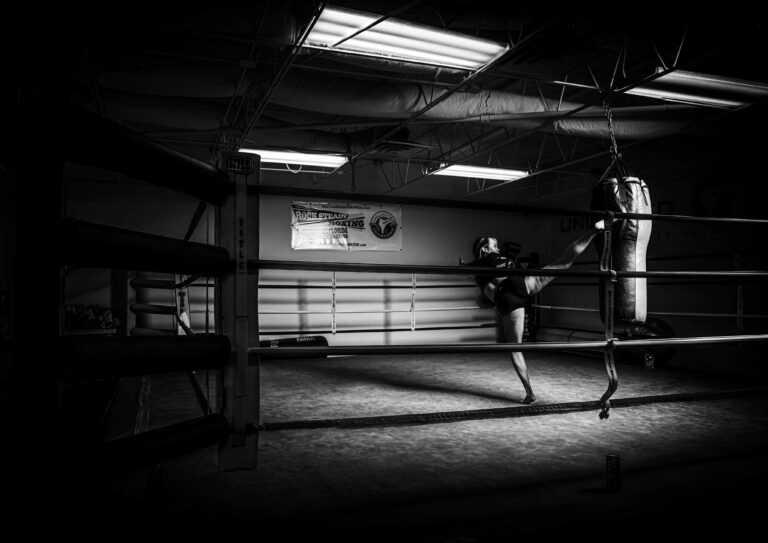
If you already have an athletic background — kickboxing, in my case — expect a strange mix of advantages and disadvantages. Your general fitness, balance, and body awareness genuinely help. But your muscle memory from another sport can actively work against you, because golf wants a slower, more rotational movement than most sports train you for. Be patient with yourself here specifically.

Comfort Over Cute, at First
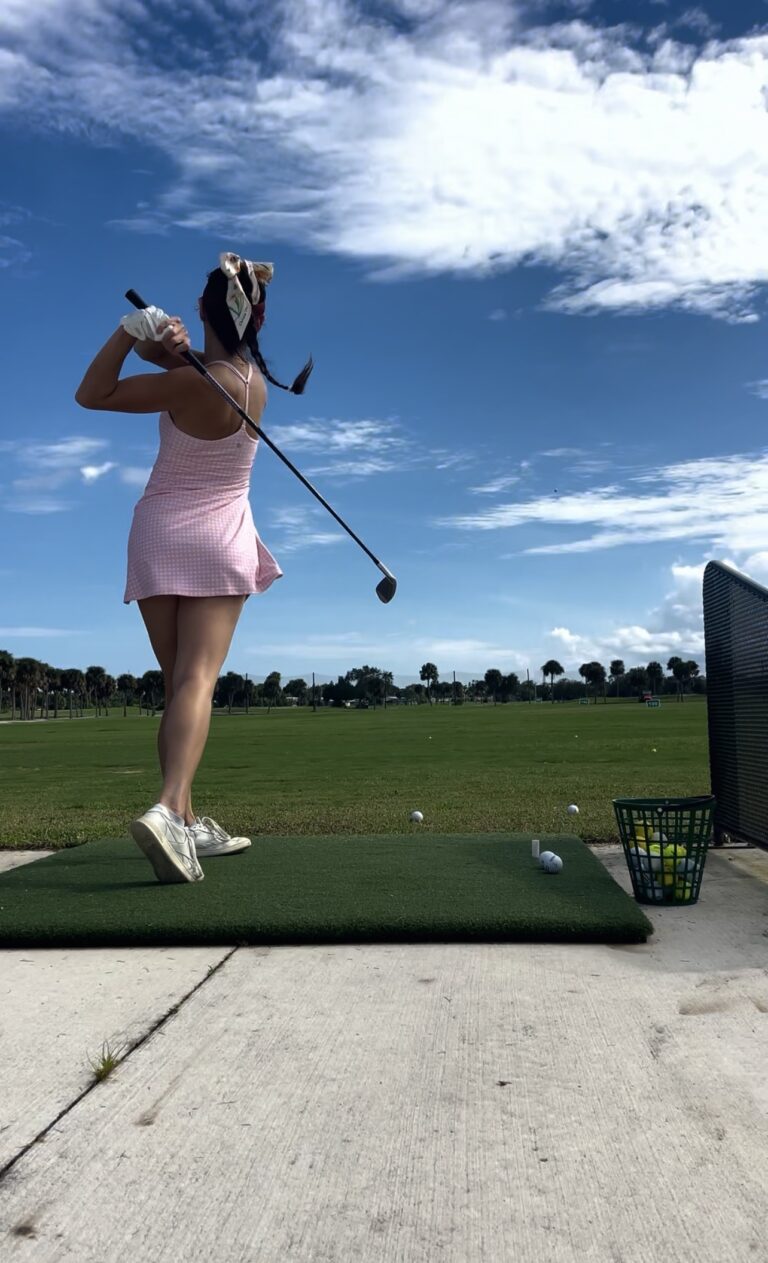
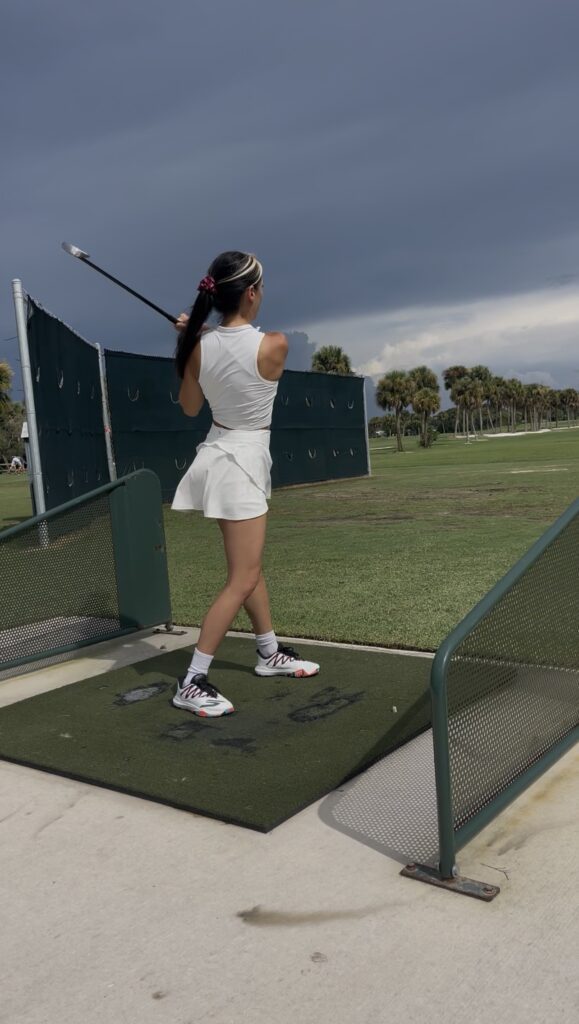
You do not need a full golf wardrobe to start. What matters is that you can rotate through your hips and shoulders without anything restricting you. I wore one of my regular activewear sets to the range and it worked completely fine — the “golf outfit” can come later, once you know you are sticking with it.
Set a Realistic First Goal
Do not go in trying to hit it straight. Go in trying to make contact. Straight comes later. My only goal on day one was to connect with the ball more often than I whiffed it, and that alone felt like a win by the end of the bucket.
What to Expect Your First Time at the Range
Knowing the logistics ahead of time removes most of the intimidation, so here’s the actual sequence. You’ll pay for a bucket of balls at the counter, usually somewhere between a small and large size, and either get a bay assignment or pick an open one. You hit until the bucket’s empty. That’s the whole thing — there’s no clock, no pressure, and nobody is watching you.
Wear whatever you can move in. Range etiquette is far more relaxed than course etiquette, and closed-toe shoes are usually the only real requirement. If you’re nervous, go on a weekday evening when it’s quieter.
The Only Three Things to Focus On Early
Beginners get buried in swing advice and end up thinking about eight things at once, which is why the ball goes nowhere. Early on, only three things genuinely matter.
Grip. How you hold the club determines almost everything downstream, and it’s the easiest thing to get wrong permanently by self-teaching. Worth having someone check it once.
Contact. Not distance, not direction — just making clean contact with the ball. Everything else is built on top of this.
Balance. If you finish your swing and you’re falling sideways, you swung too hard. A controlled, balanced swing at 70% effort will outperform a wild one every single time.
Is a Lesson Worth It?
One lesson early is genuinely worth more than ten hours of figuring it out alone, and I’d say that about any sport. Bad habits built in your first month take far longer to unlearn than they take to form.
You don’t need a package. A single lesson to check your grip, stance, and swing basics gives you something correct to practice, which is what makes range time actually productive instead of just repetitive.
Golf Is a Social Sport, and That’s the Real Point
This is the part I think gets undersold in your 30s. Golf is four or five hours with the same few people, no phones, walking outside. There genuinely aren’t many adult activities structured that way, and the friendship-building that happens as a side effect is arguably worth more than the golf.
It’s also one of the few sports where a total beginner and someone experienced can play the same round together and both enjoy it, which makes it unusually easy to say yes to an invitation.
The Mistake That Makes People Quit
Going straight to a full 18-hole course before you can consistently make contact. You’ll spend the round frustrated, hold up the group behind you, and conclude that golf isn’t for you — when really you just skipped the part where it becomes fun.
Range first, then a par-3 or executive course, then a full round. That progression is the difference between a hobby that sticks and an expensive afternoon you never repeat.
Related and probably useful: my take on Shooters Golf in Pittsburgh.
Beginner Golf: Your Questions, Answered
Do I need my own clubs to start golfing? No. Rent a basic set from the range or pro shop until you know you want to invest in your own.
Is golf harder to learn if you already play another sport? Not harder exactly, but different. Existing fitness and coordination help, while sport-specific muscle memory from something like kickboxing or tennis can occasionally get in your way at first.
What should a beginner wear to the driving range? Anything you can rotate freely in. A regular activewear set is genuinely fine — you do not need golf-specific clothing until you know you are sticking with the sport.
🛍️ My Amazon list: My Golfing Essentials
What I wear to the range in Florida heat, plus what is on my list before my first 18.